A friend of mine started tracking his blood pressure every morning.
At first it was curiosity. Then it turned into anxiety.
142/90…
138/88…
145/92…
Not catastrophic numbers. But high enough to keep showing up in his head every time he looked at the monitor.
So he did what most people in the U.S. eventually do. He started searching for supplements to lower BP naturally.
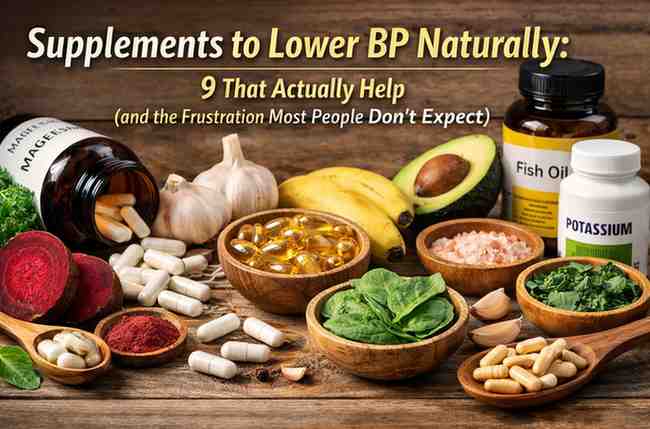
Magnesium. Garlic. Fish oil. Potassium. Beetroot.
It looked simple on paper.
But after watching dozens of people try this — friends, relatives, readers, even people I helped compare routines — the same pattern kept repeating:
People buy the right supplement…
…and still don’t see results.
Not because the supplements don’t work.
But because almost everyone misunderstands how they actually help.
And honestly, that misunderstanding causes more frustration than the blood pressure numbers themselves.
Why So Many People Start Looking for Supplements to Lower BP Naturally
Most people don’t start here because they love supplements.
They start here because they’re standing in a small doctor’s office hearing something like:
“Your blood pressure is a little elevated.”
Not dangerous yet.
But trending the wrong direction.
So the instinct becomes:
Can I fix this before medication becomes necessary?
From what I’ve seen →, the people who search for natural BP support usually fall into three groups:
1. Early-stage hypertension
-
BP creeping into the 130–140 range
2. Stress-driven spikes
-
Numbers fluctuate with sleep, anxiety, work pressure
3. Medication hesitation
-
Wanting to try lifestyle support first
And honestly… this instinct isn’t wrong.
But supplements work best when people understand what they’re actually doing inside the body.
Because most people expect something closer to a “blood pressure pill.”
That’s not how this works.
The Supplements That Actually Show Consistent Patterns
After watching people try dozens of things over the years, a few supplements show up again and again in routines that eventually help.
Not miracles.
But real, measurable support.
1. Magnesium
And weirdly… it's also the one most people underestimate.
Magnesium helps with:
-
blood vessel relaxation
-
nervous system balance
-
stress response
All things that influence blood pressure indirectly.
What surprised me after seeing so many people try this:
The biggest improvement often comes through better sleep, not the supplement itself.
When people sleep deeper, their nervous system calbs down.
BP readings start stabilizing.
Most people I’ve seen use:
-
Magnesium glycinate
-
Magnesium citrate
Typical range:
300–400 mg daily.
But here’s a common mistake.
People try magnesium for 4 days.
Then stop.
Real patterns usually show up after 2–3 weeks.
2. Potassium
It helps the body balance sodium.
And most Americans eat far more sodium than potassium.
That imbalance alone pushes blood pressure upward.
What I’ve seen:
People who increase potassium — through food or supplements — often see their numbers settle gradually.
Common potassium-rich foods:
-
bananas
-
avocados
-
spinach
Supplements are usually smaller doses.
Because high potassium must be handled carefully, especially for people with kidney issues.
3. Omega-3 Fish Oil
It reduces inflammation in blood vessels.
Which improves how easily blood flows.
From what I’ve seen in real routines, fish oil doesn’t cause dramatic changes overnight.
But after 8–12 weeks, people sometimes notice:
-
lower resting BP
-
improved cholesterol markers
-
better heart rate variability
Typical effective doses:
1,000–3,000 mg EPA/DHA daily
But quality matters a lot here.
Cheap fish oil supplements often do very little.
4. Garlic Extract
They help produce nitric oxide.
Which helps blood vessels widen slightly.
The interesting thing I noticed:
People who hate garlic smell almost never stick with this.
But aged garlic extract capsules remove most of the odor issue.
Some studies show reductions around:
5–8 mmHg
Which is meaningful.
But again… patience matters.
Most improvements appear after 6–12 weeks.
5. Beetroot / Nitric Oxide Supplements
Beetroot contains nitrates.
The body converts those nitrates into nitric oxide.
Which relaxes blood vessels.
Athletes use it for performance.
But it also helps circulation.
What people usually notice:
-
slightly lower systolic BP
-
improved endurance
-
warmer hands and feet
It’s subtle.
But noticeable over time.
The Mistakes Almost Everyone Makes at First
This is where most people get frustrated →.
Because supplements alone rarely work the way people expect.
Patterns I see constantly:
Mistake 1: Trying Everything at Once
People start:
-
magnesium
-
garlic
-
beetroot
-
potassium
-
hibiscus tea
All in one week.
Then they can’t tell what’s working.
Or what’s causing side effects.
Slow stacking works better.
Mistake 2: Expecting Quick Results
Blood pressure doesn’t change overnight unless medication is involved.
Natural changes are gradual.
Most realistic timelines I’ve observed:
| Time | What People Notice |
|---|---|
| 1–2 weeks | subtle calmness, sleep changes |
| 3–4 weeks | slightly more stable readings |
| 8–12 weeks | measurable improvement |
People quit right before progress starts.
I see this constantly.
Mistake 3: Ignoring the Real Cause
Supplements can support blood pressure.
But they rarely overpower things like:
-
chronic sleep deprivation
-
constant stress
-
high sodium diet
-
sedentary lifestyle
From what I’ve seen…
The best results happen when supplements support lifestyle changes, not replace them.
FAQ: Supplements to Lower BP Naturally
Do supplements really lower blood pressure?
Yes — some can.
But usually modestly.
Reductions of 4–10 mmHg are common with consistent use.
Which is meaningful, but not dramatic.
How long do natural supplements take to work?
Most people see changes after:
4–12 weeks
Consistency matters more than dosage.
Can supplements replace blood pressure medication?
Sometimes in early cases.
But anyone with stage 2 hypertension should talk to a doctor first.
Natural support works best alongside medical guidance.
What’s the most effective supplement overall?
From what I’ve seen repeatedly:
Magnesium + fish oil tends to form the foundation.
Then people add garlic or beetroot.
Objections I Hear All the Time
“If supplements worked, doctors would prescribe them.”
Actually, many doctors recommend magnesium or fish oil.
But supplements aren’t regulated like medications.
So results vary.
“Natural stuff is too weak.”
Sometimes.
But small improvements matter.
Dropping BP from 140 → 130 significantly lowers heart risk.
Even if it doesn’t feel dramatic.
Reality Check Most People Need
Supplements help…
But they rarely solve blood pressure alone.
The people I’ve seen succeed usually combine:
-
magnesium
-
fish oil
-
walking daily
-
reduced sodium
-
better sleep
Not glamorous.
But effective.
Also… blood pressure numbers fluctuate daily.
People panic when readings jump.
But the trend matters more than single readings.
Practical Takeaways Most People Wish They Knew Earlier
If someone asked me where to start, based on everything I’ve observed:
Start simple.
Try something like:
Morning
-
Fish oil
Evening
-
Magnesium
Track BP for 4 weeks.
Then consider adding garlic or beetroot.
Avoid stacking five supplements immediately.
Watch sleep.
Reduce sodium slowly.
And give the body time.
Some people will still need medication eventually.
That’s reality.
But I’ve also watched plenty of people stabilize their blood pressure just enough to avoid that step.
Not perfectly.
Not overnight.
But gradually.
And honestly… the biggest shift usually isn’t the supplement itself.
It’s when people stop chasing quick fixes and start building small routines they can actually stick with.
That’s when the numbers start moving.
Quietly.
Slowly.
In the right direction.