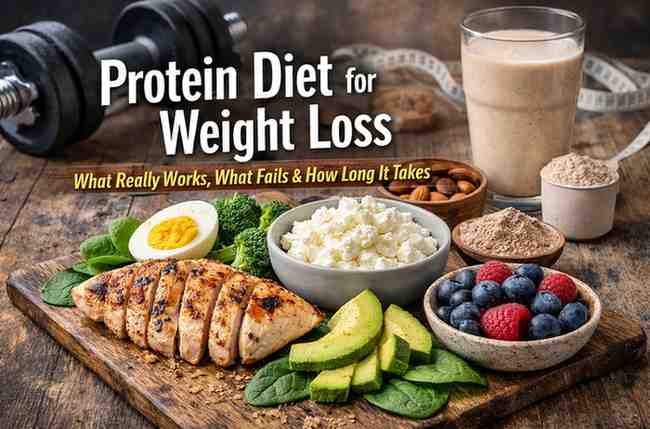
Honestly, most people I’ve watched try this hit a wall in the first two weeks. They start the protein diet for weight loss with hope, then quietly assume they’re the problem when it doesn’t “work” fast enough. I’ve seen → it play out in kitchens, break rooms, group chats, and late-night texts. Someone cuts carbs hard, loads up on chicken and shakes, drops a few pounds, then stalls. Frustration creeps in. Old habits sneak back. The plan gets blamed. Or worse—self-trust takes a hit.
From what I’ve seen up close, the protein diet for weight loss isn’t magic. But it’s not fake either. It’s a tool. And like most tools, it works when you use it the way it was designed—not the way TikTok makes it look.
What follows isn’t a perfect guide. It’s field notes from watching real people try, mess up, adjust, and—sometimes—finally feel relief when the scale stops messing with their head.
Why people reach for a protein diet (and what they’re actually hoping for)
Most folks don’t wake up thinking, I want to optimize my macros.
They’re tired of:
-
Being hungry an hour after meals
-
Feeling out of control around snacks
-
Losing the same 5–10 pounds over and over
-
Hearing “just eat less” and feeling judged
Protein gets pitched as the fix for all of that. And honestly? The appeal makes sense.
From what I’ve seen, people are hoping → for three quiet things:
-
Less hunger (so they don’t feel like they’re “failing” all day)
-
More structure (so choices are simpler when willpower is low)
-
Some early momentum (so they can believe change is possible again)
This honestly surprised me after watching so many people try it: the emotional relief of not being starving all the time is often a bigger win than the weight loss itself.
What most people misunderstand about a protein diet for weight loss
Almost everyone I’ve seen → struggle with this does one thing wrong at first:
They think “more protein” means “protein only.”
That turns into:
-
Dry chicken and broccoli three meals a day
-
Protein shakes replacing real food
-
Cutting fats so low they’re cranky and exhausted
-
Ignoring fiber, then wondering why digestion is a mess
Here’s the pattern I’ve watched repeat:
Over-restriction → short-term drop → energy crash → binge → guilt → quitting.
The protein diet for weight loss works best when protein is the anchor, not the entire boat.
What experienced users do differently (after messing it up once):
-
They keep some carbs (fruit, potatoes, rice)
-
They don’t fear fats (olive oil, eggs, nuts)
-
They prioritize whole foods over powders
-
They eat protein at every meal, not just dinner
Still simple. Just not extreme.
What consistently works (and what looks good on paper but fails in real life)
What I’ve seen work, again and again
-
Protein at the first meal of the day
People who start their day with protein → (not just coffee) report fewer snack spirals later. Not perfect control. Just fewer “I don’t know what came over me” moments. -
Repeating a few easy meals
Not meal-prepping like a bodybuilder. Just having 2–3 go-to breakfasts and lunches. Decision fatigue is real. Simplicity keeps people consistent. -
Eating enough total food
This one catches people off guard. When calories drop too low, weight loss stalls. Bodies get stubborn. Hunger gets loud. -
Tracking loosely, then letting go
A week or two of tracking helps people learn → portions. Long-term obsessive tracking? Burns people out fast.
What looks good on paper but fails in kitchens
-
Protein-only days
People feel powerful for 48 hours, then miserable. This usually ends with late-night takeout. -
Relying on shakes for multiple meals
Works for convenience. Fails for satisfaction. Chewing matters more than people think. -
“No carbs after 6 pm” rules
Creates anxiety around dinner. People rush meals. Then snack later anyway. -
Copying an influencer’s macro split
Bodies aren’t templates. Context matters: sleep, stress, work schedule, budget, culture.
How long does a protein diet for weight loss take to show results (for most people)?
Short answer:
You’ll usually feel different before you look different.
From what I’ve seen:
-
Week 1–2:
-
Hunger becomes more manageable
-
Energy might dip as routines change
-
Scale may drop fast (often water weight)
-
-
Week 3–6:
-
Real fat loss starts to show for many
-
Plateaus are common
-
Motivation gets shaky if expectations were unrealistic
-
-
After 6–8 weeks:
-
Patterns stabilize
-
People who adjusted (not quit) start seeing steady progress
-
Clothes fit differently before the scale reflects it
-
What people commonly get wrong:
They expect week 1 results to continue forever. When that slows, they assume the approach “stopped working.”
It didn’t stop working. The easy phase just ended.
The mistakes that quietly slow results (and mess with your head)
Most people I’ve worked with mess this up at first:
-
Not eating enough protein early in the day
Then trying to “catch up” at night. Hunger wins by evening. -
Underestimating calories in “healthy” foods
Nuts, cheese, oils add up. Not evil. Just dense. -
Skipping fiber
Leads to digestion issues, bloating, and feeling “off.” People blame protein. It’s usually the missing fiber. -
Drinking calories without realizing it
Sweetened coffee, juices, smoothies. Feels harmless. Adds up. -
Weighing daily and emotionally spiraling
Water retention from salty meals can hide fat loss. The scale lies short-term. People quit over noise.
Small shifts fix most of this. No heroics required.
“Is this even worth it?” — the honest answer
From what I’ve seen, a protein diet for weight loss is worth trying if:
-
You struggle with constant hunger
-
You snack mindlessly at night
-
You want simple structure, not complicated rules
-
You’re okay with slow, boring progress
It’s probably not worth it if:
-
You hate eating similar foods
-
You get anxious tracking anything
-
You already have a history of extreme dieting
-
You’re looking for fast, dramatic results
This isn’t a personality test. It’s just about fit. Some people thrive with this structure. Some resent it.
Neither group is broken.
Objections I hear all the time (and what usually helps)
“I tried high-protein and it didn’t work for me.”
From what I’ve seen, it “didn’t work” because:
-
Calories were too low
-
Protein was high, but food quality was poor
-
Stress and sleep were ignored
-
Expectations were set to “quick fix” mode
“Isn’t too much protein bad for your kidneys?”
This fear comes up a lot. What I’ve seen: people with existing kidney issues should talk to a clinician. For most healthy adults, moderate increases in protein from whole foods don’t cause the horror stories people → imagine. Extremes are the problem.
“I get bored eating like this.”
Yep. Most people do. The ones who stick with it rotate flavors, sauces, cuisines. Same structure. Different vibe.
Reality check: what can go wrong (and who should avoid this)
Let’s be honest. This isn’t harmless for everyone.
Common issues I’ve seen:
-
Constipation from low fiber
-
Fatigue from under-eating
-
Social friction (“why aren’t you eating this?”)
-
Food obsession when rules get too rigid
This approach is NOT for:
-
People with a history of disordered eating
-
Anyone who spirals with food rules
-
Those advised by a clinician to limit protein
-
People who need high-carb intake for medical reasons
Transparent limits matter. Not every tool fits every hand.
Short FAQ (quick answers people actually search for)
Does a protein diet help burn fat?
It can help control appetite and preserve muscle, which supports fat loss over time.
How much protein do I need?
Enough to feel full and supported. Most people do well spreading protein across meals instead of chasing a single big number.
Can vegetarians do a protein diet for weight loss →?
Yes, but it takes more planning. Beans, tofu, Greek yogurt, eggs, lentils. People underestimate how filling these can be when done right.
What if I’m not losing weight → after a month?
Check portions, sleep, stress, and total calories. Stalls usually mean one of those is off.
What to do in real life (not on paper)
Do this:
-
Eat protein at every meal
-
Keep carbs you actually enjoy
-
Add fiber (veggies, fruit, beans)
-
Repeat simple meals during busy weeks
-
Weigh less often. Notice how you feel
Avoid this:
-
All-or-nothing rules
-
Protein-only days
-
Copying influencer meal plans
-
Letting one off-day turn into quitting
What to expect emotionally:
-
Early hope
-
Midway doubt
-
Quiet wins
-
Occasional frustration
-
A weird sense of calm when hunger stops running your day
Patience, in practice, looks boring. It looks like doing the same decent thing on days you don’t feel motivated.
So no—this isn’t magic. It’s not a personality makeover. It’s not a moral upgrade. But I’ve watched enough people finally → stop feeling stuck once they anchored meals around protein, stayed flexible, and stopped punishing themselves for being human.
Sometimes that shift alone is the real win.