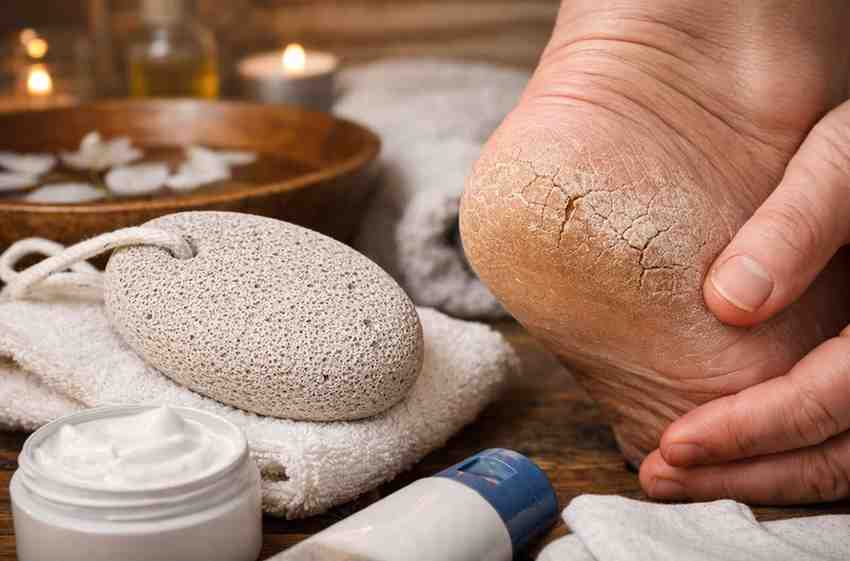
Honestly, cracked heels are one of those things people ignore… right up until they can’t.
I’ve watched this happen with friends, family members, coworkers — even people who are otherwise meticulous about their health.
At first it's just dry skin.
Then the edges start getting rough.
Then one day they look down and the heel is literally splitting.
That’s usually when someone Googles “pumice stone for cracked heels.”
And almost every time the same pattern follows.
They buy a pumice stone.
Use it aggressively for a few days.
Expect instant smooth skin.
When that doesn’t happen… they assume the method doesn’t work.
From what I’ve seen over the years — helping people troubleshoot this — the tool itself isn’t the problem.
The way people use pumice stones is where everything goes sideways.
And honestly… most people mess this up in the first week.
Why So Many People Turn to Pumice Stone for Cracked Heels
Cracked heels usually show up slowly.
But the frustration escalates fast.
People start noticing things like:
-
Socks snagging on rough skin
-
Sheets catching on heels at night
-
Visible deep lines in the heel
-
White, dry edges forming around the cracks
And eventually…
Pain.
At that point people want something physical that removes the hard skin.
Creams feel slow.
Lotions feel weak.
So the idea of a pumice stone makes sense:
If the problem is thick dead skin… just remove it.
And in theory — that’s exactly what pumice stones are meant to do.
But here's something that surprised me after watching so many people try it.
Most cracked heel problems aren’t just about removing skin.
They're about removing skin without making the heel panic and produce more hardness.
Because heels are defensive.
If you attack them too aggressively… they fight back.
What a Pumice Stone Actually Does (And Why It Works)
A pumice stone is basically hardened volcanic rock.
Its rough porous surface gently exfoliates thickened skin layers.
Used correctly, it helps:
-
Remove callus buildup
-
Smooth rough heel edges
-
Reduce pressure points
-
Prevent cracks from deepening
But here's the key thing most people miss:
Pumice stones work best when used slowly over time.
Not in one aggressive session.
The skin on your heels renews gradually.
And when people try to remove months of buildup in one sitting…
The skin reacts badly.
The Mistake Almost Everyone Makes at First
I've seen this so many times.
Someone buys a pumice stone and does this:
-
Soaks their feet
-
Scrubs aggressively
-
Tries to remove as much skin as possible
-
Stops once the heel feels raw
For a day or two the heel looks smoother.
Then the dryness comes back.
Sometimes worse.
Why?
Because the body thinks the skin was injured, not exfoliated.
So it responds by building thicker callus protection.
This is the same thing that happens when people overuse foot rasps.
From what I’ve seen, the people who actually succeed with pumice stones follow a very different rhythm.
The Routine That Consistently Works (Based on Real Patterns)
The people who eventually fix their cracked heels almost always settle into something like this:
Step 1 — Warm water soak
About 10–15 minutes.
Nothing fancy.
Just warm water.
Sometimes they add:
-
Epsom salt
-
Mild soap
-
A drop of oil
The goal isn’t a spa treatment.
Just soften the hardened skin.
Step 2 — Gentle pumice stone use
Here’s where most people mess up.
Instead of aggressive scrubbing, the people who succeed do this:
-
Light circular motion
-
2–3 minutes max per heel
-
Stop before redness appears
Honestly it almost feels too gentle.
But that’s the point.
You’re shaving off layers slowly.
Step 3 — Immediate moisturizing
This step changes everything.
Most people skip it.
But every person I’ve seen get real results becomes obsessive about moisturizing.
Common choices:
-
Urea creams (10–25%)
-
Thick heel balms
-
Petroleum jelly
-
Shea butter
Then socks.
Overnight.
That combination — pumice + moisture lock — is where the real improvement happens →.
How Long Does It Actually Take to Fix Cracked Heels?
This is where expectations usually break.
People want results in a few days.
But from what I’ve seen across dozens of cases:
Mild cracked heels
5–10 days
Moderate cracks
2–3 weeks
Deep cracks
4–6 weeks
And that assumes consistent care.
The first visible improvement most people notice?
Usually around day 5 or 6.
Not day one.
That delay is where people give up.
Things That Quietly Slow Down Results
These patterns show up again and again.
Walking barefoot constantly
Hard floors make cracks worse.
People underestimate this.
Cheap pumice stones
Some stones are too smooth.
They barely exfoliate.
Over-scrubbing
Ironically this creates thicker calluses.
Skipping moisturizer
This alone can stall progress for weeks.
Only treating the heel occasionally
Consistency beats intensity.
Every time.
The Part That Honestly Surprised Me
When people finally → get their heels under control…
They rarely need heavy pumice sessions again.
Maintenance becomes simple:
-
Light pumice once or twice a week
-
Daily moisturizing
-
Avoiding barefoot walking on rough surfaces
That’s it.
It’s not glamorous.
But it works.
Who Should Probably Avoid Using a Pumice Stone
This is important and rarely mentioned.
Some people shouldn’t use pumice stones at all.
Especially those with:
-
Diabetes
-
Peripheral neuropathy
-
Poor circulation
-
Thin fragile skin
-
Active heel infections
In those situations, even minor skin damage can become serious.
A podiatrist is the safer route.
Quick Answers to Common Questions
Does pumice stone permanently remove cracked heels?
No.
It manages buildup.
Maintenance is still needed.
Can pumice stone make cracks worse?
Yes — if used aggressively.
Especially on dry skin.
Should you use pumice stone every day?
Usually 3–4 times per week is enough.
Daily use is often unnecessary.
Is pumice better than foot scrapers?
For most people — yes.
Scrapers remove skin too quickly.
Pumice stones are safer and more gradual.
The Objections People Usually Have
I hear these a lot.
“It didn’t work when I tried before.”
Most people I’ve worked with who say this were:
-
scrubbing too hard
-
skipping moisturizer
-
expecting instant results
Once they fix those habits… the results change.
“My heels are too cracked for this.”
Sometimes that’s true.
Very deep fissures may need:
-
medical-grade heel balms
-
liquid bandage
-
podiatrist treatment
But even then, pumice often becomes part of the recovery routine later.
“It’s too much effort.”
Honestly… this one is fair.
The routine takes about 10 minutes.
Not everyone sticks with it.
But the people who do usually stop dealing with painful cracks entirely.
Reality Check: When This Method Feels Frustrating
The hardest phase is the first week.
The cracks are still visible.
The heels still feel rough.
And people assume nothing is happening.
But under the surface the thick skin is thinning.
Once that process starts… improvement becomes noticeable.
That lag period is where patience matters.
Practical Takeaways Most People Wish They Knew Earlier
If someone asked me how to avoid the usual mistakes, I’d say:
Do this
-
Soak feet before using pumice
-
Use gentle pressure
-
Moisturize immediately after
-
Wear socks overnight
-
Stay consistent for 2–3 weeks
Avoid this
-
Scrubbing aggressively
-
Using pumice on dry skin
-
Skipping moisturizer
-
Expecting instant smooth heels
And emotionally?
Expect some frustration early.
Almost everyone I’ve seen go through this hits a moment where they think: “Maybe my heels are just permanently like this.”
They’re usually wrong.
The skin just needs time to reset.
I didn’t realize how common cracked heels were until I started paying attention.
It shows up everywhere.
People quietly dealing with painful heels… hiding them in shoes… assuming nothing will fix it.
But I’ve also watched enough people slowly turn things around using something as simple as a pumice stone for cracked heels.
Not overnight.
Not magically.
Just small consistent care.
And weirdly… that slow improvement tends to feel better than quick fixes anyway.
Because once people figure out the rhythm that works for their feet…
They rarely deal with painful cracks again.