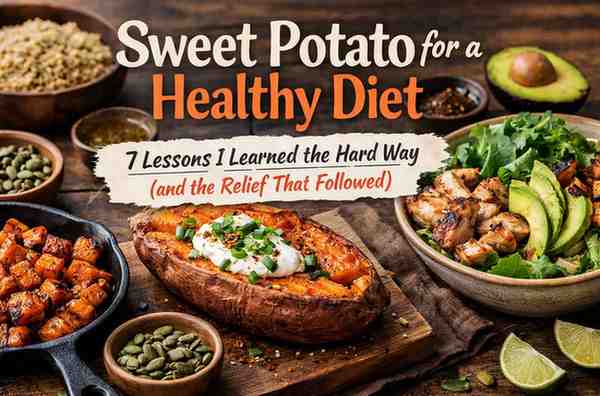
Not gonna lie… I side-eyed sweet potatoes for a long time. They felt like “diet food cosplay.” Too wholesome. Too beige. And honestly, I’d already failed at enough “healthy” resets to be skeptical of one more thing that promised to fix me if I just swapped my carbs.
Then a rough winter hit. Energy tanked. My takeout habit was getting loud. I wanted something I could actually stick to—nothing fancy, nothing expensive. That’s how sweet potato for a healthy diet slid into my life. Not as a miracle food. More like a practical crutch I didn’t expect to lean on this much.
I messed this up at first. I overdid it. I cooked it wrong. I got bored. I quit for a week. Then I came back and tweaked things. The small wins surprised me. The limits surprised me more. This is the messy version of what actually happened—and what I’d tell a friend before they try to make sweet potatoes their “healthy eating” personality.
Why I even tried sweet potato for a healthy diet (and what I misunderstood)
I was tired of plans that needed spreadsheets and willpower I didn’t have. Sweet potatoes felt… manageable. Cheap. Easy to find at any U.S. grocery store. I figured I’d roast a tray on Sunday and be done with it.
What I misunderstood:
-
I thought “healthy” meant “eat this one thing a lot.”
-
I assumed sweet potatoes were low-cal by default (they’re not magic; portion still matters).
-
I expected instant energy and instant weight changes. Yeah, no.
Why I stuck with it anyway:
-
They actually taste good when cooked right.
-
They didn’t wreck my stomach like some “clean eating” foods did.
-
They gave me a reliable base when my meals were otherwise chaotic.
From what I’ve seen, at least, sweet potatoes work best when you stop treating them like a cure and start treating them like a tool. One tool in a bigger, imperfect toolbox.
What I tried that failed (learn from my faceplants)
1) Eating them plain and getting bored
Week one, I ate plain baked sweet potatoes with salt. By day four, I hated everything. Food boredom is real. If you hate your food, you’ll quit.
Fix:
-
Add texture: Greek yogurt + lime + salt.
-
Add crunch: pepitas or toasted almonds.
-
Add heat: chili crisp or smoked paprika.
2) Over-relying on them for “diet” points
I told myself, “I ate a sweet potato, I’m healthy today.”
Then I’d still snack on ultra-processed stuff all night. The math didn’t math.
Fix:
Sweet potatoes became my anchor carb, not a free pass. I paired them with:
-
Protein (chicken, beans, tofu)
-
Fat (olive oil, avocado)
-
Greens (whatever was on sale)
3) Cooking them wrong and blaming the food
Microwaving without poking holes. Dry roasting with no oil. Burning the edges. All user error.
Fix:
-
Slice thick.
-
Toss with a little olive oil + salt.
-
Roast at 400°F until caramelized.
-
Or steam, then smash and crisp in a pan.
4) Expecting fast results
I wanted to feel different in three days. Didn’t happen. I felt… normal. Which annoyed me.
Fix:
I started tracking boring stuff: afternoon crashes, late-night cravings, how my digestion felt. The changes were subtle. But they stacked.
What actually worked (small wins that kept me going)
-
Energy steadiness. I stopped getting that 3–4 pm crash when sweet potatoes replaced random refined carbs at lunch.
-
Fewer “screw it” meals. Having a ready-to-go carb made me less likely to grab fast food.
-
Better digestion. Not perfect. Just… calmer. This honestly surprised me.
-
Consistency. The biggest win. Sweet potatoes were easy enough that I didn’t quit after a bad week.
No miracles. No dramatic before/after. Just fewer bad days stacked back-to-back.
How long does it take to notice anything?
Short answer: a couple of weeks to feel steadier.
Longer answer: it depends what you’re expecting.
-
Energy & cravings: 7–14 days for me.
-
Digestion: around 2 weeks before it felt reliably better.
-
Weight changes: slow. If that’s your main goal, sweet potatoes help by making meals more filling—not by being “fat-burning.”
If nothing changes after a month, that’s information. It might not be the lever you need.
People Also Ask (the stuff everyone Googles anyway)
Is sweet potato for a healthy diet actually worth it?
If you want an easy, affordable, filling carb that plays well with real meals—yeah, it’s worth trying. If you’re looking for a shortcut or detox vibe, you’ll be disappointed.
How much sweet potato should I eat?
I stuck to one medium sweet potato per meal when I used it as my main carb. More when I was training. Less when I wasn’t moving much. Your activity level matters.
Can I eat sweet potatoes every day?
You can. I did for stretches. But rotating carbs kept me from getting bored and helped me get a wider nutrient mix. Rice, potatoes, oats—variety helped me stick with it long-term.
Do sweet potatoes spike blood sugar?
They can, especially if you eat them solo. Pairing them with protein and fat slowed the spike for me. If blood sugar → is a concern, test and see how your body responds.
Are sweet potatoes better than regular potatoes?
Not “better,” just different. Sweet potatoes bring more vitamin A. Regular potatoes bring potassium → and can be super filling. I use both. The best carb is the one you’ll actually eat consistently.
Common mistakes that slow results
-
Treating sweet potatoes like a “health hack” instead of a food.
-
Eating them alone without protein or fat.
-
Overcooking into mush (texture matters more than people admit).
-
Ignoring portion size because they’re “healthy.”
-
Expecting quick body changes and quitting early.
Honestly, the biggest mistake is perfection mode. Miss a day. Burn a batch. Order pizza. Then come back. That’s the real pattern that worked →.
Objections I had (and how they shook out)
“They’re too high in carbs for a healthy diet.”
If carbs make you feel awful, listen to that. For me, carbs weren’t the enemy—random carbs with no structure were. Sweet potatoes brought structure.
“I don’t like sweet food with savory meals.”
Same. I leaned savory: cumin, garlic, tahini, herbs. Sweet potatoes don’t have to taste like dessert.
“This sounds boring.”
It can be. Boring food kills consistency. Rotate flavors. Change textures. Don’t be a hero about blandness.
Reality check (no hype, just the trade-offs)
-
This is not a weight-loss guarantee.
-
This won’t fix emotional eating. It can make better choices easier, not automatic.
-
This can backfire if you replace vegetables with only sweet potatoes. Variety still matters.
-
This may not suit very low-carb approaches. If that’s your lane, forcing sweet potatoes will feel like swimming upstream.
Who this is NOT for:
-
People who hate sweet potatoes (don’t suffer for trends →).
-
Anyone needing strict carb limits without room to experiment.
-
Folks looking for a one-food solution to burnout. That’s not fair to any food.
What I’d do differently if I started over
-
I’d plan two go-to recipes instead of winging it.
-
I’d pair sweet potatoes with protein from day one.
-
I’d stop trying to make them “diet cute” and just make them taste good.
-
I’d give it two weeks before judging anything.
This honestly would’ve saved me a lot of frustration.
A short FAQ (quick hits)
Can I meal prep sweet potatoes?
Yep. Roast a tray on Sunday. Reheat in a pan to bring back texture.
Do frozen sweet potatoes work?
They’re fine for soups and mashes. Fresh is better for roasting.
What if I get bored?
You will. Change spices. Change cuts. Take a break and come back.
Will this fix my gut?
It helped mine a bit. It didn’t “fix” anything overnight. If your gut is sensitive, go slow.
Practical takeaways (what to do, what to avoid, what to expect)
What to do
-
Use sweet potato for a healthy diet as your default carb, not your only carb.
-
Pair with protein + fat to feel full longer.
-
Cook for texture. Crispy edges matter.
-
Keep one easy recipe on repeat.
What to avoid
-
Eating them plain out of discipline.
-
Expecting fast body changes.
-
Treating one food like a solution to everything.
What to expect emotionally
-
Early skepticism.
-
A boring middle phase.
-
Small, quiet wins that add up.
What patience looks like
-
Two weeks before you feel steadier.
-
A month before you can judge if this fits → your life.
-
On-and-off usage instead of perfection.
I won’t pretend sweet potatoes changed my life. They didn’t.
But they changed my baseline. Fewer crashes. Fewer “I guess I’ll order something” moments. A simple carb I don’t have to argue with.
So no—this isn’t magic.
But for me? It stopped healthy eating from feeling impossible.
And that was enough to keep going.