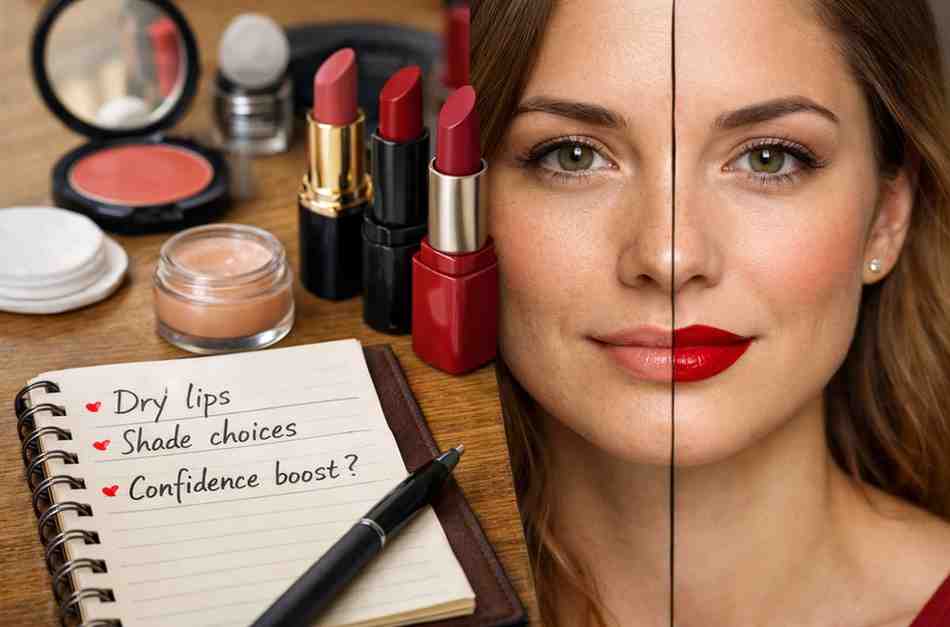
I didn’t start paying attention to the real effects of lipstick because of beauty trends.
It actually started from something much smaller.
A friend once told me she couldn’t leave the house without lipstick. Not makeup. Not foundation. Just lipstick.
At first I assumed it was just a style preference. But over time I started noticing something interesting. Women around me — coworkers, cousins, people I helped with content projects, even strangers during interviews — had strangely emotional relationships with lipstick.
Some felt confident because of it.
Some felt strangely dependent on it.
Some had skin problems they never connected to it.
And some… honestly just wore the wrong type for years without realizing why their lips were always dry.
After watching these patterns across a lot of people — and listening to the small frustrations they share when they think no one is paying attention — the real effects of lipstick started becoming clearer.
Not the marketing version.
The real, slightly messy, everyday version.
Some of it is surprisingly positive.
Some of it… people only realize after years.
Let me walk you through what I’ve actually seen →.
Why People Start Wearing Lipstick in the First Place
Most people think the answer is obvious: beauty.
But from what I’ve seen →, it’s rarely just that.
Lipstick tends to enter someone’s routine through one of these situations:
• A first job where appearance suddenly feels important
• Social pressure during college
• Weddings or big events where someone tried it once and liked the effect
• Influence from a close friend or sibling
• Or honestly… insecurity about pale lips
One pattern I’ve seen repeatedly in the U.S. especially is this:
People aren’t trying to look glamorous.
They’re trying to look awake.
That’s it.
A quick swipe of lipstick can make someone look healthier, more alert, more put together — even if they slept badly or skipped the rest of their makeup.
It’s a small psychological shortcut.
And that leads directly into the first real effect.
1. The Confidence Effect Is Real (But Not for the Reason People Think)
This honestly surprised me after watching so many people try it.
Lipstick doesn’t magically create confidence.
But it removes hesitation.
There’s a difference.
I’ve watched people walk into meetings, interviews, and presentations. And the difference between someone feeling “unfinished” vs “ready” can be surprisingly small.
Lipstick often becomes that signal.
Almost like flipping a mental switch.
A few people I spoke with described it almost the same way: “Without it I feel like I forgot something.”
Not everyone feels this way.
But among regular users, it’s incredibly common.
Still, there’s a catch most people don’t realize.
The confidence effect usually appears after routine use, not immediately.
Early users often feel awkward.
Too bright.
Too noticeable.
Too unfamiliar.
Most people need 2–3 weeks before it starts feeling natural.
2. The Dry Lips Problem Almost Everyone Runs Into
If there’s one mistake I’ve seen again and again, it’s this.
People assume lipstick is causing their dry lips.
Sometimes it is.
But often… the real issue is lipstick type + routine.
Here’s the pattern I’ve noticed across a lot of people:
They start using matte lipstick.
Matte looks great in photos. It’s trendy. It lasts longer.
But matte formulas often remove moisture.
Then the cycle starts:
• Lips feel dry
• More lipstick applied to cover flakes
• More dryness
• Eventually irritation
Most people I’ve worked with mess this up at first.
The fix is simple but rarely explained:
Lipstick should never go directly on dry lips.
The people who avoid this issue usually follow a simple routine:
-
Light lip balm first
-
Wait a minute
-
Apply lipstick
That tiny step changes everything.
I didn’t expect this to be such a common issue, but it is.
3. Lipstick Can Change How People Perceive You
This one comes up a lot in workplace conversations.
And honestly… people don’t like admitting it.
But colors influence perception.
From what I’ve seen across offices, events, and interviews:
Different lipstick shades send different signals.
For example:
Soft pink / nude tones
-
approachable
-
calm
-
professional
Bright red
-
confident
-
bold
-
assertive
Dark shades
-
dramatic
-
creative
-
edgy
Now here’s the interesting part.
The person wearing the lipstick may feel exactly the same.
But the room reacts differently.
One HR manager I spoke to told me something that stuck: “Red lipstick doesn’t change competence. But people assume confidence faster.”
Is that fair?
Maybe not.
But it’s a real pattern.
4. The “Lipstick Dependency” That Sneaks Up on Some People
This is something people usually admit quietly.
Not publicly.
After wearing lipstick daily for months or years, some people start feeling uncomfortable without it.
Not because their lips changed.
But because they got used to the enhanced look.
I’ve seen people say things like:
“I look sick without lipstick.”
Usually that’s not true.
It’s just contrast.
When someone sees themselves every day with color, their natural lips start looking dull in comparison.
Almost everyone I’ve seen struggle with this does one thing wrong:
They never take lipstick-free days.
The people who avoid the dependency effect usually rotate:
• lipstick days
• tinted balm days
• natural days
It resets perception.
5. The Hidden Ingredient Problem Most Users Ignore
This is where things get slightly technical… but still practical.
Some lipstick ingredients can irritate lips over time.
Not everyone reacts.
But certain patterns show up repeatedly.
The most common triggers I’ve seen reported:
• Fragrance
• Alcohol-heavy formulas
• Artificial dyes
• Certain preservatives
Symptoms people notice:
-
peeling lips
-
burning feeling
-
chronic dryness
-
lip darkening
The tricky part is this:
The reaction may appear weeks later, not immediately.
So people rarely connect the dots.
One dermatologist I interviewed explained it like this: Lips absorb ingredients faster than most skin.
Which means lipstick quality matters more than people assume.
6. Long-Wear Lipsticks Have Tradeoffs
Long-wear lipstick became extremely popular for obvious reasons.
Nobody wants constant reapplication.
But almost everyone I’ve seen struggle with this eventually runs into the same issue:
removal damage
Long-wear formulas are designed to stick.
Which means removing them often involves:
-
rubbing
-
scrubbing
-
strong makeup removers
That repeated friction can damage lip skin.
The people who avoid this problem almost always do this:
Use oil-based removers.
Oil dissolves lipstick faster.
Less rubbing.
Less irritation.
Simple but effective.
7. Lipstick Can Actually Protect Lips in Some Situations
Not all effects are negative.
This is something I didn’t expect until I saw the pattern.
Lipsticks — especially cream formulas — can act as a protective layer.
In dry environments, they sometimes help reduce moisture loss.
People living in cold U.S. states often report this unintentionally.
They apply lipstick for appearance.
But it ends up protecting lips from wind and dry air.
Still.
This depends entirely on the formula.
Matte products usually don’t provide that benefit.
The Real Timeline Most People Experience
From what I’ve seen across dozens of users, lipstick habits evolve like this:
Week 1
-
feels unusual
-
self-conscious
-
constant mirror checking
Week 2–3
-
color choices improve
-
application becomes easier
-
confidence boost begins
Month 2
-
routine established
-
favorite shades discovered
-
dependency risk begins for some
After 6 months
-
habits stabilize
-
skin reactions appear if ingredients are problematic
Most people never talk about this progression.
But it shows up consistently.
Common Mistakes Almost Everyone Makes at First
If I had to list the patterns I see most often, it would be these:
1. Choosing trendy colors instead of flattering ones
Social media influences a lot of bad choices.
2. Skipping lip care
Lipstick alone isn't a lip-care product.
3. Using cheap formulas daily
Occasional use is fine.
Daily use with poor formulas can cause problems.
4. Not removing lipstick properly
Sleeping with lipstick is extremely common.
And surprisingly harmful.
5. Overapplying
Many beginners apply far too much.
Thin layers usually look better.
FAQ: Questions People Usually Ask
Does lipstick damage lips?
Sometimes.
But usually the damage comes from dry formulas, irritation, or poor removal habits.
High-quality products with proper lip care rarely cause problems.
How long does it take to see the real effects of lipstick?
For most people:
-
confidence effects: 1–3 weeks
-
skin reactions: 4–8 weeks
-
habit formation: 2 months
Can lipstick darken lips?
Yes, but it’s not extremely common.
When it happens, it’s usually linked to:
• allergic reactions
• heavy dyes
• chronic dryness
Switching formulas usually solves it.
Is lipstick safe for everyday use?
Generally yes.
But daily users benefit from:
-
ingredient awareness
-
lip hydration
-
occasional breaks
Objections I Hear a Lot
Some people completely avoid lipstick because of concerns.
Let’s talk about those honestly.
“Lipstick contains chemicals.”
Yes.
But so does almost every cosmetic product.
The real question is formula quality and individual sensitivity.
Many people use lipstick daily for years without issues.
Others react quickly.
It’s highly personal.
“Natural lips are better.”
Honestly… this depends on the person.
Some people feel empowered by lipstick.
Others feel more comfortable without it.
Both are valid.
Beauty routines should serve the person, not control them.
“Lipstick is unnecessary.”
Technically true.
But so are many small rituals people enjoy.
If something boosts confidence without harming health, it has value.
The Reality Check Most Beauty Advice Ignores
Here’s something I’ve learned after watching a lot of people experiment with lipstick.
The product itself isn’t the biggest factor.
Consistency and awareness are.
People who have the best experiences with lipstick tend to:
• understand their lip type
• choose formulas carefully
• maintain basic lip care
• rotate products
• remove makeup gently
The people who struggle usually:
• follow trends blindly
• ignore ingredients
• skip lip care completely
Lipstick isn’t complicated.
But small habits make a huge difference.
Practical Takeaways That Actually Help
If someone asked me for realistic guidance based on everything I’ve seen, I’d say this:
Start simple.
Choose one shade that matches your natural lip tone.
Not dramatic.
Not trendy.
Just natural.
Then build from there.
Hydration matters more than color.
Healthy lips make every lipstick look better.
Lip balm + water intake goes further than expensive makeup.
Test products slowly.
Don’t rotate five lipsticks at once.
If irritation appears, you’ll never know which one caused it.
Pay attention to your lips.
If they start peeling, burning, or darkening… pause.
Lip skin is sensitive.
Ignoring signals makes problems worse.
Take lipstick breaks.
Even heavy users benefit from occasional lipstick-free days.
It resets skin and perception.
And honestly…
most people figure out their perfect routine through small trial and error.
Not through beauty guides.
I’ve watched enough people experiment with lipstick to realize something simple.
It’s not really about the product.
It’s about how people feel when they wear it.
For some, it becomes a tiny daily confidence boost.
For others, it’s just a color they enjoy.
And for a few… it turns into a habit they eventually question.
None of those experiences are wrong.
The real effects of lipstick aren’t dramatic transformations.
They’re small shifts.
In confidence.
In routine.
In how someone presents themselves to the world.
So no — lipstick isn’t magic.
But I’ve seen enough people stand a little straighter after applying it to know that sometimes small rituals matter more than we think. ????