Honestly, this is one of those tiny problems that ends up irritating people way more than they expect.
I’ve seen → it over and over with friends, coworkers, and even people who came asking about random skin issues.
They’ll casually say something like:
My fingers are fine except this stupid skin around my nails keeps tearing.
Then they show their hands.
Little splits.
Red edges.
Sometimes swollen.
Sometimes bleeding.
And the part that surprises most people?
They’ve already tried hand creams, oils, vitamins, fancy nail kits…
Yet the broken skin around nails just keeps → coming back.
I didn’t expect it to be such a common issue until I started noticing the pattern.
Different people.
Different lifestyles.
Same tiny painful problem.
After watching dozens of people deal with it, a few things became really clear:
• most people treat the wrong cause
• they unknowingly make it worse
• and the fixes that actually work are surprisingly simple
But also… not instant.
Why Broken Skin Around Nails Happens More Than People Think
From what I’ve seen, people usually assume it's just dry skin.
Sometimes it is.
But honestly, that’s only part of the story.
When you look at enough cases, the causes start repeating.
1. Constant Hand Washing
This one exploded after COVID.
People washing hands 15–20 times a day.
What happens:
• soap strips natural oils
• skin around nails is thinner
• small cracks start forming
Then those cracks turn into tiny torn pieces of skin.
Those painful little hangnails.
2. Dry Indoor Air
This surprised me at first.
A lot of people in colder U.S. states showed worse symptoms in winter.
Indoor heating systems dry the air.
Which slowly dries out:
• fingertips
• cuticles
• nail folds
The result?
Skin becomes fragile.
Then it splits.
3. Nail Picking (Way More Common Than People Admit)
Almost everyone I’ve seen struggle with this does this one thing wrong.
They pull the hanging skin instead of trimming it.
Big mistake.
When someone pulls a hangnail:
• the tear goes deeper
• surrounding skin breaks
• inflammation starts
Then the cycle repeats.
4. Harsh Chemicals
I’ve seen this a lot with:
• hairstylists
• cleaners
• healthcare workers
• bartenders
Frequent exposure to:
• sanitizers
• cleaning sprays
• alcohol wipes
These destroy the skin barrier around nails.
Even if the rest of the hand looks okay.
5. Nail Biting
This is one people usually hide.
But once you notice it, it becomes obvious.
Nail biting damages:
• cuticles
• surrounding skin
• nail folds
That trauma leads directly to broken skin around nails.
6. Dehydration (Small but Real Factor)
Not the main cause.
But I’ve noticed people who drink very little water often have:
• dry lips
• cracked fingertips
• peeling cuticles
Not the sole reason.
But it makes things worse.
7. Nutrient Deficiencies (Rare — But Possible)
This is where a lot of internet advice goes wrong.
Every article jumps to:
“You must have a vitamin deficiency.”
From what I’ve seen… that's actually uncommon.
But it can happen with low levels → of:
• Iron
• Biotin
• Vitamin B12
Usually there are other symptoms too, like fatigue or brittle nails.
The Pattern Most People Miss
Here’s something that honestly surprised me.
Most people focus on fixing the visible skin tear.
But the real problem is usually:
the skin barrier is damaged.
Meaning:
Your skin can't hold moisture anymore.
So it keeps cracking.
Until that barrier heals, nothing really sticks.
What Actually Helps Broken Skin Around Nails (From What I’ve Seen Work)
After watching a lot of people try different solutions, a few things consistently helped.
Not glamorous.
But effective.
1. Thick Hand Cream — Not Lotion
This is where most people mess up.
Lotions are mostly water.
They evaporate.
What worked better for almost everyone I’ve seen:
Look for creams with:
• urea
• ceramides
• glycerin
• shea butter
Apply it:
• after washing hands
• before bed
• anytime skin feels tight
Consistency matters more than brand.
2. Cuticle Oil (Underrated Fix)
This honestly surprised me after watching so many people try it.
Cuticle oil works because it:
• softens skin around nails
• prevents splitting
• strengthens the barrier
Most people notice improvement in about 7–10 days.
3. Stop Pulling Hangnails
Simple rule I tell everyone now:
Never pull skin. Ever.
Instead:
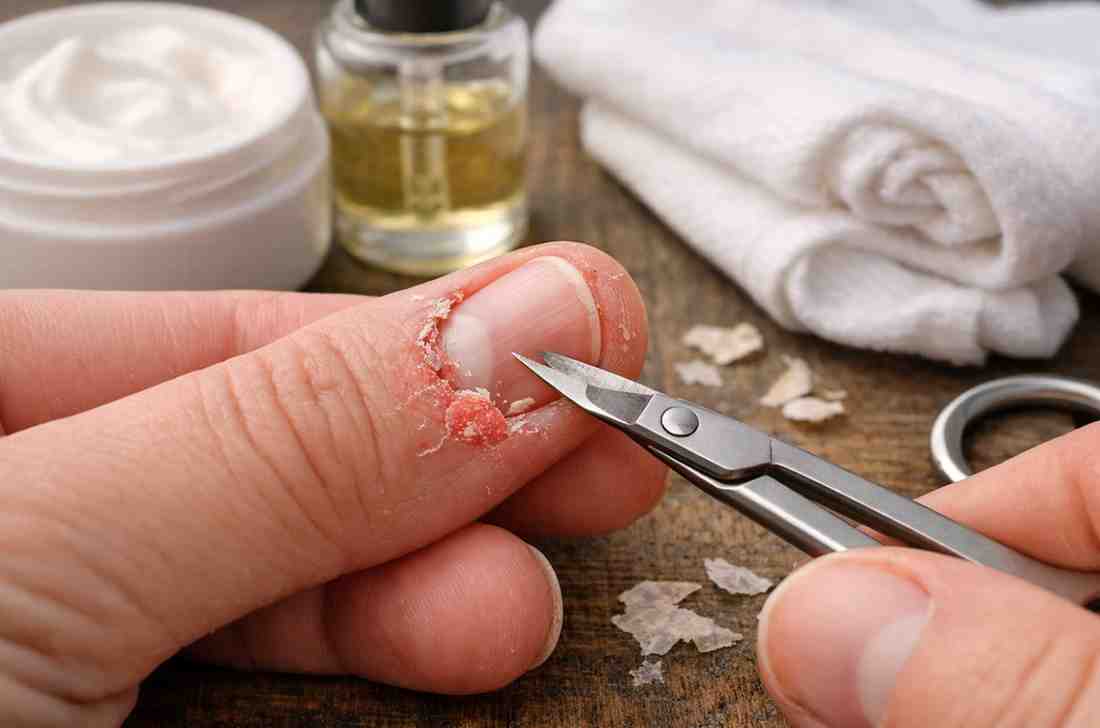
Use small cuticle scissors.
Trim the loose piece cleanly.
It prevents deeper tearing.
4. Night Repair Routine
The people who healed fastest almost always had a simple night routine.
Nothing complicated.
Just this:
-
Wash hands gently
-
Apply thick cream
-
Add cuticle oil
-
Wear cotton gloves
Overnight repair is powerful.
Skin heals faster when protected.
5. Use Gentle Soap
Another thing people overlook.
Many hand soaps are extremely harsh.
Look for:
• fragrance-free
• moisturizing formulas
• dermatology brands
Small change. Big difference.
How Long Does It Take to Heal?
This is where expectations usually break.
People expect results in 2 days.
That almost never happens.
From what I’ve seen across different people:
| Severity | Typical Healing Time |
|---|---|
| Mild dryness | 3–5 days |
| Regular hangnails | 1–2 weeks |
| Repeated tearing | 2–4 weeks |
The key is consistency.
Miss a few days and it resets progress.
Common Mistakes That Make It Worse
Most people I’ve worked with mess this up at first.
Picking skin constantly
Even tiny picking delays healing.
Using alcohol sanitizer too often
Alcohol dries skin aggressively.
Try alternating with handwashing.
Skipping nighttime care
Daytime care helps.
But night repair makes the biggest difference.
Using only nail polish oils
Many nail oils are cosmetic.
They don't repair skin barrier.
Quick Answers to Questions People Always Ask
Is broken skin around nails dangerous?
Usually no.
But it can become infected if bacteria enter the cracks.
Watch for:
• swelling
• pus
• severe redness
• throbbing pain
Why do hangnails hurt so much?
Because the skin around nails contains many nerve endings.
Even tiny tears feel intense.
Should you cut cuticles?
Dermatologists generally say no.
Cuticles protect the nail root.
Only trim loose dead skin.
Does biotin fix hangnails?
Sometimes helps nail strength.
But most broken skin cases are hydration and barrier issues.
When This Might NOT Work
I try to be honest about limits here.
Some people won’t see improvement from simple fixes.
Especially if the cause is medical.
Possible conditions include:
• eczema
• psoriasis
• chronic dermatitis
• fungal infection
If skin becomes:
• thick
• extremely red
• spreading
It’s worth seeing a dermatologist.
Who This Advice Helps Most
This approach tends to work best for people who:
• wash hands frequently
• live in dry climates
• pick at cuticles
• deal with seasonal dryness
Basically… most everyday cases.
Who Will Probably Hate This Approach
People who want:
• instant fixes
• miracle creams
• overnight solutions
Skin repair is slow.
It requires routine.
Not magic.
The Emotional Side No One Talks About
This might sound silly, but I’ve seen people get weirdly frustrated → about this.
Tiny skin tears.
But they:
• sting constantly
• catch on clothing
• look messy
And people feel embarrassed showing their hands.
It’s one of those small chronic annoyances that slowly gets under your skin.
Literally.
Practical Takeaways (If You’re Dealing With This Right Now)
If someone asked me what to actually do starting tonight, I’d say:
Start simple:
-
Buy a thick hand cream
-
Use cuticle oil daily
-
Stop pulling hangnails
-
Trim loose skin carefully
-
Do a nightly repair routine
Then give it two weeks.
That’s the real test window.
What to avoid:
• picking skin
• harsh soaps
• constant sanitizer
• ignoring dryness
What patience actually looks like:
Small improvement first.
Less redness.
Then fewer tears.
Then the skin finally stabilizes.
And honestly… that moment when someone realizes their fingers aren’t constantly hurting anymore?
It’s a small win.
But I’ve seen people genuinely relieved.
So no — fixing broken skin around nails isn’t some dramatic health breakthrough.
But I’ve watched enough people quietly stop dealing with it once they approached it this way.
Sometimes that shift alone is the real win.