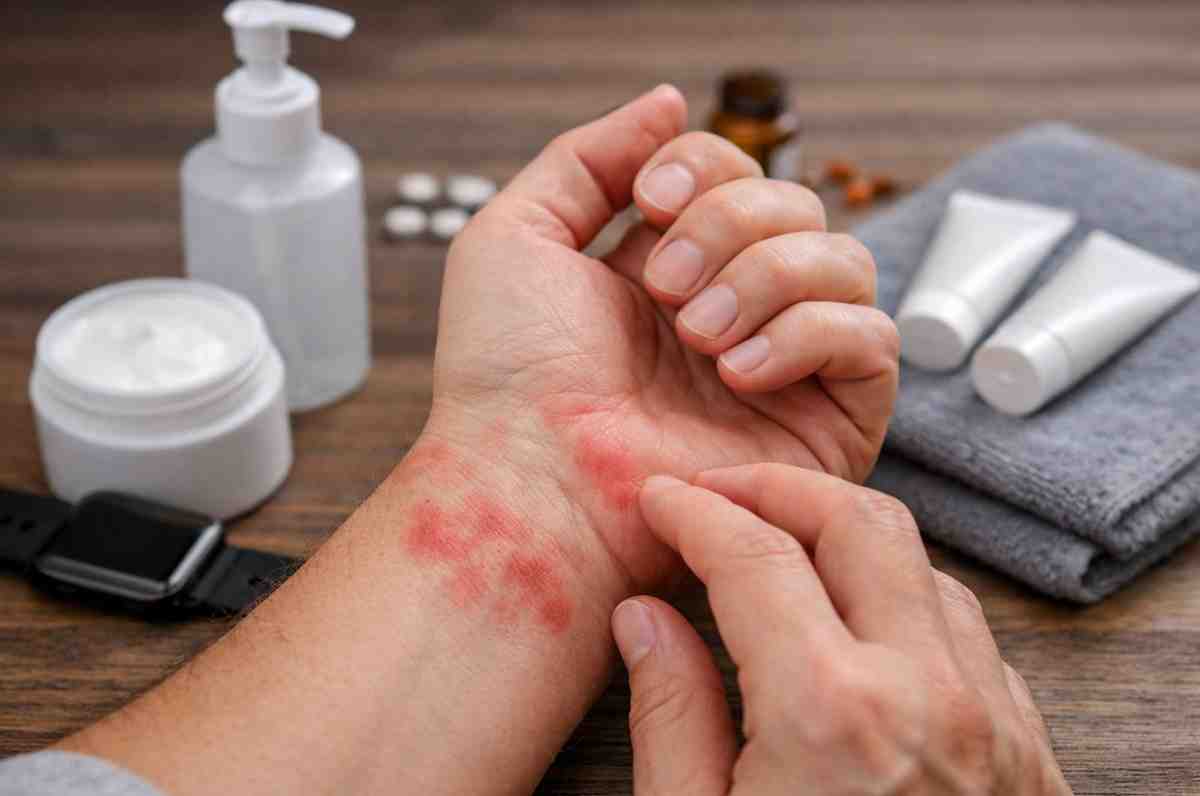
I can’t tell you how many times someone has rolled up their sleeve mid-conversation and said, “Does this look serious?”
It’s almost always the same tone. Slight panic. Slight embarrassment. A quiet Google spiral at 1 a.m.
Red blotches on wrist don’t look dramatic enough to feel like an emergency. But they also don’t look normal. And that gray zone? That’s what makes people anxious.
From what I’ve seen →, most people don’t freak out because of pain. They freak out because they don’t know what they’re looking at.
Is it a rash? An allergy? Stress? Something worse?
Let me walk you through the real-world patterns I’ve seen over and over again — what people assume, what actually causes it most of the time in the U.S., what works, and when you should stop guessing and get checked.
First — What “Red Blotches on Wrist” Usually Turn Out to Be
In the majority of cases I’ve observed, it falls into one of these buckets:
-
Contact dermatitis (reaction to something touching the skin)
-
Heat rash or sweat irritation
-
Eczema flare-ups
-
Allergic reactions
-
Friction irritation
-
Stress-triggered skin inflammation
-
Occasionally fungal infection
-
Rarely, something systemic that needs medical care
The wrist is weirdly vulnerable.
It rubs against:
-
Watch straps
-
Fitness trackers
-
Long sleeves
-
Desk edges
-
Soap residue
-
Fragrance from hand lotion
Almost everyone I’ve seen struggle with this does one thing wrong at first:
They look for an internal cause before checking what’s touching their skin → daily.
Pattern #1: The Watch Strap Nobody Suspects
I didn’t expect this to be such a common issue.
Metal bands. Cheap silicone straps. Even high-end smartwatches.
Nickel allergy is more common than people realize in the U.S. And even without allergy, sweat + friction + trapped moisture creates inflammation.
Here’s what usually happens:
-
Red blotches appear.
-
Person keeps wearing the watch.
-
It gets itchier.
-
They apply lotion.
-
It worsens because moisture is trapped.
From what I’ve seen, removing the watch completely for 7–10 days solves about 40% of mild cases.
Not reducing wear time.
Not switching wrists temporarily.
Completely stopping.
Most people I’ve worked with mess this up at first because they don’t want to stop tracking steps or workouts.
But skin needs air. Period.
Pattern #2: Overwashing and Sanitizer Burn
Since 2020, this skyrocketed.
Hand sanitizer dries out skin aggressively. Add frequent washing. Add cold weather. The wrist crease gets dry. Microcracks form. Red blotches show up.
What surprises people?
It doesn’t always itch immediately. Sometimes it just looks red and blotchy at first.
Then a few days later — itching.
What works consistently:
-
Switching to fragrance-free cleanser
-
Using thick moisturizer immediately after washing
-
Petroleum-based barrier at night
-
Avoiding hot water
What fails almost every time:
-
Thin lotion once a day
-
Scrubbing
-
Exfoliating
-
Ignoring it because “it’s just dry skin”
Dry skin on wrists escalates fast if neglected.
Pattern #3: Heat + Sweat + Friction
This one shows up a lot in gym-goers.
Tight wrist wraps. Sweatbands. Yoga mats rubbing the same spot.
Blotches appear slightly raised. Sometimes tiny bumps. Worse after workouts.
People assume fungal infection immediately.
From what I’ve seen, it’s usually irritation, not fungus.
The fix is boring but effective:
-
Remove tight wraps for 1–2 weeks
-
Keep area dry
-
Shower promptly after sweating
-
Use loose cotton sleeves if needed
Most people don’t give it enough time.
They try something for three days, expect instant improvement, then jump to antifungal cream.
Consistency matters more than intensity here.
Pattern #4: Mild Eczema That Starts Subtle
Eczema doesn’t always start dramatic.
Sometimes it starts as red blotches on wrist that feel slightly rough.
Then slowly:
-
Skin thickens
-
Itch increases
-
Flare cycles begin
What consistently helps (from what I’ve seen across multiple cases):
-
Fragrance-free everything
-
Daily thick moisturizer (not optional)
-
Avoiding hot showers
-
Short-term hydrocortisone when flaring (under guidance)
What almost everyone gets wrong at first:
They only treat during flare-ups.
But eczema management is about prevention, not reaction.
This shift alone reduces recurrence massively.
Pattern #5: Stress
This one is harder to prove. But I’ve seen it too many times to ignore.
Deadlines spike. Sleep drops. Diet slips. Red blotches appear.
Stress increases inflammation. Skin is often first to show it.
The frustrating part?
Topical creams only partially help.
When sleep improves and stress reduces — skin calms.
Not instantly. But noticeably.
I’ve watched this pattern enough that I don’t dismiss it anymore.
When Red Blotches on Wrist Are NOT Just Irritation
This is important.
You should get medical evaluation if you notice:
-
Blotches spreading rapidly
-
Severe pain
-
Fever
-
Blisters
-
Purple or bruise-like appearance
-
Signs of infection (warmth, pus, swelling)
-
Rash that doesn’t improve after 2–3 weeks of basic care
Most cases are mild.
But ignoring persistent changes is not smart.
There’s a difference between patience and denial.
How Long Does It Usually Take to Improve?
From what I’ve seen:
-
Mild irritation: 5–10 days after removing trigger
-
Eczema flare: 1–3 weeks with consistent care
-
Contact dermatitis: Often clears within 2 weeks once trigger is removed
-
Fungal infections (if confirmed): 2–4 weeks treatment
The mistake?
People expect 48-hour miracles.
Skin heals slower than we want.
And inconsistency resets progress.
Common Mistakes I See Repeatedly
Almost everyone I’ve seen struggle with this does one of these:
-
Keeps exposing skin → to the trigger
-
Switches products every 2 days
-
Over-applies multiple creams at once
-
Uses scented products
-
Scratches unconsciously at night
-
Googles worst-case scenarios
Especially the last one.
Anxiety makes it worse.
Is It Worth Trying Home Care First?
For mild, non-painful red blotches on wrist?
Yes. Usually.
Start simple:
-
Remove watches and tight wraps.
-
Switch to fragrance-free soap.
-
Moisturize twice daily.
-
Avoid hot water.
-
Don’t scratch.
Give it 10–14 days.
If improving — stay consistent.
If worsening — escalate.
That’s a reasonable decision path.
Quick FAQ (People Also Ask Style)
Are red blotches on wrist serious?
Usually no. Most are irritation or mild dermatitis. But spreading, pain, or systemic symptoms need medical care.
Can stress cause red → blotches?
Indirectly, yes. Stress can trigger inflammatory skin reactions.
Should I use hydrocortisone?
Short-term, mild use can help inflammatory rashes. But don’t overuse without guidance.
Is it an allergy?
Often contact-related. Watches, metals, detergents are common triggers.
What if it doesn’t itch?
It can still be irritation or dermatitis even without itch initially.
Objections I Hear All the Time
“I’ve already tried lotion.”
Was it fragrance-free? Thick enough? Used consistently? Most people underapply.
“It doesn’t look that bad.”
Mild now doesn’t mean ignore it. Early intervention prevents escalation.
“I don’t want to stop wearing my watch.”
Then healing will likely stall. I’ve seen this enough times.
“I’m worried it’s something serious.”
That fear is valid. But statistically? Most wrist blotches are benign.
Reality Check Section
This approach won’t work if:
-
It’s fungal and untreated properly
-
It’s an autoimmune skin condition
-
You keep reintroducing triggers
-
You expect overnight healing
Also — some people are just more skin-sensitive.
That’s not weakness. It’s biology.
And patience becomes part of management.
Practical Takeaways
If you’re dealing with red blotches on wrist right now:
Do this:
-
Remove possible irritants fully
-
Simplify products
-
Moisturize consistently
-
Monitor changes weekly (not hourly)
Avoid this:
-
Layering multiple new treatments
-
Constantly touching it
-
Panicking after two days
-
Self-diagnosing rare diseases
Expect emotionally:
-
Frustration
-
Impatience
-
Doubt
-
Relief when it finally fades
Healing skin requires boring consistency.
That’s the part nobody likes.
I’ve watched enough people quietly stress over small wrist rashes to know it’s rarely about vanity. It’s about uncertainty.
Not knowing what’s happening.
So no — most red blotches on wrist aren’t dramatic. But they deserve attention. Calm, methodical attention.
From what I’ve seen, the people who improve fastest are the ones who stop reacting emotionally and start observing patterns.
Remove. Simplify. Wait. Adjust.
It’s not magic.
But I’ve watched enough wrists clear up to trust that approach.
Sometimes that steady shift — from panic to patience — is the real relief.