Honestly, most people I’ve watched try to lose weight → don’t fail because they lack discipline.
They fail because their body feels like it’s fighting them.
I’ve seen this over and over. A friend cuts calories hard. A client lowers carbs. Someone starts walking five miles a day. The scale drops for a week… then suddenly they look puffy. Bloated. Up two pounds overnight. They panic. They assume it’s fat.
Most of the time?
It’s water. And electrolytes. And stress.
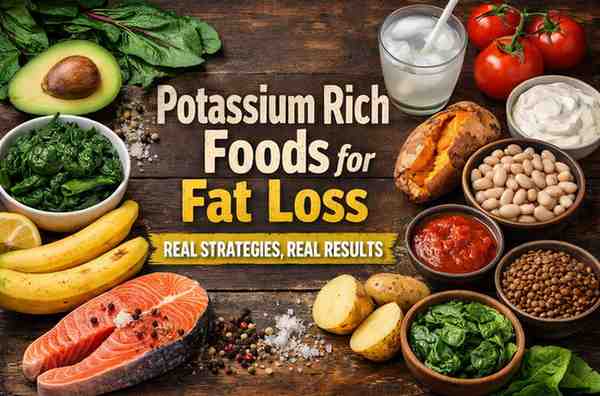
That’s usually when potassium rich foods for fat loss quietly enter the conversation — not as some miracle nutrient, but as the missing piece no one thought to look at.
From what I’ve seen across dozens of real attempts, potassium isn’t magic.
But ignoring it? That slows people down more than they realize.
Why People Even Start Looking at Potassium
It usually starts like this:
-
“I’m eating less but I feel swollen.”
-
“I’m low-carb and exhausted.”
-
“I’m working out but the scale won’t move.”
-
“I look leaner but heavier.”
What surprised me after watching so many people try to push through fat loss is how often sodium goes up and potassium quietly drops.
Packaged “healthy” food.
Protein bars.
Low-carb wraps.
Restaurant meals.
All sodium-heavy.
Very little potassium.
The body holds onto water when sodium dominates and potassium falls behind. And when that happens, people think they’re gaining fat.
They’re not. They’re retaining fluid.
That emotional spiral? I’ve seen it wreck momentum in week two more times than I can count.
The Quiet Role Potassium Plays in Fat Loss
Let me say this clearly.
Potassium does not burn fat.
If someone tells you that, they’re overselling it.
What potassium does — from what I’ve consistently observed — is:
-
Help regulate fluid balance
-
Support muscle contractions (including during workouts)
-
Reduce bloating when sodium intake is high
-
Support nerve signaling and energy levels
-
Improve workout performance in subtle ways
And performance matters.
Because fat loss doesn’t happen from “trying harder.”
It happens from consistency. And consistency collapses when you feel exhausted and inflamed.
Almost everyone I’ve seen struggle with this does one thing wrong:
They slash calories but forget micronutrients.
And then blame themselves for feeling awful.
11 Potassium Rich Foods for Fat Loss That Actually Help
These aren’t exotic superfoods. These are foods I’ve seen people realistically stick with.
1. Spinach
-
~840 mg per cooked cup
-
Easy to add to eggs, smoothies, rice bowls
-
High volume, low calorie
People underestimate leafy greens. But I’ve seen bloating visibly reduce when someone consistently adds two cups a day.
2. Avocado
-
~700 mg per fruit
-
Also provides healthy fats for satiety
This one is tricky. Some people overdo it and accidentally stall fat loss because calories add up fast. Half an avocado usually works better than a whole.
Small adjustment. Big difference.
3. Sweet Potatoes
-
~540 mg per medium potato
-
Fiber + potassium combo
From what I’ve seen, this helps especially with people coming off restrictive low-carb phases. Energy improves. Cravings calm down.
4. Greek Yogurt
-
~380–500 mg per cup (plain, nonfat)
High protein. Easy to prep. Supports muscle retention during calorie deficits.
Most people I’ve worked with mess this up by choosing flavored versions loaded with sugar.
5. White Beans
-
~600 mg per half cup
Quietly powerful. Affordable. Filling.
But yes — if someone isn’t used to fiber, this can cause temporary bloating.
That part surprises people.
6. Salmon
-
~500 mg per 3 oz serving
Protein + omega-3s + potassium.
I’ve seen inflammation markers improve when people replace processed meats with fatty fish twice a week.
7. Coconut Water (Unsweetened)
-
~600 mg per cup
This is helpful for active people sweating heavily.
Not necessary for everyone.
And honestly? Most sedentary people don’t need daily coconut water. Context matters.
8. Bananas
-
~420 mg per medium banana
Yes, they’re simple. Yes, they work.
No, they won’t make you gain fat.
I’ve watched too many people fear bananas unnecessarily.
9. Lentils
-
~365 mg per half cup
Steady energy. High fiber. Budget-friendly.
People trying to “clean eat” sometimes forget basic foods work best.
10. Beet Greens
-
~1,300 mg per cooked cup
Almost no one uses them. But they’re incredibly dense in potassium.
That said — accessibility in the U.S. varies.
11. Tomato Products (Low Sodium)
-
~400–500 mg per cup
Tomato paste. Crushed tomatoes.
Easy to add to meals without much effort.
What Consistently Works (From Watching Real People Try)
From what I’ve seen, the people who benefit most from increasing potassium:
-
Eat out frequently
-
Are doing low-carb or keto
-
Sweat heavily from workouts
-
Feel chronically bloated
-
Experience frequent muscle fatigue
What works best is not supplements first.
It’s food adjustments.
A simple pattern I’ve seen succeed:
-
Add one potassium-rich food per meal
-
Increase leafy greens daily
-
Reduce ultra-processed sodium-heavy snacks
-
Drink adequate water (not excessive)
Within 7–14 days, most people report:
-
Less puffiness
-
Slight drop in scale weight (water)
-
Better workout endurance
-
Fewer random cravings
Not dramatic.
But noticeable.
Common Mistakes That Slow Results
This honestly surprised me after watching so many attempts.
1. Going straight to potassium supplements
Too much too fast can cause digestive discomfort. And in rare cases, issues if someone has kidney concerns.
2. Ignoring sodium balance
If sodium stays high and potassium rises slightly, results are limited.
It’s a ratio.
3. Expecting fat to melt instantly
Potassium helps the environment. It doesn’t replace a calorie deficit.
4. Overcorrecting with high-calorie foods
Avocados and nuts are healthy — but calories still matter.
How Long Does It Take to Notice a Difference?
For fluid-related changes?
Usually 3–10 days.
For actual fat loss?
That depends entirely on overall calorie balance and movement.
Potassium supports the process. It doesn’t drive it alone.
Anyone promising visible fat loss from potassium alone is skipping basic physiology.
Is It Worth Trying?
If you:
-
Feel bloated during fat loss
-
Eat a lot of packaged foods
-
Feel fatigued in workouts
-
Crave salty foods constantly
Then yes.
It’s worth adjusting.
If you already eat whole foods, plenty of vegetables, and hydrate properly?
You might not notice a huge change.
And that’s okay.
Who Should Avoid Aggressively Increasing Potassium?
Important.
People with:
-
Kidney disease
-
On potassium-sparing medications
-
Certain blood pressure medications
Always check with a healthcare provider.
Most healthy adults in the U.S. actually under-consume potassium.
But context matters.
Objections I Hear a Lot
“Isn’t this just water weight?”
Partly. Yes.
But reducing unnecessary water retention can improve how someone feels and performs. That often improves adherence.
And adherence is everything.
“Can’t I just take a pill?”
You can.
But from what I’ve seen, food-based approaches produce steadier outcomes and fewer side effects.
“I tried this and nothing happened.”
Then one of three things was likely true:
-
Sodium remained high
-
Calories weren’t controlled
-
Expectations were unrealistic
Harsh, but usually accurate.
Quick FAQ (Straight Answers)
Does potassium burn belly fat?
No. It supports fluid balance and muscle performance.
How much potassium do adults need?
Most U.S. guidelines suggest around 2,600–3,400 mg daily depending on sex and body size.
Can low potassium slow weight loss?
Indirectly, yes — through fatigue, bloating, and reduced workout performance.
Are supplements safe?
Food first. Supplements only if advised.
Reality Check Section
Let’s ground this.
Potassium rich foods for fat loss are not a shortcut.
They are not biohacks.
They won’t override poor sleep, high stress, or chronic overeating.
What they can do — from what I’ve consistently seen — is remove friction.
Less bloating.
Better energy.
More stable performance.
And when people feel better, they stick with things longer.
That’s the quiet advantage.
Practical Takeaways
If I were guiding someone starting today, I’d suggest:
-
Add one potassium-dense food to each meal
-
Keep sodium moderate, not extreme
-
Hydrate consistently
-
Don’t slash calories aggressively
-
Track energy, not just weight
Emotionally?
Expect this:
-
The scale may fluctuate
-
You might not “see” dramatic change instantly
-
The biggest shift might be how you feel, not how you look
Patience looks boring.
It looks like small corrections repeated daily.
Most people quit before their body stabilizes.
I won’t pretend potassium is some hidden fat-loss weapon.
It’s not.
But I’ve watched enough people stop feeling stuck once they fixed their electrolyte balance. Sometimes the breakthrough isn’t burning more fat — it’s finally understanding why the body was holding on in the first place.
So no — this isn’t magic.
But for the right person? It’s relief.
And sometimes relief is exactly what keeps → someone going.