Honestly, most people I’ve watched try to follow a healthy diet hit the same wall around week two.
Week one is enthusiasm.
Week two is confusion.
Week three is frustration.
I’ve seen this play out with coworkers, family friends, gym buddies, and a few people who asked me for help after their doctor told them to “fix their diet.”
They start with good intentions.
They download meal plans.
They buy expensive ingredients.
Then something quietly collapses.
Usually the same things:
-
the diet feels too strict
-
the food becomes repetitive
-
they get one bad day and assume they “failed”
After watching this happen again and again, one thing became clear.
Most people don’t fail at healthy eating.
They fail at the version of healthy eating they were told to follow.
And those two things… are not the same.
So if you’re trying to figure out how to follow a healthy diet, the real answer isn’t a perfect meal plan.
It’s understanding the patterns that actually work in real life.
Not the ones that look good on Instagram.
Why People Start Trying to Follow a Healthy Diet
The motivations are surprisingly similar.
From what I’ve seen, people rarely start because they suddenly love vegetables.
They start because something scares them a little.
Usually one of these:
-
A doctor mentions cholesterol or blood sugar
-
Clothes start fitting tighter
-
Energy levels crash every afternoon
-
Someone in the family gets a health scare
-
They feel constantly tired or foggy
I remember a friend saying something that stuck with me. “I didn’t want to become a ‘diet person’. I just didn’t want to feel like this anymore.”
That’s the real driver most of the time.
Not weight.
Not aesthetics.
Just wanting to feel normal again.
Still… when people search how to follow a healthy diet, what they usually find is rigid rules.
And that’s where things begin to break.
What Most People Get Wrong About Healthy Diets
This part honestly surprised me after watching so many people try.
Almost everyone assumes a healthy diet means removing things.
No carbs.
No sugar.
No snacks.
No eating after 7pm.
But the people I’ve seen succeed long-term did something completely different.
They focused on adding stability, not restriction.
Their diets usually improved because they started doing three small things consistently.
1. They Stopped Skipping Meals
Almost everyone I’ve seen struggle with healthy eating does this at first.
They skip breakfast.
Then lunch becomes rushed.
Then dinner turns into overeating.
By night they feel guilty… and the cycle repeats.
The people who stabilized their eating usually did something simple:
They ate three real meals per day.
Not perfect meals.
Just predictable ones.
Example routine I’ve seen work repeatedly:
Breakfast
-
Eggs or yogurt
-
Toast or oatmeal
-
Fruit
Lunch
-
Something green
-
Something filling (rice, potatoes, bread)
Dinner
-
Protein
-
Vegetables
-
Carb source
Nothing fancy.
But consistency changed everything.
2. They Stopped Trying to Eat “Perfect”
This might be the biggest trap.
People think a healthy diet means flawless eating.
What actually works is closer to this rule:
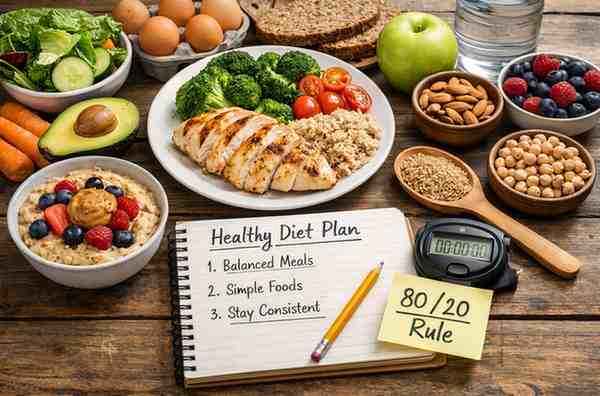
80% reasonable. 20% flexible.
From what I’ve seen, people who follow this pattern stick with it for years.
Their weeks look something like:
-
Mostly whole foods
-
Some convenience meals
-
Occasional takeout
-
Dessert sometimes
And that balance prevents the crash-and-binge cycle.
Because honestly… extreme diets almost always snap back.
3. They Fixed Their Grocery Habits
This is one of those small details people underestimate.
But it shows up constantly.
Most people who struggle with healthy diets don’t have easy food at home.
They have ingredients.
But not meals.
So when they get tired, they order food.
The people who improved their diet usually kept simple fallback foods stocked.
Things like:
-
eggs
-
Greek yogurt
-
frozen vegetables
-
rotisserie chicken
-
canned beans
-
oatmeal
-
rice
Not glamorous.
But practical.
And that’s the difference.
What a Healthy Diet Actually Looks Like (In Real Life)
Healthy eating rarely looks like the meal plans you see online.
It usually looks… boring.
But stable.
Typical day I’ve seen work for a lot of people:
Breakfast
-
Oatmeal with fruit and peanut butter
or -
Eggs and toast
Lunch
-
Chicken or tuna sandwich
-
Salad or fruit
Snack
-
Yogurt
-
Nuts
-
Apple
Dinner
-
Rice or potatoes
-
Vegetables
-
Chicken, fish, tofu, or beans
Nothing extreme.
Just balanced.
And repeatable.
That last word matters more than most people realize.
How Long Does It Take to Adjust to a Healthy Diet?
Most people I’ve seen go through the same timeline.
Week 1: Excitement
Motivation is high.
They’re planning meals.
Cooking more.
Feeling optimistic.
Week 2–3: Friction
This is where most people struggle.
They get bored.
Cravings spike.
Life gets busy.
And the old habits start calling.
Week 4–6: Stabilization
The people who push through this phase usually report something interesting.
Food decisions start feeling automatic.
Energy improves.
And the diet stops feeling like a project.
This doesn’t happen overnight.
But it happens faster than people expect once the routine clicks.
The Most Common Mistakes I Keep Seeing
After watching dozens of attempts, a few mistakes repeat constantly.
Mistake 1: Starting Too Aggressively
People jump from:
Fast food → strict diet overnight.
That shift rarely lasts.
The people who succeed usually change one meal at a time.
Breakfast first.
Then lunches.
Then dinners.
Slow changes… stick.
Mistake 2: Trying Complicated Recipes
Healthy eating fails quickly when every meal requires effort.
Most sustainable diets rely on simple meals repeated often.
Think:
-
grilled chicken + rice
-
eggs + toast
-
yogurt + fruit
It may sound dull.
But it works.
Mistake 3: Underestimating Hunger
Many people trying to eat healthy accidentally eat too little.
Then they binge later.
The people who maintain healthy diets usually eat enough food.
Just better food.
Reality Check: Healthy Diets Aren’t Always Fun
This is something that doesn’t get said enough.
Healthy eating is satisfying…
But it’s not always exciting.
Sometimes dinner is just:
Chicken.
Vegetables.
Rice.
Again.
And again.
But something interesting happens over time.
Your body starts to like the predictability.
Energy becomes stable.
Cravings calm down.
People who stick with it usually say the same thing: “I didn’t realize how chaotic my eating used to be.”
Who This Approach May Not Work For
To be fair… this approach isn’t for everyone.
People who often struggle with it include:
-
Those who enjoy strict rules and structure
-
People following medical diets (keto for epilepsy, etc.)
-
Individuals who love cooking elaborate meals daily
This approach works best for people who want:
-
stability
-
flexibility
-
long-term habits
Not short-term transformation.
Objections I Hear a Lot
“Healthy food is expensive”
It can be.
But many of the diets I’ve seen work rely on simple foods.
Rice
Eggs
Beans
Potatoes
Chicken
Frozen vegetables
Sometimes the cost difference is smaller than expected.
“I don’t have time to cook”
Most sustainable routines rely on 20-minute meals or less.
Or leftovers.
Or batch cooking twice a week.
People who succeed usually simplify cooking dramatically.
“I always fall off after a few weeks”
Honestly… almost everyone does.
The difference is what happens next.
People who maintain healthy diets restart quickly.
Not next month.
Not Monday.
Next meal.
That small reset habit changes everything.
Quick FAQ About Following a Healthy Diet
What is the simplest way to follow a healthy diet?
Focus on balanced meals:
-
protein
-
fiber-rich foods
-
healthy carbs
-
whole foods when possible
Consistency matters more than perfection.
Do you need to cut out sugar completely?
No.
From what I’ve seen, moderate sugar intake works fine for most people.
The problem is excessive processed food, not occasional sweets.
Can you still eat out?
Yes.
Most people who maintain healthy diets still eat out.
They just do it occasionally, not daily.
Is calorie counting necessary?
Some people benefit from it.
But many people improve their diet simply by:
-
eating regular meals
-
choosing balanced foods
-
reducing ultra-processed snacks
Practical Takeaways (From Watching What Actually Works)
If someone asked me tomorrow how to follow a healthy diet, I’d tell them something like this.
Start simple.
Really simple.
1. Eat three real meals daily
Even imperfect ones.
Consistency beats perfection.
2. Build meals around three things
-
protein
-
fiber
-
carbs
That combination stabilizes hunger.
3. Keep easy food available
Healthy eating collapses when people are tired and hungry.
Stock simple fallback foods.
4. Accept repetition
The healthiest eaters I know repeat meals constantly.
Variety is nice.
But routine builds habits.
5. Expect boredom sometimes
Not every meal will be exciting.
That’s normal.
And maybe the most important lesson I’ve noticed after watching people try this for years…
The ones who succeed don’t treat healthy eating like a challenge.
They treat it like maintenance.
Something steady.
Something quiet.
Something that slowly becomes normal.
And no — this isn’t magic.
Some weeks still get messy.
People order pizza.
They skip meals.
They eat too many snacks.
That still happens.
But once someone understands how to follow a healthy diet in a realistic way, they stop seeing those moments as failure.
They just… return to the routine.
And honestly, that shift alone is where most people finally stop feeling stuck.