Honestly, most people I’ve watched try to increase protein on a vegetarian diet hit a wall in the first two weeks.
They start strong. Pinterest boards. Grocery hauls. A fridge full of Greek yogurt and chickpeas.
Then by week three, they’re tired. Bloated. Still hungry at 9:30 PM. Quietly wondering if high protein vegetarian meals just… don’t work for them.
I’ve seen this pattern over and over. Friends trying to build muscle. Clients trying to lose weight. A cousin who just wanted to stop feeling drained every afternoon.
And the problem usually isn’t effort.
It’s misunderstanding what “high protein” actually looks like in a vegetarian world.
So let’s unpack this the way I’ve seen it play out in real kitchens, real bodies, real moods.
No theory. Just patterns.
Why People Start Looking for High Protein Vegetarian Meals
From what I’ve seen, it’s usually one of four things:
-
They’re lifting weights and not recovering well →
-
They’re constantly hungry despite “eating healthy”
-
They’re trying to lose weight → without feeling deprived
-
Their doctor mentioned protein levels or muscle → preservation
And here’s the quiet emotional layer most won’t admit:
They’re scared they chose the wrong diet.
Especially in the U.S., where protein talk is loud. Gym culture. Macro tracking. “1 gram per pound.”
Vegetarians often feel like they’re behind before they start.
I’ve watched people almost switch back to meat out of frustration.
But here’s the thing that surprised me after watching so many try it:
It’s rarely about being vegetarian.
It’s about protein density and structure.
The First Big Mistake I See (Almost Every Time)
Almost everyone I’ve seen struggle with this does one thing wrong:
They rely on carb-heavy vegetarian staples and assume they’re high protein.
Examples I see constantly:
-
Oatmeal with peanut butter
-
Avocado toast
-
Big quinoa bowls
-
Smoothies with fruit + almond milk
These are fine meals.
But protein-wise? Often 8–15 grams max.
For someone trying to hit 80–120 grams a day? That’s not even close.
And then what happens?
They snack all afternoon.
Energy dips.
Cravings rise.
Then they blame willpower.
It’s not willpower.
It’s math.
What Actually Counts as “High Protein” in Real Life
From what I’ve seen work consistently, a meal needs:
-
At least 25–35 grams of protein
-
Balanced carbs (not carb-dominant)
-
Enough fat to feel stable
-
Real chewing (liquid-only meals rarely satisfy long)
In U.S. dietary patterns, that usually means intentionally building around:
-
Greek yogurt (18–20g per cup)
-
Cottage cheese (24g per cup)
-
Tofu (20g per block)
-
Tempeh (30g per cup)
-
Seitan (up to 21g per 3 oz)
-
Lentils (18g per cup cooked)
-
Edamame (17g per cup)
Not sprinkling them on top.
Building around them.
That shift alone changes everything.
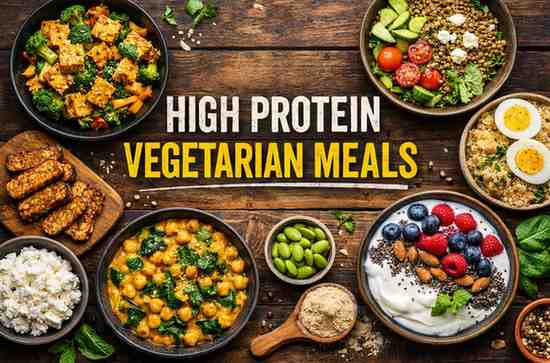
21 High Protein Vegetarian Meals I’ve Seen Actually Work
Not trendy. Not aesthetic. Just effective.
Breakfast
-
Greek yogurt bowl + chia + hemp + berries (30–40g)
-
Tofu scramble with spinach + whole grain toast (25–35g)
-
Protein oatmeal (oats + protein powder + egg whites stirred in) (30g)
-
Cottage cheese + almond butter + banana (28–35g)
-
Savory tempeh breakfast tacos (30g)
What surprised me?
People who switch from sweet-carb breakfasts to savory protein → breakfasts almost always report better hunger control.
Lunch
-
Lentil + feta power salad (30g)
-
Seitan stir-fry with vegetables (35g+)
-
Chickpea pasta + tofu crumble (30g)
-
High-protein wrap (hummus + grilled tofu + Greek yogurt sauce) (30g)
-
Edamame grain bowl (35g)
The key pattern I’ve seen:
If lunch doesn’t hit at least 30g protein, evening snacking skyrockets.
Dinner
-
Tempeh curry (35g)
-
Paneer tikka + roasted veggies (30g)
-
Black bean + seitan chili (40g)
-
Tofu teriyaki + broccoli (30g)
-
Lentil bolognese with high-protein pasta (35g)
High-Protein Snacks That Actually Help
-
Cottage cheese + everything seasoning
-
Protein smoothie with real base (not almond milk alone)
-
Roasted edamame
-
Greek yogurt dip + veggies
-
Hard-boiled eggs (if ovo-vegetarian)
-
Protein bar (as backup, not foundation)
How Long Does It Take to See Results?
This depends on the goal.
From what I’ve observed:
Energy stabilization: 3–7 days
Reduced constant hunger: 1–2 weeks
Strength improvements: 3–6 weeks
Body composition shifts: 6–12 weeks
But here’s the part people don’t expect:
Week two is messy.
Digestion adjusts.
Meal prep feels heavy.
Protein tracking feels annoying.
Most people I’ve worked with almost quit here.
The ones who don’t?
They simplify. They repeat meals. They stop chasing variety.
Repetition wins.
What Repeatedly Fails (Even If It Looks Good Online)
I didn’t expect this to be such a common issue, but here it is:
1. Over-relying on protein powder
Helpful.
Not foundational.
People who drink 3 shakes a day usually end up feeling unsatisfied.
Chewing matters.
2. Underestimating portion size
A half-cup of lentils isn’t “high protein.”
It’s a garnish.
3. Ignoring total daily intake
One high-protein dinner doesn’t fix a 12g breakfast.
Protein distribution across the day is huge.
4. Going low-calorie + high protein simultaneously
This burns people out fast.
Especially active adults.
Objections I Hear All the Time
“Isn’t it hard to get enough protein without meat?”
Hard? No.
Intentional? Yes.
The people who struggle are usually winging it.
“Won’t I gain weight eating more protein?”
From what I’ve seen, most people actually stabilize weight because they snack less.
But calories still matter. Protein isn’t magic.
“Is this worth it if I’m not lifting?”
Yes — if you want:
-
Better satiety
-
Muscle preservation with age
-
Stable energy
No — if you’re perfectly satisfied already and just chasing trends.
Who Will Probably Hate This Approach
Let’s be honest.
This isn’t for:
-
People who love light, snacky eating all day
-
People unwilling to prep or cook
-
People who hate tofu/tempeh/seitan
-
Ultra-low appetite individuals
High protein vegetarian meals require structure.
If structure stresses you out, this might feel restrictive.
Reality Check (The Part No One Talks About)
There will be bloating at first.
Legume adjustment is real.
Water intake matters more than people think.
Also?
Social eating gets awkward sometimes.
I’ve seen people feel self-conscious ordering double tofu.
That phase passes.
But it’s real.
Quick FAQ (For the Questions People Google at 11 PM)
How much protein do vegetarians really need?
Most active adults I’ve observed do well at 0.7–1 gram per pound of body weight. Less active? Slightly lower works.
Can you build muscle on high protein vegetarian meals?
Yes. I’ve seen it repeatedly. But total calories + progressive overload matter just as much.
What’s the biggest beginner mistake?
Thinking beans alone are enough.
Do you need supplements?
Not always. But protein powder can help fill gaps.
Practical Takeaways (If You Want This to Actually Work)
-
Build every meal around a protein anchor.
-
Aim for 30g per meal.
-
Repeat meals instead of chasing novelty.
-
Track for 2 weeks — not forever.
-
Expect a digestive adjustment phase.
-
Don’t cut calories aggressively at the same time.
And emotionally?
Expect doubt around week two.
That seems to be universal.
Patience here looks like boredom.
Repetition.
Unexciting meals that quietly work.
That’s the real rhythm.
Still — this isn’t magic.
Some people try high protein vegetarian meals and realize they just prefer a different balance. That’s okay.
But I’ve watched enough frustrated eaters finally feel steady — not starving at night, not crashing at 3 PM — once they stopped guessing and started structuring.
Sometimes the shift isn’t dramatic.
It’s subtle.
Fewer cravings.
More stable mood.
Better workouts.
And honestly?
For most of the people I’ve seen go through it, that quiet stability ends up being the real win.