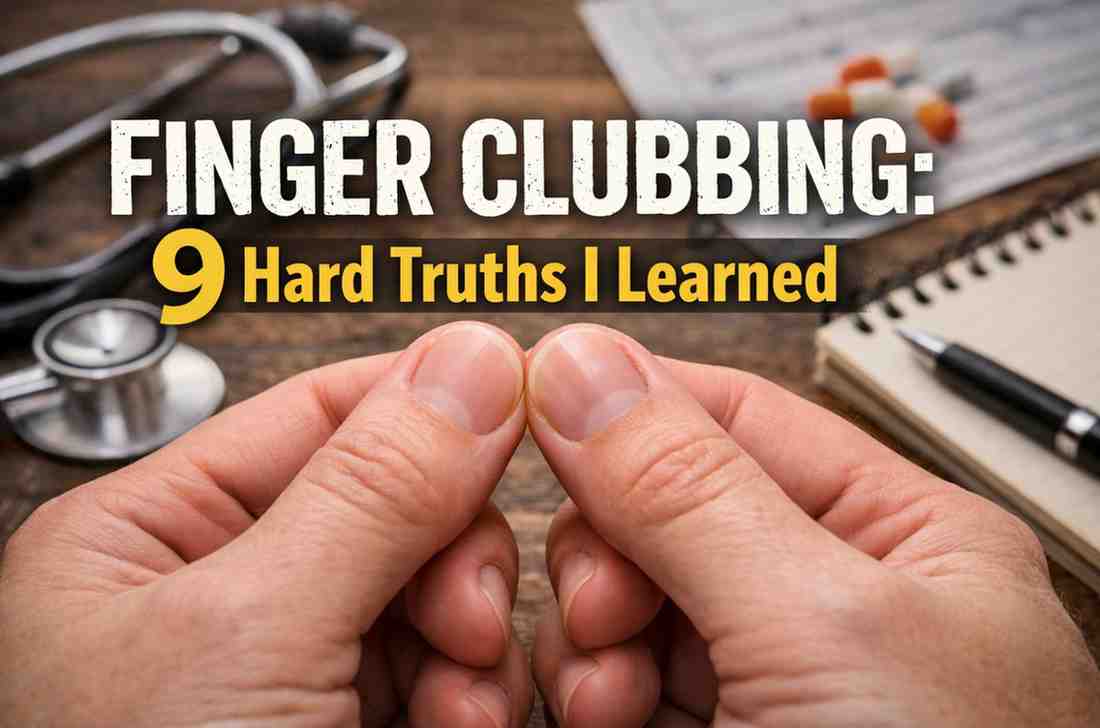
The moment I realized something was… off
Not gonna lie, I almost missed it.
I was trimming my nails late one night—bad lighting, half-asleep, scrolling my phone with my other hand. And something about my fingertips looked… swollen? Rounded? I remember pressing my thumb and index finger together and thinking, “Huh. That’s new.”
At first I laughed it off. I type a lot. Maybe it was just inflammation. Maybe I was dehydrated. Maybe I was overthinking things (my specialty).
But that tiny moment—that quiet, nagging “this doesn’t look like it used to”—was the first time finger clubbing crossed my radar. And once you see it, you can’t unsee it.
What followed was weeks of confusion, a lot of late-night reading, a few bad assumptions, and one very humbling doctor’s visit.
This isn’t a medical paper. This is what it actually felt like to notice it, misunderstand it, panic a little, and then slowly get clarity.
If you’re here because you’re staring at your own fingers right now… yeah. I get it.
I thought it was just “weird fingers” (spoiler: nope)
Here’s what I messed up early on: I assumed finger changes had to be dramatic to matter.
Like cartoon-level swelling. Or pain. Or bright red warning signs.
Mine were subtle. Almost polite.
What I noticed first:
-
Fingertips looked rounder from the side
-
Nails curved more than before
-
Pressing two nails together didn’t leave that little diamond-shaped gap anymore
Still, no pain. No color change. No obvious illness.
So I did what most of us do—I minimized it. “It’s probably genetics.”
“My hands have always been weird.”
“I’ll check again next month.”
That delay? Yeah. Don’t love that part of the story.
Because finger clubbing isn’t about how dramatic it looks. It’s about why it happens.
And I didn’t understand that yet.
The Google rabbit hole (and why it made things worse)
I’m going to be honest: Googling this at 1 a.m. was a terrible idea.
Search results jump fast—from “sometimes harmless” straight to “associated with serious disease.” No middle ground. No context. Just doom and confusion.
Some pages made it sound cosmetic. Others made it sound like a medical emergency. A few contradicted each other completely.
What didn’t help:
-
Stock photos that looked nothing like my hands
-
Medical jargon with zero explanation
-
Forums full of panic and no follow-up
I remember closing my laptop and thinking, “Okay, either this is nothing… or everything.”
That’s when I decided to stop guessing and start paying attention to my own body instead.
What finger clubbing actually felt like (for me)
This part surprised me.
There wasn’t pain. There wasn’t stiffness. There wasn’t even discomfort.
What there was:
-
A sense of fullness at the fingertips
-
Nails that felt thicker when trimmed
-
Skin that looked smoother, almost shiny
It was visual more than physical. Which is probably why it’s so easy to ignore.
From what I’ve seen → (and lived), finger clubbing doesn’t announce itself loudly. It whispers. Slowly. Over time.
And because it’s gradual, your brain adapts. You normalize it.
That’s dangerous.
The doctor visit I kept putting off
I delayed booking the appointment for weeks. Part fear, part denial, part “I’m busy.”
Classic.
When I finally went in, I didn’t even lead with my fingers. I talked about fatigue. Sleep. Stress. Everything around the issue.
The doctor noticed my hands before I finished my sentence.
That moment—when a professional confirms the thing you’ve been trying not to name—hits hard.
He didn’t panic. That mattered.
Instead, he explained that finger clubbing is a sign, not a diagnosis. A clue. A signal that something else might be going on.
Might.
That word helped me breathe again.
The biggest misunderstanding people have (I did too)
Here’s the truth I wish I’d known earlier:
Finger clubbing itself isn’t the problem.
It’s the messenger.
It can be linked to lung issues, heart conditions, digestive diseases, or sometimes things that are manageable—or already known.
Sometimes it’s even idiopathic. Meaning… no clear cause.
What matters is context:
-
Other symptoms
-
Medical history
-
Timeline
-
Progression
Looking at your fingers alone won’t give answers. Looking at your whole body might.
This isn’t magic. It’s detective work.
Tests, waiting, and the mental spiral
Waiting for results is brutal.
Every day I inspected my hands like they were going to change overnight. They didn’t. But my anxiety did.
Here’s what I learned during that stretch:
-
Stress makes everything feel worse
-
Obsessive checking helps nothing
-
Writing symptoms down helps a lot
I kept a simple notes app log:
-
What changed
-
What didn’t
-
How I felt physically
That log ended up being more useful than my memory when follow-ups happened.
Also—important—nothing catastrophic happened. That’s worth saying out loud.
“Don’t make my mistake” moments
If you take nothing else from this, take these:
-
Don’t self-diagnose based on images. Hands vary wildly.
-
Don’t assume no pain = no issue.
-
Don’t wait for it to get “bad enough.”
-
Don’t let Google replace a real exam.
And maybe the biggest one: Don’t shame yourself for noticing something and being scared by it.
That fear is information. Use it. Don’t drown in it.
9. What actually helped me move forward
A few things made a real difference:
-
Seeing a clinician who explained things clearly
-
Asking dumb questions without apologizing
-
Accepting uncertainty without spiraling
-
Understanding that monitoring is sometimes the plan
Not everything needs an immediate fix. Some things need observation and context.
That took me a while to accept.
Practical things I’d tell a friend right now
If you’re worried about finger clubbing, here’s my real-world advice—not medical instructions, just human stuff:
-
Take clear photos of your hands over time
-
Compare both hands, not just one
-
Note any breathing, fatigue, or circulation changes
-
Bring it up directly with your doctor
-
Ask what they are watching for
And if your doctor brushes it off without explanation? Get a second opinion. Calmly. Respectfully. But firmly.
You deserve clarity.
FAQ: what I’ve learned messing with this myself
Is finger clubbing always serious?
No. Sometimes it’s linked to conditions that are already known or manageable. The key is finding out why, not panicking.
How fast does it develop?
Slowly. That’s part of the problem. Changes happen over months → or years, not days.
Can it go away?
From what I’ve seen, it depends on the cause. In some cases, treating the underlying issue helps. In others, it stabilizes.
Should I see a doctor even if I feel fine?
Yes. Feeling fine doesn’t rule anything out. I felt fine too.
Is it painful?
For me, no. And that’s common. Lack of pain doesn’t mean lack of importance.
I didn’t expect my fingers to teach me anything about patience, fear, or paying attention to my body. But here we are.
Finger clubbing isn’t magic. It isn’t a verdict. It’s a signal.
And learning to listen—without freaking out or ignoring it—that’s the real work.
If you’re in that weird in-between space right now, staring at your hands and wondering what to do next… take a breath. Get information. Get help. You’re not wrong for noticing.
From where I’m standing? That awareness alone already puts you ahead.