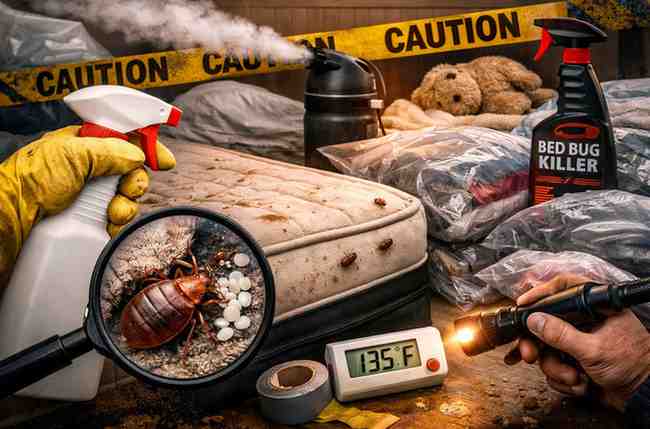
Honestly, most people I’ve watched → try exterminating bed bugs start out confident… and then hit a wall around week two.
At first, it feels manageable. A few bites, a quick spray, maybe a deep clean. Then suddenly—it’s still happening. New bites. Same anxiety before bed. That quiet dread of “did I miss something?”
I’ve seen people go from calm to borderline obsessive over this. Checking sheets at 2 AM. Washing everything twice. Throwing out perfectly good furniture out of frustration.
And the part that gets them?
They think they’re doing everything right.
But they’re not. Not because they’re careless—but because bed bugs don’t behave the way most people expect.
Why people even get stuck here in the first place
From what I’ve seen →, people don’t underestimate the idea of bed bugs.
They underestimate the process of getting rid of them.
Most assume:
- “If I clean thoroughly, they’ll go away”
- “If I don’t see them, they’re gone”
- “One treatment should be enough”
None of that really holds up in real situations.
Bed bugs are slow, persistent, and annoyingly strategic. They don’t just live in beds. They spread. They hide. They wait.
And people?
We’re wired to want quick closure.
That mismatch… that’s where most problems start.
The pattern I’ve seen over and over
There’s almost a predictable timeline:
Week 1:
- Panic cleaning
- Buying sprays online
- Vacuuming everything
- Some temporary relief
Week 2–3:
- Bites come back
- Confusion sets in
- People start doubting themselves
Week 4+:
- Either they escalate properly… or
- They burn out and start ignoring it (which makes it worse)
What surprised me?
Even very organized, disciplined people struggle with this.
Because it’s not about effort.
It’s about strategy + consistency over time.
What most people misunderstand about exterminating bed bugs
1. It’s not about killing what you see
Most people focus on visible bugs.
Problem is… you’re only seeing maybe 10–20% of the actual infestation.
The rest?
- Inside mattress seams
- Behind headboards
- Inside electrical outlets
- Under baseboards
That’s why surface-level solutions fail.
2. Eggs are the real enemy
This honestly surprised me after watching so many people try to fix this.
Even if you kill every visible bug…
Eggs hatch later.
So people think:
“It worked for a few days!”
Then it comes back.
Not new bugs.
Just delayed ones.
3. One-time treatments almost never work
Almost everyone I’ve seen struggle with this does this one thing wrong:
They treat it like a one-and-done job.
In reality, effective extermination is:
- Layered
- Repeated
- Timed
Think in cycles. Not single attempts.
What actually works (based on repeated real outcomes)
Not theory. Just patterns I’ve seen work across multiple cases.
Consistent heat + containment approach
People who succeed usually combine:
- High-heat washing (clothes, bedding)
- Drying on max heat (this matters more than washing)
- Sealing items in bags after cleaning
Why this works:
Heat kills bugs and eggs. Most sprays don’t.
Mattress encasements (but used correctly)
A lot of people buy these… and use them wrong →.
Correct use:
- Fully seal mattress AND box spring
- Leave it on for months (not days)
Why:
You’re trapping anything inside until it dies.
Decluttering (this is where people resist)
I get it. Nobody wants to throw things out.
But clutter creates:
- More hiding spots
- More surfaces to treat
- More chances to miss something
The people who improve fastest?
They simplify their space aggressively.
Professional help (when needed)
Here’s the honest part:
DIY works… but only if you’re extremely consistent.
Many people I’ve seen eventually call professionals not because they failed—but because they got exhausted.
And that’s valid.
What repeatedly fails (even though it sounds logical)
❌ Overusing sprays
People spray everything.
Beds. Floors. Walls.
Problem:
❌ Sleeping somewhere else
This one backfires badly.
People think:
“I’ll avoid bites by sleeping in another room.”
What actually happens:
- Bugs follow you
- Infestation spreads
Staying put (as uncomfortable as it is) actually helps contain the problem.
❌ Constantly changing strategies
This happens when frustration kicks in.
One day it’s sprays.
Next day essential oils.
Then some random hack from a forum.
No consistency = no results.
How long does exterminating bed bugs actually take?
Short answer?
Most real cases: 4–8 weeks minimum
Sometimes longer.
Here’s the honest breakdown:
- First 1–2 weeks → reduction in activity
- Weeks 3–5 → fewer bites, but not zero
- Weeks 6+ → stability if done right
And yeah… this is where people quit too early →.
What if it’s not working?
From what I’ve seen →, when people say:
“Nothing is working”
It’s usually one of these:
- Missing hidden areas
- Not repeating treatment cycles
- Not addressing eggs
- Inconsistent routine
Sometimes… it’s just incomplete coverage.
Not failure.
Common mistakes that slow everything down
Most people I’ve worked with mess this up at first:
- Skipping follow-up treatments
- Not drying items on high heat
- Leaving clutter untouched
- Assuming fewer bites = problem solved
That last one gets almost everyone.
Less activity doesn’t mean elimination.
Would this even be worth trying?
Depends on your situation.
This approach works best if:
- Infestation is early to moderate
- You can stay consistent daily
- You’re okay with temporary inconvenience
You might struggle if:
- You want quick results
- You’re inconsistent with routines
- You rely only on sprays
And that’s not judgment. Just pattern.
Quick FAQ (what people keep asking me)
Do bed bugs → go away on their own?
No. I’ve never seen that happen naturally.
Can I handle this without professionals?
Yes—but only with consistency and patience.
Are bites the only sign?
No. Some people don’t → react to bites at all.
Is throwing everything away necessary?
Rarely. But strategic decluttering helps a lot.
Objections I hear (and what usually happens)
“I don’t have time for all this.”
Then it drags longer. That’s usually the trade-off.
“I’ll just wait and see.”
Almost always gets worse. I’ve yet to see “waiting” work →.
“I cleaned everything already.”
Cleaning ≠ extermination. They’re different.
Reality check (this part people don’t like)
This isn’t just a physical problem.
It becomes:
- Mental fatigue
- Sleep disruption
- Constant low-level anxiety
I’ve seen people feel embarrassed talking about it.
Even though it’s way more common than they think.
Also…
Progress doesn’t feel → linear.
You’ll think it’s gone… then suddenly doubt everything again.
That emotional rollercoaster?
Completely normal.
Practical takeaways (what actually helps)
If I had to condense everything I’ve seen →:
Do this:
- Wash + dry on high heat consistently
- Use encasements properly
- Stick to one strategy long enough
- Repeat treatments in cycles
Avoid this:
- Jumping between methods
- Relying only on sprays
- Ignoring clutter
- Quitting after early improvement
Expect this:
- Slow progress
- Some setbacks
- Mental frustration
But also—
- Fewer bites
- Better sleep
- More control
Those matter more than people realize.
I didn’t expect this to be such a common issue until I started seeing how many people quietly deal with it.
And almost all of them go through the same phases—panic, overcorrection, frustration, then finally… a more grounded approach that actually works.
So no—this isn’t magic.
It’s slow, a bit annoying, and sometimes exhausting.
But I’ve watched enough people finally get out of that cycle once they stopped chasing quick fixes and started thinking in patterns instead of moments.
Sometimes that shift alone is what makes the difference.