I can’t tell you how many times I’ve watched someone switch to artificial sweeteners with genuine hope.
Usually it starts the same way.
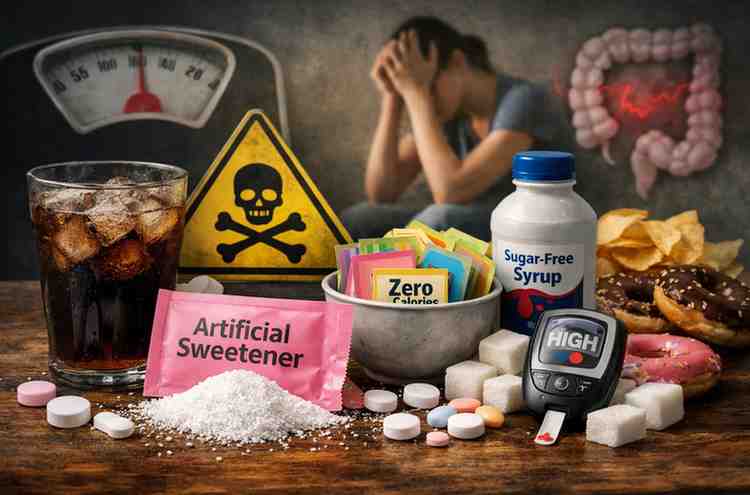
They’re cutting sugar. Trying to lose weight. Managing blood sugar. Cleaning up their diet. They swap soda for diet soda. Coffee for packets of something “zero calorie.” Yogurt becomes “light.” Protein bars suddenly taste suspiciously like candy.
And for the first two weeks? They feel disciplined. In control.
Then something strange happens.
Cravings spike. Hunger feels louder. Energy gets weird. Bloating shows up. Weight loss stalls. Or worse — they start eating more.
That’s usually when someone pulls me aside and asks, “Are there actual dangers of artificial food sweeteners… or am I overthinking this?”
You’re not overthinking it.
From what I’ve seen — over and over — the issue isn’t just whether artificial sweeteners are “toxic.” It’s what they quietly do to behavior, appetite, gut response, and expectations.
And almost nobody talks about that part clearly.
Let’s break this down the way it actually plays out in real life →.
Why People Turn to Artificial Sweeteners in the First Place
Nobody switches to aspartame or sucralose because they love chemicals.
They switch because:
-
They’re scared of sugar.
-
Their doctor mentioned prediabetes.
-
They’re stuck in a weight loss plateau.
-
They want control without deprivation.
-
They feel guilty eating regular desserts.
Honestly, most people I’ve worked with aren’t lazy or careless. They’re trying.
Artificial sweeteners feel like a loophole.
Sweet taste. No calories. No blood sugar spike (at least on paper).
It sounds perfect.
But here’s what I didn’t expect to be such a common issue after watching so many people try it:
The body doesn’t respond to “zero calories” the way the label suggests.
The Behavioral Trap Nobody Mentions
This is the pattern I see the most.
Someone replaces sugar with diet drinks and sugar-free snacks.
Then within weeks:
-
They snack more often.
-
They feel hungrier late at night.
-
They justify bigger portions elsewhere.
-
They crave intensely sweet foods more than before.
Almost everyone I’ve seen struggle with this does this one thing wrong:
They assume sweetness without calories is neutral.
It’s not.
From what I’ve observed, artificial sweeteners often:
-
Keep the brain locked into “reward mode”
-
Maintain a high sweetness threshold
-
Increase psychological reliance on hyper-palatable foods
So instead of resetting their palate, they reinforce it.
This honestly surprised me after watching so many people try it.
They weren’t gaining weight because of the sweeteners directly.
They were staying stuck because their appetite regulation never got a reset.
Do Artificial Sweeteners Increase Cravings?
Short answer: For many people, yes.
Not everyone.
But enough that it’s a pattern.
Here’s what I’ve repeatedly noticed:
-
People using sweeteners daily report stronger dessert cravings.
-
They feel less satisfied after meals.
-
They look for “something sweet” even when full.
Why?
Sweet taste signals incoming energy. The body prepares for calories. When they don’t arrive, some people experience a rebound appetite effect.
Not everyone. But enough that I stopped dismissing it.
And the worst part?
People blame themselves.
“I just have no discipline.”
No. Sometimes you’re stimulating reward circuits without satisfying them.
That mismatch matters.
The Gut Reaction Most People Don’t Connect
Another thing that keeps popping up in real-world conversations: digestion issues.
Bloating.
Gas.
Weird bowel patterns.
Sudden intolerance to certain foods.
Especially with:
-
Sugar alcohols (like sorbitol, erythritol)
-
High amounts of sucralose
-
Artificially sweetened protein products
Most people I’ve worked with mess this up at first by assuming “sugar-free” equals “gut-friendly.”
It doesn’t.
Some artificial sweeteners:
-
Alter gut bacteria balance
-
Increase fermentation in the colon
-
Cause osmotic shifts (pulling water into intestines)
That’s why “sugar-free candy” has that warning label.
From what I’ve seen, people with IBS or sensitive digestion get hit hardest.
And they don’t connect it for months.
The Blood Sugar Surprise
This part is nuanced.
On paper, artificial sweeteners don’t spike blood sugar like sugar does.
But here’s what I’ve observed in people monitoring glucose closely:
-
Some experience mild insulin responses.
-
Some see increased hunger after sweetened drinks.
-
Some compensate by eating more carbs later.
The body isn’t just a calculator.
It responds to taste, expectation, and context.
Does this mean artificial sweeteners cause diabetes?
No. That’s an oversimplification.
But relying heavily on them doesn’t always lead to the metabolic improvement people expect.
Especially if overall diet quality stays the same.
The Psychological Backfire Effect
This one might be the most underrated danger of artificial food sweeteners.
Moral licensing.
“I had diet soda, so I deserve fries.”
“I used zero-calorie syrup, so this is basically healthy.”
“I avoided sugar all day — I earned dessert.”
I didn’t expect this to be such a consistent pattern until I watched it unfold across dozens of people.
Artificial sweeteners can create a false sense of dietary control.
Which then leads to overeating elsewhere.
Not because people are weak.
Because humans rationalize.
And “zero calorie” feels like a win.
Even when the overall behavior isn’t aligned.
How Long Does It Take to Notice Problems?
This depends on the person.
From what I’ve seen:
-
Digestive issues can appear within days.
-
Cravings changes show up in 1–3 weeks.
-
Weight plateaus creep in after 4–8 weeks.
-
Psychological reliance builds slowly over months.
The tricky part?
The connection isn’t obvious.
People don’t think, “It’s the sweeteners.”
They think:
“I’m failing.”
“My metabolism is broken.”
“This diet isn’t working.”
Sometimes removing artificial sweeteners is the experiment that reveals the pattern.
Not always.
But often enough that I suggest testing it.
Who Should Be Especially Careful?
Based on real-world patterns:
-
People with IBS or gut sensitivity
-
Those prone to binge eating
-
Anyone trying to reset sugar cravings
-
Individuals consuming multiple diet products daily
-
People relying on sweeteners for emotional comfort
Who might tolerate them fine?
-
Occasional users
-
Those using them temporarily during transition
-
People not experiencing cravings or digestive shifts
It’s not black and white.
But heavy daily use? That’s where I consistently see issues.
Common Mistakes I See Over and Over
Let me just list these plainly.
Almost everyone I’ve seen struggle with artificial sweeteners does at least one of these:
-
Replacing water with diet soda
-
Using sweeteners in every meal
-
Combining them with ultra-processed foods
-
Ignoring mild digestive symptoms
-
Expecting them to fix poor overall diet habits
The sweeteners become the centerpiece.
Instead of a minor tool.
That shift matters.
FAQ: Straight Answers to What People Ask Me
Are artificial sweeteners worse than sugar?
Not necessarily worse in every context.
But they’re not automatically better either.
Heavy sugar intake causes clear harm. Heavy sweetener reliance creates different issues — often behavioral and digestive.
The better question is: How dependent are you on sweet taste overall?
Do artificial sweeteners cause cancer?
Current evidence doesn’t conclusively show typical consumption causes cancer in humans.
But that’s rarely the real-world issue I see.
The daily behavioral and metabolic patterns matter more for most people.
Can artificial sweeteners make you gain weight?
Indirectly? Yes.
Directly through calories? No.
From what I’ve observed, weight gain happens when sweeteners:
-
Increase cravings
-
Maintain high reward sensitivity
-
Enable overeating
It’s the ripple effect.
Should I quit them completely?
Depends.
If you’re using them occasionally, not experiencing cravings, and your overall diet is solid — probably not urgent.
If you’re stuck, bloated, or craving constantly?
Testing a reduction for 2–4 weeks can be eye-opening.
Objections I Hear (And What Usually Happens)
“But they help me avoid sugar.”
Sometimes. That’s valid.
But if they keep you psychologically attached to intense sweetness, you’re not fully breaking the cycle.
“I can’t give up sweet taste.”
Most people think that.
Then after 3–4 weeks reducing artificial sweeteners, their taste buds adjust.
Fruit tastes sweeter. Coffee tastes normal.
It’s uncomfortable at first. Then surprisingly freeing.
“Zero calories means zero harm.”
That logic works on paper.
Humans aren’t paper.
Reality Check: What This Is NOT
This isn’t fear-mongering.
It’s not saying one packet will ruin you.
It’s not claiming artificial sweeteners are poison.
It’s acknowledging patterns I’ve seen repeatedly:
-
Overuse creates subtle problems.
-
Dependency blocks appetite reset.
-
People expect miracles and get confusion.
And honestly, some people tolerate them just fine.
But heavy, daily, emotional reliance?
That’s where cracks show.
What Actually Works Better (From What I’ve Seen)
When people succeed long term, they usually:
-
Gradually reduce sweetness overall
-
Drink more plain water
-
Use whole fruit instead of sweetened snacks
-
Focus on protein and fiber at meals
-
Accept a temporary “bland” phase
That bland phase?
It’s uncomfortable.
Then around week three, something shifts.
Cravings quiet down.
Energy stabilizes.
They stop obsessing about sweets.
That shift is subtle. But powerful.
Practical Takeaways
If you’re worried about the dangers of artificial food sweeteners, here’s what I’d actually suggest:
-
Track how often you use them for one week.
-
Notice cravings after consuming them.
-
Pay attention to digestion.
-
Try a 2–4 week reduction experiment.
-
Don’t replace them with more processed snacks.
Emotionally, expect:
-
Irritability at first
-
Stronger cravings temporarily
-
Doubt (“Is this even doing anything?”)
-
Then gradual recalibration
Patience looks like staying consistent through the awkward phase.
Not chasing perfection.
Not panicking after one craving spike.
Just observing.
Adjusting.
Testing.
Still — artificial sweeteners aren’t evil. They’re tools.
But tools used daily, emotionally, and automatically can quietly shape behavior in ways people don’t expect.
From what I’ve seen, the real danger isn’t cancer headlines.
It’s staying stuck.
Feeling confused.
Blaming yourself.
If you’re using them occasionally and thriving? Fine.
If you feel stalled, bloated, craving constantly?
Maybe it’s not a willpower problem.
Maybe it’s worth running the experiment.
No drama. No extremes.
Just honest observation.
I’ve watched enough people feel relief once they stepped back from constant sweetness.
Not because it was magic.
But because their body finally got a chance to recalibrate.
Sometimes that quiet shift is the real win.