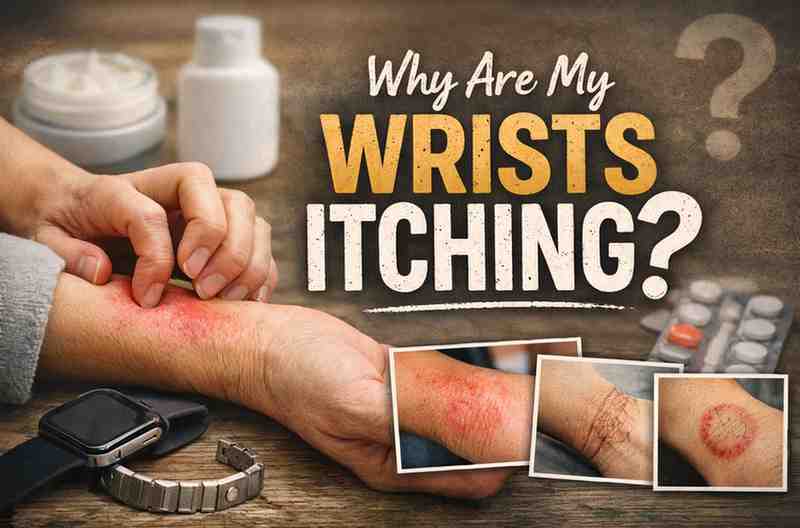
I can’t tell you how many times someone has texted me late at night with some version of: “Why are my wrists itching like crazy and there’s barely even a rash?”
It’s usually said with a mix of frustration and low-key panic.
I’ve watched friends scratch through meetings. Seen coworkers rub their wrists → against their jeans like they’re trying to sand the itch off. I’ve sat with people who tried three different creams in one week because Google made it sound simple.
And honestly? It rarely is.
From what I’ve seen across dozens of real cases — family, clients, gym buddies, neighbors — itchy wrists tend to fall into repeatable patterns. Not random. Not mysterious. But easy to misunderstand.
Let’s walk through what I’ve consistently observed.
First: The Most Common Reasons Your Wrists Are Itching
When people → ask “why are my wrists itching,” they’re usually expecting one obvious answer.
There isn’t one.
But there are patterns.
Here are the causes I’ve seen show up again and again in the U.S., especially in dry climates, heated indoor environments, and high-stress routines.
1. Contact Dermatitis (The Sneaky Trigger Most People Miss)
This is the one I didn’t expect to be so common.
Contact dermatitis basically means your skin is reacting to something it touches.
From what I’ve seen, the biggest wrist triggers:
-
Watch straps (especially silicone or cheap metal)
-
Fitness trackers worn 24/7
-
New bracelets or bangles
-
Fragrance transfer from sleeves
-
Laundry detergent residue
-
Hand sanitizer dripping down from palms
Almost everyone I’ve seen struggle with this does one thing wrong:
They treat the itch.
They don’t remove the trigger.
And the itching just keeps coming back.
What surprised me? Even people who’ve worn the same watch for years can suddenly react. Skin sensitivity changes. Sweat builds up. Micro-irritation adds up.
If your itching is:
-
Exactly where a watch sits
-
Worse after workouts
-
Paired with redness or tiny bumps
This is very likely your culprit.
And yes — just taking the watch off for 5–7 days has solved this more times than I can count.
2. Dry Skin (It Sounds Basic. It’s Not.)
Because it feels too simple.
But I’ve seen dry air absolutely wreck wrists.
Why wrists specifically?
-
The skin is thinner.
-
It bends constantly.
-
It gets washed more than we realize.
-
It rarely gets moisturized intentionally.
In colder U.S. states especially, indoor heating drops humidity fast. I’ve watched this spike every winter.
The mistake most people make:
They use lotion once.
It feels better.
They stop.
Then two days later — itching again.
What consistently works?
-
Thick cream, not thin lotion
-
Applied right after washing hands
-
At least twice daily for 2 weeks
The timeline matters. Dry-skin itching doesn’t disappear overnight. Most people give up too early.
3. Eczema (Especially If It Keeps Coming Back)
I’ve watched this play out a lot.
Common pattern:
-
Stress spike
-
Weather shift
-
New soap
-
Then itching that won’t quit
Sometimes it looks red and inflamed.
Sometimes it just looks slightly dry but feels intensely itchy.
What people get wrong → at first:
They scratch aggressively.
Which tears the skin.
Which makes it worse.
Which leads to more scratching.
It becomes a loop.
This honestly surprised me after watching so many people try to “power through” it. Gentle care works better than force.
4. Stress (Yes, Your Nervous System Can Make Your Wrists Itch)
This one is weird. But I’ve seen it too many times to ignore.
No rash.
No dryness.
Just itching.
And it flares during:
-
Work pressure
-
Relationship stress
-
Financial anxiety
-
Sleep deprivation
The body releases inflammatory chemicals under stress. Skin nerve endings get more reactive.
I didn’t expect this to be such a common issue until I started noticing the timing patterns.
If your itching:
-
Spikes at night
-
Appears during stressful weeks
-
Fades during vacations
Stress may be amplifying the signal.
It doesn’t mean “it’s in your head.”
It means your nervous system is involved.
5. Heat Rash or Sweat Irritation
Especially in southern U.S. states.
I’ve seen this in gym settings constantly.
Sweat trapped under a watch band.
Tight sleeves.
Humid weather.
Tiny red bumps. Prickly feeling.
What fixes it?
-
Airflow.
-
Washing sweat off quickly.
-
Not wearing tight wrist accessories during workouts.
Simple. But often ignored.
6. Fungal Infections (Less Common, But Worth Mentioning)
Clues:
-
Circular rash
-
Defined border
-
Spreading slowly
-
Doesn’t improve with moisturizer
Most people I’ve worked with mess this up at first by assuming it’s dry skin and piling on lotion.
If it spreads or forms a ring shape, antifungal treatment is usually needed.
How Long Does Wrist Itching Usually Last?
From what I’ve seen:
-
Contact irritation: improves within 3–7 days after removing trigger
-
Dry skin: 1–2 weeks of consistent care
-
Eczema flare: 1–3 weeks depending on severity
-
Stress-related itching: unpredictable, tied to stress cycle
If it’s been more than 3–4 weeks with no improvement, that’s when I usually tell people to see → a clinician.
Especially if:
-
Skin cracks or bleeds
-
Rash spreads
-
There’s swelling or pus
-
It interferes with sleep
Common Mistakes I Keep Seeing
Almost everyone I’ve watched struggle with this does at least one of these:
-
Switching products every 2–3 days
-
Over-scrubbing the area
-
Using fragranced creams
-
Ignoring watches/bracelets as triggers
-
Not moisturizing consistently
-
Assuming it’s serious immediately
The constant product-switching is the worst.
Skin needs consistency.
Quick FAQ (People Also Ask Style)
Why are my wrists itching at night?
Skin sensitivity increases at night. Dry air, heat, and stress hormones also shift. I’ve seen nighttime itching spike in dry bedrooms.
Why do my wrists itch but there’s no rash →?
Dry skin or stress-related nerve irritation are common causes. Not every itch comes with visible inflammation.
Should I be worried about serious illness?
In the vast majority of cases I’ve seen — no. But if itching is widespread, severe, or paired with other symptoms, get evaluated.
Objections I Hear All the Time
“I’ve tried lotion. It didn’t work.”
Most people try it for two days →. That’s not long enough.
“It can’t be my watch — I’ve → worn it for years.”
I’ve seen delayed reactions more times than I expected.
“There’s barely any redness, so it can’t be eczema.”
Mild eczema often looks subtle.
Reality Check: When This Isn’t a Quick Fix
Who this is NOT for:
-
People with intense swelling or blistering
-
Rapidly spreading rash
-
Signs of infection
-
Severe, full-body itching
That’s doctor territory.
Also — if you expect one cream to solve everything overnight, this will frustrate you.
Skin repair takes patience.
What Actually Works (From Patterns I’ve Seen)
If I had to guide someone step-by-step:
-
Remove wrist accessories for one week.
-
Switch to fragrance-free soap.
-
Use thick cream twice daily.
-
Avoid scratching (trim nails).
-
Reduce hot water exposure.
-
Track stress levels.
Simple.
Not glamorous.
But effective.
Consistency beats complexity here.
What to Expect Emotionally
This part matters.
People get embarrassed.
Annoyed.
Worried it’s something serious.
Most cases I’ve observed resolve with basic care and patience.
But the first week? It feels like nothing is working.
That’s where most people quit.
Still — if you’re sitting there asking “why are my wrists itching,” you’re not crazy, and you’re not alone.
I’ve watched enough people go from quietly panicking to realizing it was something manageable.
No, it’s not magic.
And yes, sometimes you’ll need medical input.
But more often than not, it’s a small trigger. A simple oversight. A pattern hiding in plain sight.
Once you catch that pattern, the relief usually follows →.