I remember a friend texting me late one night after a doctor's appointment.
Her cholesterol numbers had crept up. Nothing catastrophic, but enough to scare her. The doctor said something about “switching to monounsaturated fats.”
That phrase alone triggered about two hours of confused Googling.
Olive oil? Avocados? Are these actually fats? Aren’t fats supposed to be bad?
Honestly… this is where most people I’ve watched start spinning in circles.
They hear “healthy fats” but can’t quite understand what that actually means in real life. Some people start pouring olive oil on everything. Others panic and cut fats entirely.
Neither approach works.
So before we go deeper, let’s address the real question that keeps coming up.
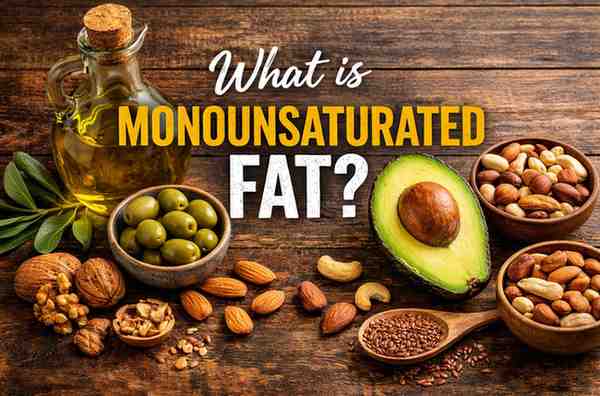
What is monounsaturated fat?
In simple terms:
Monounsaturated fat is a type of dietary fat found in foods like olive oil, avocados, nuts, and seeds that tends to support heart health when used in place of less healthy fats.
That’s the clinical answer.
But from what I’ve seen watching dozens of people try to improve their diets…
The real story is a lot more practical. And honestly a lot more interesting.
The Simple Way to Understand Monounsaturated Fat
Most people assume fats fall into two categories:
-
Good
-
Bad
Reality is messier.
There are several types of fats, but the three that keep showing up in nutrition discussions are:
| Type of Fat | Common Sources | General Impact |
|---|---|---|
| Saturated fat | Butter, fatty meats, dairy | Neutral to harmful in excess |
| Monounsaturated fat | Olive oil, avocados, almonds | Generally supportive for heart health |
| Polyunsaturated fat | Fish, walnuts, flax | Often beneficial |
Monounsaturated fat sits in an interesting middle ground.
It’s still fat.
Still calorie-dense.
But it behaves differently in the body compared to heavily processed fats or excessive saturated fats.
And this surprised me after watching so many people adjust their diets:
When people swap unhealthy fats for monounsaturated fats, their cholesterol markers often move in the right direction.
Not overnight.
Not magically.
But consistently.
Where Monounsaturated Fat Actually Shows Up in Real Food
This is where people usually overcomplicate things.
Most people I’ve worked with assume they need special products or expensive “health foods.”
They don’t.
Monounsaturated fats already live inside normal foods.
Some of the most common ones:
-
Olive oil
-
Avocados
-
Almonds
-
Peanuts
-
Cashews
-
Macadamia nuts
-
Sesame oil
-
Peanut oil
These foods are especially common in Mediterranean-style diets.
And that’s not a coincidence.
That pattern of eating keeps showing up in long-term health studies.
Why People Start Looking Into Monounsaturated Fat
From what I’ve seen, people usually land here for one of four reasons.
1. A cholesterol scare
A doctor mentions LDL numbers.
Suddenly diet matters.
This is probably the most common entry point.
2. Weight loss plateaus
Some people realize cutting all fats makes them constantly hungry.
Adding healthy fats stabilizes meals.
3. Energy crashes
People running low-fat diets often feel this.
Meals digest too fast.
Blood sugar spikes.
Then crashes.
4. General “eat healthier” attempts
Honestly… sometimes people just want to stop eating junk.
And this is one of the easiest upgrades.
What Most People Get Wrong at First
This part comes up over and over again.
Almost everyone I’ve seen struggle with this does one of these things.
Mistake #1: Adding healthy fats without removing anything
This one is huge.
Someone hears:
“Olive oil is healthy.”
So they add it everywhere.
Salads. Eggs. Toast. Cooking. Drizzling.
But calories still count.
If you're adding fats on top of an already heavy diet…
Weight gain happens quickly.
Mistake #2: Assuming “healthy” means unlimited
Avocados are amazing.
But one large avocado can contain 250+ calories.
Same with nuts.
Small portions matter.
Mistake #3: Buying processed versions
This surprised me after seeing grocery receipts from people trying to eat healthier.
They buy things like:
-
avocado-flavored snacks
-
olive oil chips
-
nut-based desserts
Those usually contain very little of the actual healthy fat.
And a lot of sugar or refined starch.
Why Monounsaturated Fat Works Better Than Most Diet Advice
A lot of diet rules feel restrictive.
Cut this.
Avoid that.
Remove everything fun.
Monounsaturated fat works differently.
Instead of removing foods, it often replaces worse choices.
For example:
| Replace | With |
|---|---|
| Butter-heavy cooking | Olive oil |
| Processed snack foods | Nuts |
| Mayonnaise-heavy spreads | Avocado |
This small shift changes the fat profile of the diet.
And over time, that matters.
The Health Effects People Usually Notice
Everyone's body reacts differently.
Still, patterns show up.
From what I’ve seen across many people adjusting their diets, these are the most common benefits.
More stable energy
Meals digest slower.
Blood sugar swings calm down.
Better cholesterol markers
Especially when replacing trans fats or processed oils.
Improved satiety
People feel full longer.
Which quietly reduces snacking.
More enjoyable meals
This part gets overlooked.
Healthy food actually tastes better with good fats.
How Long Does It Take to See Changes?
People usually expect instant results.
Nutrition rarely works that way.
From what I’ve observed:
-
Energy changes: 1–2 weeks
-
Weight trends: 4–8 weeks
-
Cholesterol improvements: 6–12 weeks
Still… consistency matters more than speed.
Many people quit right before results begin.
The Foods That Deliver the Most Monounsaturated Fat
Here are some of the most reliable sources.
Olive Oil
Extra virgin olive oil is one of the richest sources.
Used in Mediterranean cooking for centuries.
Avocados
Naturally high in monounsaturated fats.
Also contain fiber and potassium.
Almonds
One of the most balanced nut options.
Good for snacks.
Peanuts
Often underrated.
Affordable and widely available.
Macadamia Nuts
Extremely high in monounsaturated fat.
But calorie-dense.
So portions matter.
Quick FAQ (People Ask These Constantly)
Is monounsaturated fat actually healthy?
Generally yes.
Especially when replacing processed fats or trans fats.
Does monounsaturated fat cause weight gain?
Only if total calories increase.
The fat itself isn't the problem.
Portion sizes matter.
Is olive oil the best source?
It’s one of the easiest and most studied sources.
But avocados and nuts are excellent too.
How much should someone eat?
There’s no universal number.
But many healthy diets include 20–35% of calories from fat, with a large portion coming from monounsaturated sources.
Who Might Not Benefit As Much
This part rarely gets mentioned.
But honesty matters.
Monounsaturated fat isn't some miracle switch.
Some people may not notice dramatic changes.
For example:
-
People already eating balanced diets
-
People whose main issue is sugar intake
-
People expecting rapid weight loss
Fat quality matters.
But it’s still one piece of a larger picture.
Objections I Hear All the Time
“Fat makes you fat.”
Technically… excess calories cause weight gain.
Healthy fats can actually reduce overeating.
“Low-fat diets are safer.”
This belief came from older dietary guidelines.
Modern nutrition research paints a more nuanced picture.
“Oil is processed food.”
Not necessarily.
Extra virgin olive oil is simply pressed olives.
The Reality Check Nobody Talks About
Healthy eating advice often sounds simple.
But people’s lives aren’t simple.
The biggest obstacles I’ve seen are:
-
stress eating
-
convenience foods
-
inconsistent habits
-
portion blindness
Switching to monounsaturated fats helps.
But it doesn't fix everything.
And expecting it to is where disappointment creeps in.
Practical Takeaways (What Actually Works)
From watching many people slowly improve their diets, these patterns show up repeatedly.
1. Replace fats — don’t add them
Swap butter or processed oils with olive oil.
Don’t double the fat intake.
2. Use nuts strategically
Great for snacks.
But easy to overeat.
Small handfuls work best.
3. Add avocados to meals
They increase satiety.
Especially in lunch meals.
4. Cook simply
Most successful people do basic cooking:
-
olive oil
-
vegetables
-
simple seasoning
Nothing fancy.
5. Give it time
People expect overnight changes.
Nutrition works on a slower timeline.
Weeks… sometimes months.
I’ve watched enough people try to overhaul their diets overnight to know how that usually ends.
Two weeks of perfection.
Then burnout.
Then guilt.
Then back to square one.
The people who quietly succeed usually do something different.
They change one small habit.
Switch oils.
Add nuts to snacks.
Use avocado instead of spreads.
Nothing dramatic.
But over months, those tiny adjustments stack up.
So no — monounsaturated fat isn’t some miracle nutrient.
But I’ve seen enough people finally stop feeling stuck once they approached their food this way.
And sometimes that shift alone… is the real win.