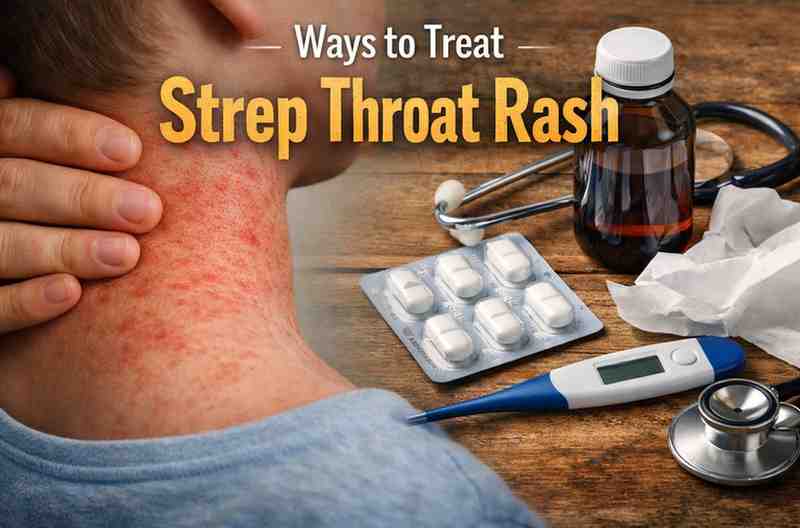
Honestly, most people I’ve watched deal with strep throat rash → don’t even realize what they’re looking at at first.
They think it’s heat rash. Or an allergy. Or something they ate.
I’ve had moms send me photos in a panic. I’ve had grown adults ignore it for three days because “it’s probably nothing.” And almost every single time, the same thing happens — they focus only on the sore throat and miss that the rash is part of the same infection.
When people start searching for Ways to Treat Strep Throat Rash, they’re usually already frustrated. The throat hurts. The body feels off. And now there’s this red, sandpaper-like rash that makes everything feel more serious.
From what I’ve seen, the biggest mistake isn’t that people don’t care.
It’s that they underestimate how connected everything is.
Let’s walk through what actually works — not in theory, but in real life.
First, What’s Really Happening With a Strep Throat Rash?
Most cases I’ve seen fall into one category: scarlet fever, which is essentially strep throat with a rash.
The rash:
-
Feels rough, almost like fine sandpaper
-
Starts on the chest or neck
-
Spreads outward
-
Often comes with a strawberry-looking tongue
-
Can be itchy, but not always
And here’s what surprises people:
The rash itself isn’t the core problem.
The underlying strep infection is.
Treat the infection properly, and the rash usually fades with it.
Miss the infection? The rash lingers… or worse, complications start creeping in.
That’s the part people don’t always think about.
1. Start Antibiotics Promptly (When Confirmed)
I’ve seen this pattern too many times:
Someone tries to “wait it out.”
Three days later, they feel worse.
Almost everyone I’ve seen struggle with this delays antibiotics because they’re unsure if it’s “serious enough.”
Here’s the reality:
-
If a rapid strep test confirms it
-
If symptoms strongly match
-
If a doctor prescribes antibiotics
Take them. As directed. Finish the full course.
Usually:
-
Fever improves within 24–48 hours
-
Throat pain eases in 2–3 days
-
Rash begins fading within a few days
When people stop antibiotics early because they “feel better,” I’ve seen rebound infections happen. Not often. But enough to matter.
This isn’t the time to experiment.
2. Hydration — More Important Than People Think
This honestly surprised me after watching so many people try to power through.
Dehydration makes everything worse.
Dry skin = itchier rash →
Dry throat = sharper pain
Less circulation = slower healing
What consistently works:
-
Room-temperature water
-
Electrolyte drinks (low sugar)
-
Warm broths
Most adults underestimate how little they’re drinking.
Kids especially.
If someone with strep says they’re not thirsty — that doesn’t mean they’re hydrated.
3. Manage the Fever Properly
When the fever comes down, the rash often looks less angry.
From what I’ve seen:
-
Acetaminophen or ibuprofen (as directed by a doctor)
-
Regular timing instead of random doses
-
Monitoring temperature every few hours
What people get wrong?
They wait until the fever spikes high again.
Keeping it controlled helps the whole body calm down.
4. Don’t Over-Treat the Rash
This one’s big.
Most people I’ve worked with mess this up at first.
They start applying:
-
Steroid creams
-
Heavy ointments
-
Essential oils
-
Random anti-itch formulas
The rash from strep isn’t primarily a skin → condition. It’s systemic.
Overloading the skin can actually irritate it more.
What tends to work better:
-
Gentle, fragrance-free moisturizer
-
Light clothing
-
Lukewarm showers
-
Pat dry — no aggressive towel rubbing
Sometimes doing less is smarter.
5. Cool Compresses for Itch Relief
If itching is intense:
-
Clean washcloth
-
Cool (not ice-cold) water
-
5–10 minutes at a time
Ice directly on the skin? I’ve seen that cause blotchiness and more irritation.
Subtle relief beats shock therapy.
6. Watch for Peeling (And Don’t Panic)
About a week later, I’ve seen peeling on:
-
Fingers
-
Toes
-
Groin area
Parents especially get scared here.
Peeling doesn’t mean it’s getting worse.
It’s often part of the healing process.
What helps:
-
Light moisturizer
-
Patience
-
Avoid picking
Picking delays recovery.
Almost everyone who tries to “help the peeling along” regrets it.
7. Rest — Real Rest
People underestimate how drained strep makes the body.
Not “work from bed” rest.
Actual rest.
I’ve seen adults push through, then crash harder on day four.
Healing time, for most:
-
3–5 days before real improvement
-
7–10 days before feeling normal
That’s average. Not guaranteed.
8. Replace the Toothbrush
I didn’t expect this to be such a common issue.
People keep using the same toothbrush after starting antibiotics.
Re-exposure risk is small but real.
Switch it out 24–48 hours after starting treatment.
Small detail. Big peace of mind.
9. Avoid Sharing Anything
From what I’ve seen in households:
One child gets it.
Then a sibling.
Then sometimes a parent.
No shared:
-
Towels
-
Cups
-
Utensils
-
Pillowcases
Wash bedding in warm water.
It’s not paranoia. It’s containment.
10. Know When It’s Not Improving
Here’s where I get firm.
If after 48 hours of antibiotics:
-
Fever persists
-
Rash worsens
-
Breathing issues appear
-
Joint pain develops
That’s not “normal healing.”
Call a doctor.
Complications are rare, but I’ve seen the consequences when people ignore worsening symptoms.
11. Emotional Side No One Talks About
Especially with kids.
The irritability. The clinginess. The tears over nothing.
When the body is inflamed, mood shifts.
Adults too — brain fog, low patience, fatigue.
That part? Normal.
Temporary.
Still frustrating.
Common Mistakes I Keep Seeing
-
Waiting too long to get tested
-
Stopping antibiotics early
-
Overloading the rash with products
-
Assuming rash = allergy
-
Not resting enough
Almost everyone I’ve seen struggle with this does one of those.
Usually more than one.
FAQ: Quick Answers People Usually Want
How long does strep throat rash last?
Most rashes fade within 3–7 days after antibiotics begin. Peeling can last another week.
Is strep throat rash contagious?
The infection is contagious until about 24 hours after starting antibiotics.
Can you treat it without antibiotics?
From what I’ve observed — no. The rash may fade, but the infection risks complications.
Is it dangerous?
Untreated strep can lead to serious issues. Treated properly, recovery is usually smooth.
Objections I Hear (And What I’ve Seen)
“I don’t want to take antibiotics unless absolutely necessary.”
I get that. But confirmed strep isn’t a mild viral sore throat.
“The rash doesn’t look that bad.”
The severity of the rash doesn’t equal the severity of infection.
“It’s probably just heat rash.”
If there’s sore throat + fever + rash? Don’t assume.
Reality Check Section
This approach is not for:
-
People refusing medical testing
-
Those expecting instant overnight healing
-
Anyone ignoring worsening symptoms
Healing isn’t always dramatic.
Sometimes it’s subtle:
Day 2 — less fever.
Day 3 — rash less bright.
Day 5 — energy returning.
It’s gradual.
That’s normal.
Practical Takeaways
If you’re dealing with this right now:
-
Get tested.
-
Take prescribed antibiotics fully.
-
Hydrate more than you think you need.
-
Keep skincare minimal.
-
Rest like it matters — because it does.
-
Watch symptoms closely the first 48 hours.
Emotionally?
Expect crankiness. Fatigue. Frustration.
Healing is not linear.
Some mornings feel worse before better.
That doesn’t mean it’s failing.
I’ve watched enough families go through this to know one thing — panic usually makes it feel scarier than it is.
Still, ignoring it makes it worse than it needs to be.
So no, this isn’t magic. It’s not glamorous. It’s not complicated either.
It’s about treating the infection, supporting the body, and not overreacting to the skin while also not underreacting to the warning signs.
Most people recover fully. Most rashes fade. Most fears calm down once treatment starts.
And sometimes, the biggest relief isn’t the rash → disappearing.
It’s finally knowing you handled it the right way.