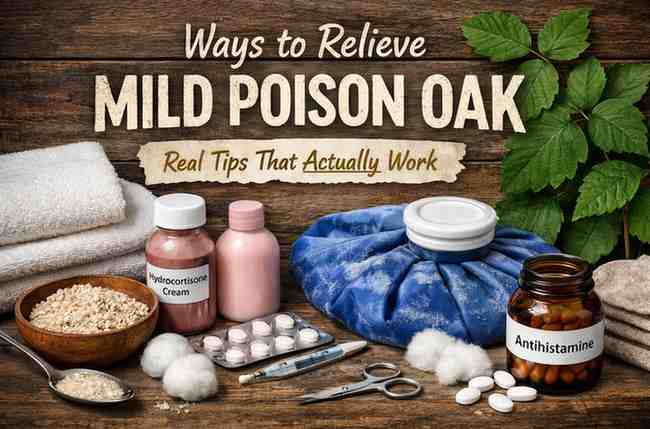
I’ve watched grown adults nearly panic over mild poison oak.
Not because it’s life-threatening.
Because it’s maddening.
The itching ramps up at night. The rash looks worse by the hour. Someone Googles “Ways to Relieve Mild Poison Oak” at 1:30 a.m., tries three random home remedies, then texts me the next day frustrated because it’s spreading.
From what I’ve seen — the rash isn’t usually the worst part.
It’s the uncertainty.
“Did I make it worse?”
“Why is it still itchy?”
“Is this normal?”
Most people I’ve worked with mess this up at first. Not because they’re careless. But because poison oak feels simple… until it isn’t.
So let’s walk through what actually helps. What backfires. What takes patience. And what I’ve consistently seen bring real relief →.
First, a Grounded Reality Check
Mild poison oak in the U.S. is caused by contact with urushiol oil — that invisible resin from the plant. It binds to your skin fast. Within minutes.
Here’s the pattern I see → over and over:
-
Someone brushes against leaves while hiking.
-
They don’t realize it.
-
Rash appears 12–48 hours later.
-
They assume the rash is “spreading.”
Most of the time, it’s not spreading from fluid.
It’s delayed reaction from oil that already touched other areas.
That misunderstanding alone causes so much unnecessary panic.
1. Rinse Early — and Rinse Like You Mean It
This is boring advice. But it matters.
If it’s been less than a few hours since exposure:
-
Use cool running water.
-
Mild soap.
-
Wash thoroughly for 10–15 minutes.
-
Under nails.
-
Around wrists, ankles, neck.
I didn’t expect this to be such a common issue, but almost everyone I’ve seen struggle with worsening rashes didn’t wash thoroughly enough early on.
Urushiol is oily. Quick rinse = not enough.
Still — once rash forms, washing won’t reverse it. It just prevents leftover oil from spreading to new spots.
2. Cold Compresses Calm the “Fire Phase”
There’s a phase where the skin feels hot. Inflamed. Angry.
Cold compresses help more than people think.
What I’ve seen work consistently:
-
Clean washcloth
-
Cold tap water
-
15–20 minutes at a time
-
3–4 times daily
No ice directly on skin. That backfires.
This doesn’t cure anything. But it reduces inflammation and that “I need to claw my skin off” feeling.
Small win. But real.
3. Colloidal Oatmeal Baths — Underrated
I was skeptical at first.
But after watching multiple people use colloidal oatmeal baths properly, I stopped doubting it.
Not oatmeal from your kitchen. The finely ground kind labeled for skin.
Why it works (from what I’ve observed):
-
Forms a soothing barrier
-
Reduces itching
-
Softens tight skin
Soak 15–20 minutes. Pat dry. Don’t rub.
Most people I’ve seen rush this step. They jump in for 5 minutes and expect magic.
It’s subtle relief. But layered over days? Noticeable.
4. Calamine Lotion — But Use It Strategically
Calamine dries out weepy rashes.
Good if:
-
You have small blisters
-
Skin feels moist or irritated
Not great if:
-
Skin is already dry and cracking
This honestly surprised me after watching so many people try it: some over-apply calamine and then complain the rash feels tighter and more irritated.
Thin layer. Let dry. Don’t cake it on.
5. 1% Hydrocortisone Cream (Short-Term Only)
For mild poison oak, over-the-counter hydrocortisone can help reduce inflammation.
From what I’ve seen:
-
Works best early in rash cycle
-
Helps reduce redness and itch
-
Not a miracle for severe blistering
Use thin layer, 1–2 times daily, max 7 days unless a doctor advises otherwise.
What consistently fails?
People layering five products together.
Hydrocortisone. Then calamine. Then essential oils (please don’t). Then aloe. Then something else.
Over-treating irritates skin more.
6. Oral Antihistamines at Night
If itching destroys sleep, this matters.
Diphenhydramine (Benadryl) can help with sleep, not necessarily the rash itself.
But sleep changes everything.
I’ve seen people spiral emotionally after two nights of bad sleep from itching.
You’re not weak. Sleep deprivation amplifies discomfort.
Always follow dosing guidelines. And avoid if contraindicated.
7. Trimmed Nails. Seriously.
This sounds basic.
But almost everyone I’ve seen struggle with worsening irritation does this one thing wrong:
They scratch in their sleep.
Trim nails short. Consider cotton gloves at night if scratching is severe.
Scratching doesn’t spread poison oak oil after the initial exposure — but it can:
-
Break skin
-
Invite infection
-
Prolong healing
That’s the real danger.
8. Loose Clothing Only
Friction worsens inflammation.
I’ve watched people wear tight athletic leggings over poison oak rashes and then wonder why it looks worse.
Loose cotton clothing.
Let it breathe.
Avoid synthetic tight fabrics during healing.
9. Stop Trying Random Internet Remedies
Let’s say this plainly.
Toothpaste?
Bleach?
Apple cider vinegar straight on skin?
Essential oils undiluted?
No.
I’ve seen chemical burns layered on top of poison oak rashes because someone read a viral hack.
If it sounds extreme — skip it.
10. How Long Does Mild Poison Oak Last?
For most healthy adults in the U.S.:
-
1–3 weeks total
-
Peak itch: days 3–7
-
Gradual improvement after that
From what I’ve seen, frustration peaks around day 5.
People think: “It’s worse. Something’s wrong.”
Often… it’s just the normal inflammatory cycle.
Still — if it:
-
Spreads to face/genitals
-
Shows signs of infection (pus, fever)
-
Covers large areas
-
Causes swelling
See a doctor. Don’t tough it out.
11. When to See a Doctor (Even If It’s “Mild”)
You should seek medical care if:
-
Rash covers more than 20–25% of body
-
Severe swelling
-
Trouble breathing (emergency)
-
Infection signs
-
Rash lasts beyond 3 weeks without improvement
Steroid prescriptions sometimes shorten severe reactions dramatically.
There’s no prize for suffering through it.
Common Mistakes I Keep Seeing
Let’s be blunt.
Here’s what almost everyone gets wrong at first:
-
❌ Waiting too long to wash after exposure
-
❌ Over-layering treatments
-
❌ Scratching aggressively
-
❌ Using harsh “natural” remedies
-
❌ Assuming fluid spreads the rash
That last one causes so much stress.
Blister fluid does not contain urushiol.
It feels like it’s spreading because different skin areas react at different times.
FAQ (Straight Answers)
Does scratching spread poison oak?
Not after oil is gone. But scratching can cause infection.
Is mild poison oak contagious?
No. Only the oil spreads — not the rash itself.
Is it worth trying home treatment?
For mild cases, yes. Most resolve without prescription meds.
How fast does relief start?
Cold compresses: same day.
Hydrocortisone: 1–3 days noticeable change.
Full healing: up to 3 weeks.
Objections I Hear All the Time
“If it’s mild, why does it feel so intense?”
Because itch triggers are neurological. Small rash. Big sensation.
“It looks worse every day.”
That’s normal in first week.
“Nothing is working.”
Usually means either:
-
Over-treating
-
Not giving enough time
-
Or mild case that just needs patience
Who This Approach Is NOT For
This guide is for mild poison oak.
Not:
-
Severe swelling
-
Face/genital involvement
-
Breathing issues
-
Recurrent extreme reactions
Those need medical care.
What Actually Brings Relief (From What I’ve Seen)
If I simplify everything I’ve observed:
The people who recover fastest usually:
-
Wash thoroughly early
-
Use 1–2 treatments consistently (not five)
-
Avoid scratching
-
Wear loose clothes
-
Stay patient through week one
It’s boring.
But boring works.
The Emotional Part No One Talks About
Mild poison oak messes with your head.
It’s visible.
It itches at night.
It makes you self-conscious.
I’ve seen people cancel plans over small rashes.
The emotional frustration is real →.
That said — most mild cases improve steadily after the first week.
Progress feels slow. Then suddenly it’s fading.
Practical Takeaways
If you want a simple action plan:
-
Wash thoroughly if early.
-
Cold compress.
-
Oatmeal bath daily.
-
Thin hydrocortisone layer.
-
Calamine if weepy.
-
Oral antihistamine at night if needed.
-
Don’t over-treat.
-
Be patient for 1–3 weeks.
What to avoid:
-
Harsh DIY remedies
-
Tight clothes
-
Obsessive mirror checking
-
Panic Googling at midnight
What patience actually looks like:
Day 1–3: frustration
Day 4–7: peak annoyance
Week 2: visible improvement
Week 3: fading marks
Not linear. But steady.
Honestly?
Ways to Relieve Mild Poison Oak aren’t complicated.
What complicates it is panic. Over-treatment. Impatience.
From what I’ve seen, the real shift happens when someone stops trying to “attack” the rash and instead focuses on calming it.
So no — this isn’t magic. It won’t disappear overnight.
But I’ve watched enough people move from frustrated and itchy to calm and healing once they stopped fighting their skin and started supporting it.
Sometimes that’s the real relief. ????