I can’t tell you how many times someone has messaged me late at night, worried about their tongue.
It usually starts the same way.
“It’s burning.”
“It feels raw.”
“I brushed harder thinking that would help.”
And then three days later it’s worse.
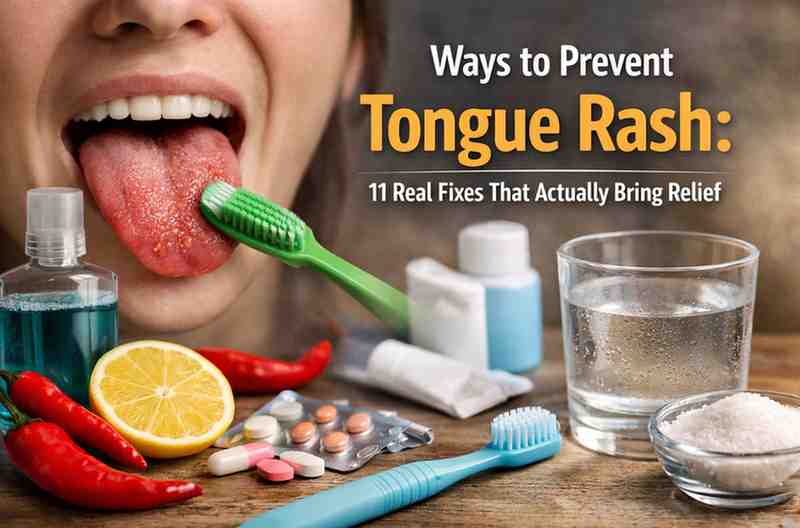
Most people start searching for Ways to Prevent Tongue Rash → when they’re already uncomfortable, already frustrated, already wondering if something is seriously wrong.
From what I’ve seen, tongue rashes don’t just hurt physically. They mess with your confidence. Eating feels risky. Talking feels weird. You start checking your tongue in every mirror like you’re monitoring a stock market crash.
And almost everyone I’ve worked with messes up the first response.
They attack it.
Hard brushing. Alcohol mouthwash. Random home remedies.
More force. More products. More panic.
Let’s slow this down.
Because preventing tongue rash is less about doing more — and more about doing the right few things consistently.
What I’ve Seen Trigger Tongue Rashes Over and Over
Most people assume infection first. But honestly? That’s rarely the starting point.
From watching dozens of real cases unfold, the most common triggers look like this:
-
Overbrushing the tongue (especially with stiff bristles)
-
Alcohol-heavy mouthwash
-
Spicy or acidic food overload
-
Dehydration
-
Stress flare-ups
-
Antibiotic use
-
Oral thrush after illness
-
New toothpaste reactions
I didn’t expect dehydration to be such a common issue. But it is. Dry mouth makes the tongue vulnerable. The protective saliva barrier weakens. Then irritation snowballs.
And here’s what surprised me even more:
A lot of people cause their own second wave of irritation → trying to “fix” the first one.
11 Ways to Prevent Tongue Rash (That Actually Work)
These aren’t theoretical. These are patterns I’ve watched hold up repeatedly.
1. Switch to a Soft or Ultra-Soft Toothbrush
Almost everyone I’ve seen struggle with this does one thing wrong: they scrub.
The tongue is delicate tissue. It’s not a tile floor.
Soft bristles reduce micro-tears that later inflame.
If someone refuses to stop brushing aggressively? The rash often lingers.
2. Drop Alcohol-Based Mouthwash
This is a big one.
Alcohol dries the mouth.
Dryness leads to irritation.
Irritation invites inflammation.
If your mouth burns when you rinse — that’s not “working.” That’s damage.
Switch to alcohol-free. Or skip mouthwash entirely while healing.
3. Hydrate More Than You Think You Need
Most people underestimate this.
When someone increases water intake consistently for 5–7 days, irritation often drops noticeably.
Saliva matters. A lot.
Dry mouth equals friction. Friction equals inflammation.
4. Pause Spicy, Acidic, and Ultra-Salty Foods
Hot sauce. Citrus overload. Vinegar-heavy meals.
I’ve watched people delay healing for weeks because they refuse to pause these.
It doesn’t have to be forever.
But give your tongue 10–14 calm days.
That reset matters.
5. Check for Toothpaste Reactions
Whitening toothpaste is a repeat offender.
So are formulas heavy in sodium lauryl sulfate (SLS).
From what I’ve seen, switching to a gentle, SLS-free toothpaste quietly solves many cases within two weeks.
No drama. Just calm tissue again.
6. Manage Stress (Yes, Really)
I didn’t expect this to show up so often.
But stress spikes correlate with:
-
Burning tongue sensation
-
Inflammation flares
-
Recurring irritation
Cortisol shifts affect immune response.
And your mouth reflects that.
You don’t need to meditate for two hours.
But sleep, hydration, and basic nervous system regulation matter.
7. Treat Underlying Thrush Quickly
If the tongue looks:
-
White and patchy
-
Cottage-cheese-like
-
Wipes off and leaves redness
That’s likely fungal overgrowth.
This isn’t a DIY experiment situation. Get proper antifungal treatment.
When treated early? It resolves fast.
When ignored? It spreads.
8. Avoid Constant Tongue Checking
This one sounds small. It’s not.
People scrape. Inspect. Brush again.
That repeated friction prevents healing.
Check once daily. That’s enough.
9. Use Salt Water — Gently
Warm salt water rinses reduce inflammation.
But here’s where people go wrong:
Too much salt.
Too frequent.
Once or twice daily is plenty.
10. Address Nutrient Gaps
B12 deficiency. Iron deficiency. Folate issues.
Burning tongue sometimes links to these.
If someone has recurring unexplained irritation, I often suggest lab work.
And sometimes that’s the missing piece.
This honestly surprised me after watching so many people try surface-level fixes.
11. Stop “Trying Everything”
This is the quiet killer.
Switching products every two days prevents patterns from revealing themselves.
Consistency beats experimentation here.
Give a strategy 10–14 days before judging it.
How Long Does It Take to Prevent or Heal a Tongue Rash?
For mild irritation:
-
3–7 days with proper adjustments
For moderate inflammation:
-
10–14 days
For fungal or deficiency-related cases:
-
Depends on treatment, usually 2–3 weeks
If there’s no improvement after two weeks of careful prevention steps?
Time to consult a dentist or physician.
What Most People Get Wrong at First
I’ve watched the same mistakes repeat:
-
Scrubbing harder
-
Adding more products
-
Googling worst-case scenarios
-
Ignoring dehydration
-
Not pausing trigger foods
The emotional spiral makes it worse.
They assume it’s permanent.
It usually isn’t.
Is It Worth Trying Prevention Steps Before Seeing a Doctor?
Short answer: yes — if symptoms are mild.
If there’s:
-
Severe pain
-
Bleeding
-
Fever
-
Rapid spreading patches
Skip DIY. Get checked.
But for most low-grade irritation? Prevention works when done calmly.
Who Will Hate This Approach?
Honestly?
People who want a quick chemical fix →.
Prevention is slower. It’s behavioral. It requires patience.
If someone refuses to change brushing habits or diet triggers, this won’t feel satisfying.
But from what I’ve seen, the people who commit for two weeks almost always feel improvement.
FAQ: Ways to Prevent Tongue Rash
Can dehydration cause tongue rash →?
Yes. Dry mouth reduces protective saliva and increases irritation risk.
Is tongue scraping safe?
Gently, yes. Aggressively, no. Over-scraping delays healing.
Does spicy food cause tongue rash →?
It can worsen irritation if the tissue is already inflamed.
When should I see a doctor?
If symptoms persist beyond two weeks, worsen, or include severe pain or infection signs.
Objections I Hear All the Time
“But I need mouthwash for hygiene.”
Not always. Gentle brushing and hydration often do more good.
“I brushed harder because I thought it was bacteria.”
That’s the instinct. But inflammation isn’t always infection.
“I tried salt water and it didn’t work in two days.”
Two days isn’t enough for tissue repair.
Reality Check
This isn’t glamorous.
There’s no miracle supplement that fixes everything overnight.
And sometimes the cause is systemic — not local.
If it’s nutrient-related, prevention alone won’t solve it.
If it’s fungal, you need treatment.
Prevention reduces risk. It doesn’t replace medical care.
Practical Takeaways
If you’re dealing with this right now:
Do this:
-
Switch to ultra-soft brushing
-
Pause alcohol mouthwash
-
Hydrate consistently
-
Remove spicy/acidic triggers
-
Simplify your routine
Avoid this:
-
Over-scraping
-
Switching products constantly
-
Panicking over every mirror check
Expect:
-
Mild improvement within a week
-
Noticeable relief by two weeks (in most cases)
-
Some trial-and-error adjustments
Emotionally?
You’ll probably worry more than necessary.
That’s normal.
I’ve watched enough people go through this to know it rarely means something catastrophic.
Still — it feels alarming when it’s happening to you.
So no, this isn’t magic. It’s not instant.
But I’ve seen real relief when people stop attacking the problem and start protecting the tissue instead.
Sometimes that shift alone is the real win.