I can’t tell you how many times I’ve gotten a late-night message that starts like this:
“Hey… I started amoxicillin three days ago and now I have this rash. Is this bad?”
It’s usually panic. Sometimes guilt. Sometimes frustration because the infection was finally getting better and now this shows up.
From what I’ve seen, most people don’t expect a skin reaction. They assume antibiotics are straightforward. Take the pills. Get better. Done.
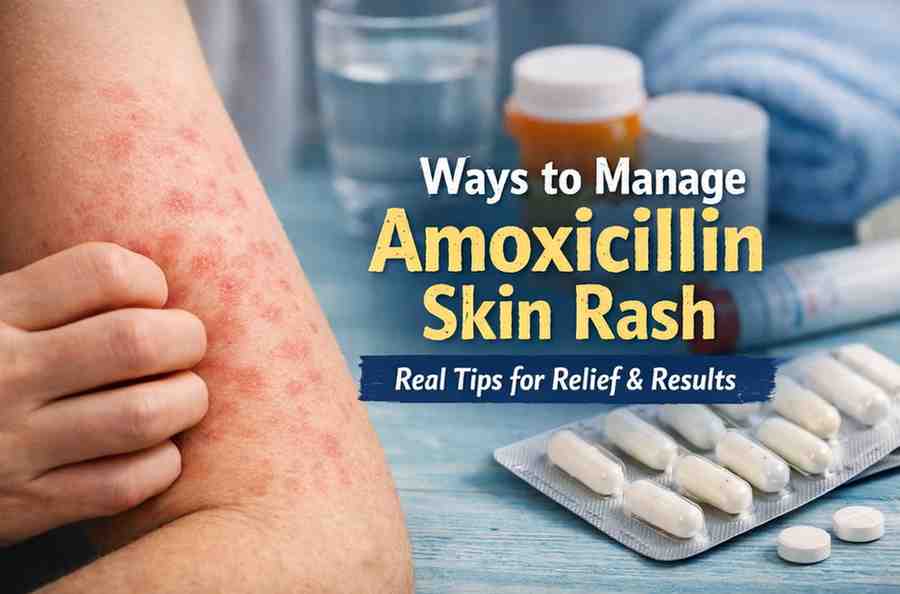
Then the rash appears — red, itchy, blotchy. And suddenly they’re Googling ways to manage amoxicillin skin rash → at 11:47 PM, convinced they either did something wrong… or something worse is happening.
Let me walk you through what I’ve observed over and over. What calms things down. What people mess up. And where you genuinely need to slow down and call your doctor instead of self-managing.
Because not all rashes are the same. And that distinction matters more than most people realize.
First: Not All Amoxicillin Rashes Mean “Allergy”
This honestly surprised me after watching so many people go through it.
A large percentage of mild rashes from amoxicillin are non-allergic. They’re immune responses, not true drug allergies. Especially common in kids. Also common in adults who are fighting viral infections at the same time.
Here’s what I typically see:
Common, milder rash pattern:
-
Flat red or pink spots
-
Sometimes slightly raised
-
Often spreads across chest, back, arms
-
Appears around day 3–10
-
Mild itch or no itch at all
-
No breathing issues
Concerning allergic reaction signs:
-
Hives (raised, very itchy welts)
-
Swelling of lips, face, tongue
-
Wheezing
-
Tight throat
-
Dizziness
If it’s the second category, this isn’t a “manage at home” situation. That’s urgent medical care.
Almost everyone I’ve seen struggle with this makes one mistake at first:
They treat every rash like a life-threatening allergy. Or they ignore a dangerous one thinking it’s mild.
So step one isn’t treatment.
It’s recognition.
9 Ways to Manage Amoxicillin Skin Rash (Based on What Actually Helps)
These aren’t theoretical tips. These are patterns I’ve watched play out repeatedly.
1. Call the Prescribing Doctor Before Stopping the Medication
Most people I’ve worked with mess this up at first.
They panic and stop the antibiotic immediately.
Sometimes that’s correct — but sometimes stopping early creates a second problem: incomplete infection treatment.
What I’ve seen work best:
-
Call.
-
Describe the rash clearly.
-
Ask whether to continue or switch medications.
Doctors often want photos. Send them in good lighting.
This one phone call saves so much confusion.
2. Stop Scratching. Seriously.
It sounds obvious. It’s not.
Scratching turns a mild rash into:
-
Broken skin
-
Inflammation
-
Secondary infection
-
Dark marks that linger
What actually helps:
-
Trim nails short
-
Wear loose cotton clothing
-
Cold compress for 10–15 minutes
Cold reduces inflammation fast. I didn’t expect it to be such a common fix, but it consistently calms irritation.
3. Oral Antihistamines (If Approved by a Doctor)
From what I’ve seen, doctors often recommend:
-
Diphenhydramine (Benadryl)
-
Cetirizine (Zyrtec)
-
Loratadine (Claritin)
These reduce itching.
But here’s the part people underestimate:
Some antihistamines make you very drowsy. I’ve seen people take them mid-workday and regret it instantly.
If you’re unsure:
-
Ask your doctor which one fits your schedule
-
Start with lowest effective dose
4. Oatmeal Baths Actually Work
I was skeptical the first time someone told me they felt real relief from colloidal oatmeal baths.
But after seeing dozens try it?
It consistently reduces itch intensity.
How people use it:
-
Lukewarm water (not hot — hot worsens rash)
-
Soak 10–15 minutes
-
Pat dry, don’t rub
Simple. Cheap. Low risk.
5. Topical Steroid Cream (Mild Strength)
Hydrocortisone cream (1%) often helps reduce redness and inflammation.
Common mistake I’ve seen:
People apply it once and expect magic.
It usually works better when:
-
Applied thinly
-
1–2 times daily
-
For a few days
Still — if the rash is spreading rapidly, don’t self-treat indefinitely. Loop your doctor in.
6. Avoid Heat
This one catches people off guard.
Hot showers.
Intense workouts.
Sun exposure.
All of it can amplify redness.
I’ve watched mild rashes double in appearance after:
-
A hot yoga class
-
A beach afternoon
-
Long hot showers
Temporary pause helps more than people expect.
7. Hydrate More Than You Think
It sounds unrelated.
But dehydration worsens skin irritation.
People who increase fluids often report:
-
Less tightness
-
Faster fading
-
Better comfort
It’s not a miracle fix.
But it supports recovery.
8. Track the Timeline
Most non-allergic amoxicillin rashes:
-
Appear day 3–10
-
Peak around day 5–7
-
Fade within 3–6 days after stopping
If it lasts beyond that window, worsens significantly, or new symptoms appear — that’s reassessment territory.
I’ve seen people panic on day two of the rash when it’s actually following a normal course.
Timeline context reduces anxiety.
9. Don’t Self-Label Yourself as “Penicillin Allergic” Yet
This is huge.
Once “penicillin allergy” is added to your medical chart, it follows you.
And from what I’ve seen, many of those labels aren’t accurate.
Doctors sometimes recommend allergy testing later to confirm.
Because being incorrectly labeled allergic can:
-
Limit antibiotic choices
-
Lead to broader-spectrum drugs
-
Increase resistance risk
This is a conversation to have calmly later — not during the initial panic.
Why This Rash Happens (Simple Explanation)
Amoxicillin belongs to the penicillin family.
Sometimes your immune system:
-
Reacts to the drug
-
Reacts to the infection itself
-
Reacts to both
Especially common when:
-
The infection is viral (like mono)
-
The immune system is already activated
It’s not always a sign of danger.
But context matters.
How Long Does It Take to Improve?
From what I’ve consistently observed:
-
Mild rashes: start fading within 3 days after stopping
-
Itch improves within 24–72 hours with antihistamines
-
Full clearing: 1–2 weeks
What delays healing?
-
Heat exposure
-
Scratching
-
Continuing medication without medical guidance
-
Secondary skin infection
Patience feels slow here.
But it usually resolves.
Common Mistakes I Keep Seeing
Almost everyone I’ve seen struggle with this does one of these:
-
Googles worst-case images and spirals
-
Stops medication without informing doctor
-
Takes multiple OTC meds at once
-
Uses very hot water on irritated skin
-
Applies heavy fragranced lotions
Less is often more.
Gentle. Calm. Observant.
Objections I Hear All the Time
“But it’s spreading — doesn’t that mean it’s getting worse?”
Not always.
Some rashes spread before they fade. The key question is:
Are there new systemic symptoms?
-
Fever?
-
Breathing issues?
-
Facial swelling?
If not, spreading alone isn’t always escalation.
“Should I push through and finish the antibiotic?”
This depends entirely on what your doctor says.
I’ve seen both scenarios:
-
Continue and rash fades.
-
Stop and switch medication.
There isn’t a universal answer.
“Is this worth trying at home?”
If:
-
No breathing symptoms
-
No facial swelling
-
Rash is mild to moderate
-
Doctor has been contacted
Yes, home management often works.
If not — don’t gamble.
Reality Check
This approach is not for:
-
Anyone with anaphylaxis symptoms
-
Severe blistering
-
Painful skin peeling
-
High fever with rash
-
Purple or bruise-like rash
Those are medical emergencies.
Also:
If anxiety is spiraling out of control, reassurance from a professional is worth it.
Sometimes peace of mind is part of treatment.
Quick FAQ (For Clarity)
Can amoxicillin rash go away on its own?
Yes. Many mild rashes resolve within days after stopping the medication.
Does an amoxicillin rash mean I’m allergic?
Not always. True allergy needs evaluation.
Is itching normal?
Mild itching is common. Severe hives require medical review.
Can I shower?
Yes. Keep water lukewarm.
Will this happen again?
Maybe. Maybe not. Allergy testing later can clarify.
Practical Takeaways
If you’re dealing with this right now:
-
Call your doctor first.
-
Avoid heat.
-
Use cold compresses.
-
Consider antihistamines if approved.
-
Keep skin → calm and simple.
-
Watch for red flag symptoms.
Emotionally?
Expect:
-
Anxiety
-
Overthinking
-
Hyper-awareness of your skin
That part is normal too.
What patience actually looks like:
-
Checking once or twice daily
-
Not obsessively inspecting every hour
-
Letting the immune system settle
It’s uncomfortable.
But it’s rarely catastrophic.
I’ve watched enough people go through this to know the fear feels bigger than the rash most of the time.
Still — that fear is real.
So no, this isn’t magic. There’s no overnight fix. But when people approach it calmly, loop in their doctor early, and manage the irritation properly… it almost always stabilizes.
Sometimes the biggest shift isn’t the rash fading.
It’s realizing you’re not as out of control as you thought.