I can’t tell you how many parents I’ve watched spiral over this rash.
It starts small. A little redness on the cheeks. Maybe mild fever a few days earlier. Then suddenly someone Googles it at 11:40 PM and convinces themselves it’s measles, an allergy, or something way worse.
From what I’ve seen, most people don’t struggle because the rash → is dangerous. They struggle because it’s confusing.
That’s why understanding the real, practical Ways to Identify and Treat Erythema Infectiosum Rash matters. Not textbook definitions. Not clinical jargon. Just what actually shows up in real families — and what consistently helps.
And honestly? Almost everyone I’ve worked with messes up the identification stage first.
Let’s talk about what I’ve actually seen.
What Erythema Infectiosum Rash Usually Looks Like (In Real Life)
This is where the confusion begins.
On paper, erythema infectiosum (also called Fifth disease) sounds straightforward. In real life? It doesn’t announce itself clearly.
Here’s the pattern I’ve seen over and over:
-
A mild cold-like phase (low fever, fatigue, runny nose)
-
A few days of “they seem fine now”
-
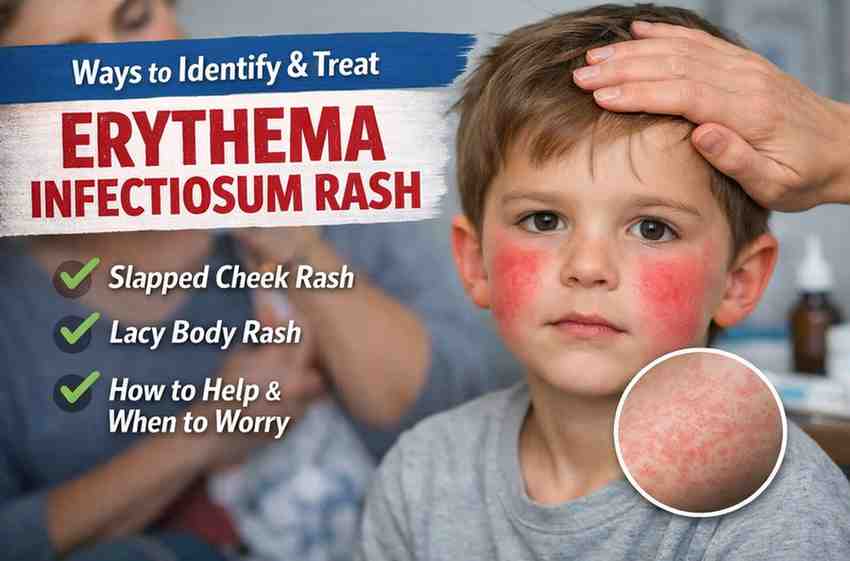
Then boom — bright red cheeks
Parents almost always think allergy first.
But the cheek redness has a specific look. It’s not blotchy hives. It’s not patchy irritation.
It looks like someone gently slapped both cheeks.
That’s why it’s sometimes called “slapped cheek disease.”
What surprised me after watching so many cases? The child usually feels totally fine when the rash appears. Energy back. Appetite normal. Acting like nothing’s wrong.
That disconnect throws people off.
Key Visual Clues I’ve Noticed
-
Symmetrical red cheeks
-
Pale area around the mouth
-
Lacy, net-like rash spreading to arms and legs later
-
Rash fades and reappears with heat or activity
That last one confuses people the most.
A parent thinks, “It’s getting worse again.”
It’s not worsening. Heat — baths, sunlight, running around — makes it more visible temporarily.
I didn’t expect this to be such a common panic trigger. But it is.
What People Usually Get Wrong at First
Most families I’ve observed make one of these early mistakes:
-
They assume it’s contagious once the rash shows.
-
They think the rash stage means the illness is peaking.
-
They over-treat it like a severe allergic reaction.
-
Or they ignore it completely because the child feels okay.
Here’s the pattern that matters:
By the time the rash appears, the contagious phase has usually passed.
That detail alone relieves so many parents.
But almost everyone misses it at first.
Why People Search for Ways to Identify and Treat Erythema Infectiosum Rash
The emotional driver isn’t just medical curiosity.
It’s fear.
Fear of misdiagnosing.
Fear of sending a child to school too soon.
Fear of it being something worse.
Fear of long-term effects.
And honestly, most of those fears settle down once you understand how predictable this virus actually is.
What Consistently Works for Treating It
Here’s the grounded truth:
There’s no special antiviral treatment for erythema infectiosum rash in otherwise healthy kids.
That disappoints people.
But also — it simplifies things.
From what I’ve seen across many cases, treatment is mostly about comfort:
-
Rest (even if they don’t act sick)
-
Fluids
-
Fever reducers if needed (acetaminophen or ibuprofen)
-
Light clothing if itching occurs
That’s it.
The rash itself doesn’t usually need medicated creams.
And here’s something that surprised me: over-treating the skin often makes things worse.
Parents apply steroid creams “just in case,” and irritation increases.
Most of the time? Leaving it alone works better.
How Long Does Erythema Infectiosum Rash Last?
This is the question everyone asks.
Here’s what I’ve consistently seen:
-
The bright cheek phase: 2–4 days
-
The lacy body rash: can last 1–3 weeks
-
Flare-ups triggered by heat: can happen for several weeks
That lingering pattern frustrates → people.
They think, “Why isn’t this gone yet?”
But the key is understanding it fades gradually. It doesn’t just disappear overnight.
And in healthy kids, it resolves on its own.
When It’s Not So Simple
Now — this is important.
Most cases are mild.
But there are situations where this rash deserves closer attention:
-
If the child has a blood disorder (like sickle cell disease)
-
If the person infected is pregnant
-
If symptoms include severe joint pain
-
If fever is high and persistent
From what I’ve seen, adults — especially women — sometimes experience more joint pain than kids.
That surprises families too.
And pregnant women exposed to parvovirus B19 (the virus behind erythema infectiosum) should always check with their OB. Not panic. Just check.
This isn’t about fear. It’s about being informed.
Common Mistakes That Slow Relief
Almost everyone I’ve seen struggle with this does one thing wrong:
They chase the rash instead of watching the child.
If the child is:
-
Drinking fluids
-
Playing
-
Alert
-
Breathing normally
That tells you more than the redness does.
Other frequent mistakes:
-
Sending the child to school before confirming fever has resolved
-
Using harsh soaps that worsen skin irritation
-
Over-Googling rare complications
-
Assuming every flare-up means reinfection
It’s not reinfection.
It’s heat-reactivation of visible rash.
That distinction matters.
FAQ (Short, Direct Answers)
Is erythema infectiosum dangerous?
In healthy children, it’s usually mild and self-limiting.
Is it contagious during the rash?
Most contagious before the rash appears.
Does it itch?
Sometimes mildly. Not typically severe.
Can adults get it?
Yes. Adults may experience more joint pain.
Should I isolate my child?
Once the rash appears and fever is gone, isolation usually isn’t necessary — but confirm with your pediatrician.
Objections I Hear All the Time
“But the rash looks so intense.”
It does. Especially on lighter skin tones.
Intensity of color doesn’t equal severity.
“What if I’m missing something serious?”
Fair concern.
Here’s when to reassess:
-
Persistent high fever
-
Lethargy
-
Severe headache
-
Breathing issues
-
Signs of anemia
Otherwise, observation and supportive care are appropriate in most cases.
“Is it worth seeing a doctor?”
If you’re unsure, yes.
But most pediatric visits I’ve observed for this end with reassurance, not prescriptions.
Sometimes reassurance is the real treatment.
Reality Check: Who This Isn’t Simple For
I won’t pretend it’s effortless for everyone.
If your child has:
-
Chronic anemia
-
Immune suppression
-
Complex medical history
This is not a “wait it out casually” situation.
Also — emotionally? It’s harder for first-time parents.
I’ve watched seasoned parents shrug it off by kid three.
The first time? It feels bigger.
That’s normal.
What Experienced Caregivers Do Differently
After seeing repeated patterns, here’s what experienced caregivers tend to do:
-
They don’t panic at the cheek redness.
-
They focus on behavior over appearance.
-
They track fever accurately.
-
They limit unnecessary creams.
-
They stay hydrated themselves too (because stress is draining).
That last one sounds small.
But calm adults help calm kids.
And honestly, the energy in the room changes outcomes more than people realize.
Practical Takeaways (If You Want This Simple)
If you’re trying to handle this well:
Do:
-
Monitor fever
-
Encourage fluids
-
Keep skin → cool
-
Watch for unusual symptoms
-
Call your pediatrician if unsure
Avoid:
-
Heavy topical treatments
-
Overexposure to heat
-
Spiraling into rare complication forums
-
Comparing your child’s rash to every image online
Emotionally, expect:
-
Mild frustration
-
A “why is it still there?” phase
-
Relief once you understand the pattern
Patience here doesn’t mean doing nothing.
It means observing wisely.
Still — let me say this plainly.
This isn’t magic.
It’s a viral rash with a predictable course in most healthy people.
But I’ve watched enough families lose sleep unnecessarily because no one explained the pattern in real language.
Once they understood what they were looking at, everything softened.
The fear.
The frantic Googling.
The late-night worst-case scenarios.
So no — there’s no miracle cure here.
But there is clarity.
And from what I’ve seen, clarity is usually what people needed all along.