I can’t tell you how many late-night texts I’ve gotten that start with, “Should I just make myself throw up?”
It’s usually panic. Food poisoning. Too much alcohol. A kid who swallowed something weird. Or someone who feels so nauseous they think vomiting safely might finally bring relief →.
From what I’ve seen, most people don’t actually want to throw up. They want the feeling to stop. The spinning. The cramping. The fear that something is “stuck” inside them.
And this is where things get messy.
Because vomiting safely isn’t just about leaning over a toilet and hoping for the best. Sometimes it’s appropriate. Sometimes it’s unnecessary. Sometimes it’s flat-out dangerous.
I’ve watched people handle this well. I’ve watched others make it worse. The patterns repeat more than you’d think.
Let’s talk through what I’ve actually seen happen.
Why People Consider Vomiting on Purpose
When people ask about vomiting safely, it’s usually one of these situations:
-
Suspected food poisoning
-
Nausea after overeating
-
Too much alcohol
-
Swallowed something questionable
-
Feeling like “getting it out” will solve the problem
-
Panic response
Almost everyone I’ve worked with messes this up at first by assuming vomiting = relief.
Sometimes it is. Sometimes the body is already trying to do exactly that for a reason.
But forcing it? That’s where things get complicated.
First: Is It Ever Safe to Make Yourself Vomit?
Short answer?
Rarely recommended.
From what I’ve seen across ER visits and doctor consults, medical professionals almost never advise inducing vomiting at home anymore. Especially not in the U.S., where poison control and emergency protocols have shifted heavily away from that advice.
There’s a reason.
Situations Where You Should NOT Induce Vomiting
If someone swallowed:
-
Bleach
-
Cleaning chemicals
-
Gasoline
-
Sharp objects
-
Batteries
-
Strong acids or alkalis
Vomiting can cause more damage on the way back up.
This honestly surprised me after watching so many people try it. They think, “Get it out before it absorbs.”
But corrosive substances burn twice.
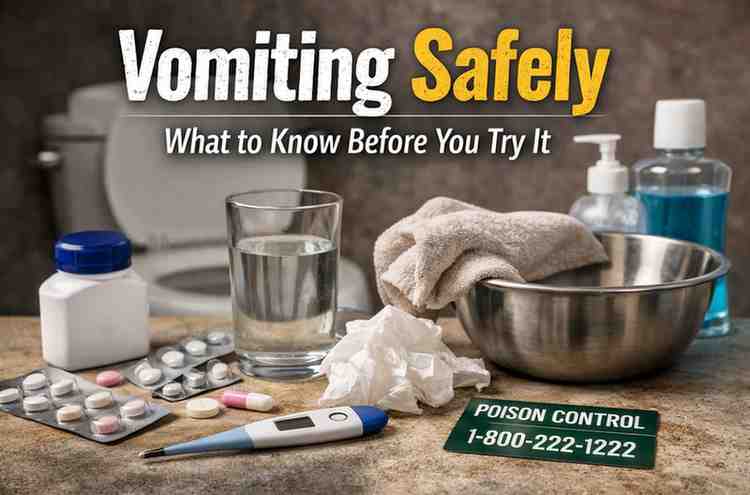
If this is the scenario, the move is calling Poison Control (1-800-222-1222 in the U.S.), not inducing vomiting.
What Vomiting Actually Does (When the Body Initiates It)
Here’s something people don’t think about:
Vomiting is already a protective reflex.
If your body needs to expel something, it usually will.
When someone has food poisoning, I’ve seen this pattern over and over:
-
Nausea builds
-
Sweating starts
-
Waves of discomfort
-
Body triggers vomiting naturally
-
Temporary relief
The body is smart.
The mistake is trying to override it.
The Alcohol Panic Scenario
This is one of the most common.
Someone drinks too much. Feels awful. Starts Googling “vomiting safely after drinking.”
Most people I’ve seen → struggle with this do one thing wrong: they wait too long.
Alcohol absorbs quickly. By the time someone feels extremely sick, most of it is already in the bloodstream.
Inducing vomiting at that stage doesn’t “undo” intoxication.
What actually works better?
-
Hydration
-
Monitoring breathing
-
Not sleeping alone if heavily intoxicated
-
Seeking medical help if symptoms escalate
Vomiting might happen naturally. Forcing it usually just adds throat irritation and risk of aspiration.
And aspiration? That’s serious. Vomit entering lungs is not rare in heavy intoxication cases.
“But Won’t I Feel Better If I Throw Up?”
Sometimes. Yes.
But here’s what I’ve consistently seen:
-
If nausea is building naturally → vomiting may bring relief →.
-
If nausea is anxiety-driven → forcing vomiting makes things worse.
-
If stomach is already empty → dry heaving causes more pain.
This is where people misread the signal.
Anxiety nausea and toxin-induced nausea feel similar.
Different root causes. Different outcomes.
How Long Does Nausea Typically Last?
This depends on the trigger.
From watching dozens of cases:
Food poisoning
-
Vomiting usually begins within 1–6 hours
-
Peaks within 12–24 hours
-
Gradually improves over 1–3 days
Alcohol
-
Peak nausea usually 4–8 hours after heavy intake
-
Improves with hydration and rest
Viral stomach bugs
-
Vomiting 24–48 hours
-
Fatigue lingers
The pattern? Most people panic in the first 90 minutes.
That’s when they consider forcing vomiting.
And honestly, that’s often the window where waiting works better.
Common Mistakes I See Again and Again
Let me just list these because the repetition is wild:
-
Using fingers aggressively and injuring throat
-
Drinking salt water (please don’t)
-
Using ipecac (outdated and discouraged)
-
Lying flat immediately after vomiting
-
Not rehydrating slowly
-
Ignoring warning signs like blood in vomit
Almost everyone I’ve seen struggle with this does this one thing wrong: they rush.
They want control back.
But vomiting safely is mostly about not interfering unless necessary.
If Vomiting Is Already Happening: How to Do It Safely
This is different from inducing it.
If your body is already vomiting:
Do this instead:
-
Lean forward, not backward
-
Stay upright
-
Take small sips of water after 30–60 minutes
-
Avoid large gulps
-
Rest on your side
-
Monitor hydration
Small detail that matters: don’t brush your teeth immediately. Acid softens enamel. Rinse first.
It sounds minor. It isn’t.
When to Seek Immediate Medical Help
Call for help if you see:
-
Blood in vomit
-
Coffee-ground appearance
-
Severe abdominal pain
-
High fever (over 102°F)
-
Signs of dehydration (no urination, dizziness, dry mouth)
-
Confusion
-
Vomiting lasting more than 48 hours
I didn’t expect dehydration to be such a common issue until I started paying attention to repeat cases.
People underestimate it.
Especially adults who assume dehydration is just a kid problem.
It’s not.
Reality Check: Vomiting Is Not a Weight-Control Tool
I have to say this clearly.
If someone is searching “vomiting safely” in a weight-loss context, that’s a different issue entirely.
Repeated self-induced vomiting damages:
-
Teeth
-
Esophagus
-
Electrolytes
-
Heart rhythm
It also spirals psychologically.
From what I’ve seen, people don’t start there. It creeps in during stress phases.
If that’s happening, that’s not about nausea anymore. That’s about support.
And it’s worth reaching out.
Objections I Hear All the Time
“But my grandma always said to throw it up.”
Older advice was different. Poison protocols changed significantly in the U.S. over the last few decades.
“If I don’t throw up, won’t toxins absorb?”
Often they already have.
Or the body will expel them naturally.
“I just want this feeling to stop.”
That’s usually the real issue.
Nausea is distressing. It triggers fear.
Vomiting feels like action.
But action isn’t always solution.
Who Should Avoid Trying to Induce Vomiting
-
Children
-
Elderly adults
-
Pregnant women
-
People with heart conditions
-
Anyone who swallowed chemicals
-
Anyone who is disoriented
In these groups, risk multiplies fast.
What Actually Helps More Than Forcing It
This is what I’ve seen consistently work better:
-
Time
-
Hydration
-
Small sips of electrolyte solution
-
Rest
-
Cool compress
-
Fresh air
-
Reducing panic
Boring advice. I know.
But boring works.
FAQ (Quick Answers)
Is it ever safe to make yourself vomit?
Rarely recommended. Only under specific medical instruction.
Does vomiting remove alcohol?
Not effectively once absorbed.
How long should nausea last?
Usually 24–48 hours depending on cause.
When is vomiting dangerous?
If blood appears, severe pain exists, or dehydration sets in.
Should I call Poison Control?
Yes, immediately, for chemical ingestion in the U.S.
What This Is NOT For
This isn’t for:
-
Managing chronic eating behaviors
-
Detox fads
-
“Cleansing” trends
-
Quick-fix weight loss
If that’s the goal, vomiting safely isn’t the right frame at all.
Practical Takeaways
If I had to boil down everything I’ve seen:
-
Don’t force vomiting unless instructed by a medical professional.
-
Let the body lead when it needs to.
-
Hydration matters more than people realize.
-
Panic makes nausea worse.
-
Warning signs should never be ignored.
-
Relief usually comes with time.
And emotionally?
Expect frustration. Expect discomfort. Expect moments of doubt.
But also expect that most cases resolve without dramatic intervention.
Here’s the honest part.
Vomiting safely isn’t about mastering a technique.
It’s about knowing when to step back.
Most people I’ve watched go through this feel embarrassed afterward. Or dramatic. Or silly for panicking.
But nausea is primal. It rattles people.
So no — this isn’t