I can’t tell you how many late-night messages I’ve seen from women who were told, casually, “It might be harder for you.”
Harder.
That word does damage.
One woman I know sat in her car outside a fertility clinic for twenty minutes just staring at the steering wheel. Not crying. Just stunned. She’d been trying for eight months. Her cycles were painful but “manageable.” She assumed pregnancy would just… happen.
It didn’t.
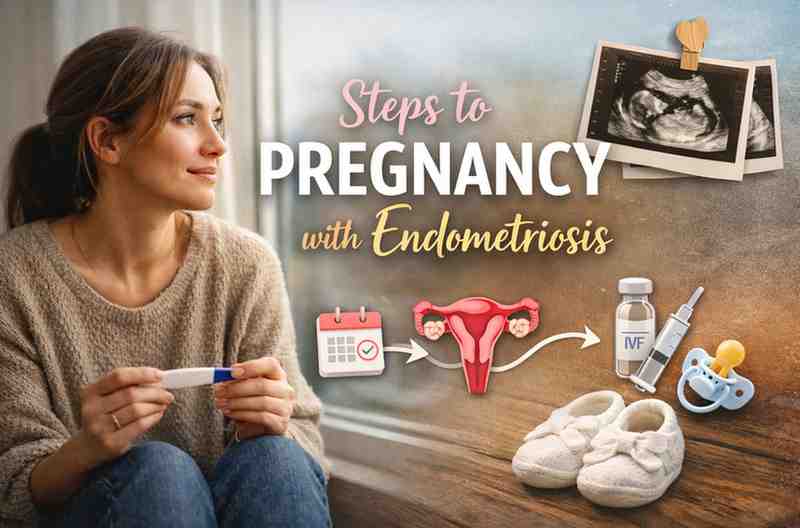
And when she started looking up Steps to Pregnancy with Endometriosis, she found two extremes:
-
Doom-and-gloom forums
-
Miracle cure blogs
Neither felt real.
From what I’ve seen, the truth sits in the middle. It’s slower. It’s more strategic. And it’s way more emotional than most doctors explain.
Let’s talk about what actually happens. What I’ve watched work. What almost everyone gets wrong at first. And how to approach this without losing yourself in the process.
First: Why Endometriosis Complicates Pregnancy (But Doesn’t End It)
Most women I’ve worked with misunderstand one big thing:
Endometriosis doesn’t automatically mean infertility.
But it does change the terrain.
From what I’ve observed across dozens of cases:
-
Inflammation interferes with egg quality
-
Scar tissue can distort anatomy
-
Pain can reduce timed intimacy
-
Hormonal imbalances disrupt ovulation
-
Immune dysfunction plays a quiet but powerful role
What surprised me after watching so many journeys is this:
It’s rarely just one issue. It’s layered.
And that’s why random advice fails.
The 9 Steps to Pregnancy with Endometriosis That Actually Matter
These aren’t theoretical. These are patterns I’ve watched unfold repeatedly.
1. Get the Right Diagnosis (Not Just “Probably Endo”)
Almost everyone I’ve seen struggle with this does this one thing wrong:
They assume their OB’s quick assessment is enough.
Endometriosis varies wildly:
-
Stage I minimal
-
Stage II mild
-
Stage III moderate
-
Stage IV severe
And severity doesn’t always match symptoms.
Some women with mild endo struggle deeply.
Some with stage III conceive naturally.
From what I’ve seen, the women who move faster toward pregnancy success get:
-
Advanced imaging (when appropriate)
-
A reproductive endocrinologist consultation
-
Honest clarity on anatomy
Clarity reduces guessing. Guessing wastes months.
2. Address Inflammation Before Obsessing Over Ovulation
This honestly surprised me after watching so many people try it:
They jump straight into ovulation tracking apps, temperature charts, OPKs.
Meanwhile their inflammatory markers are sky high.
When inflammation is unchecked:
-
Egg quality declines
-
Implantation struggles
-
Early miscarriage risk increases
The women who stabilize inflammation first often report:
-
Less pelvic pain
-
More predictable cycles
-
Stronger ovulation signs
What I’ve seen work repeatedly:
-
Anti-inflammatory nutrition (consistent, not extreme)
-
Omega-3 support
-
Gentle gut repair
-
Sleep discipline
-
Lower stress exposure
It’s not sexy advice. But it shifts outcomes.
3. Stop Waiting Too Long If You’re Over 32
I don’t say this to scare anyone.
But I’ve seen regret here.
Many women spend 12–18 months trying “naturally” because they feel pressure not to rush into fertility treatment.
Here’s the reality:
-
Endometriosis + age = compounded impact
-
Egg reserve can decline faster
-
IVF success rates drop after 35
If you’re:
-
Over 32
-
Trying for 6+ months
-
Aware of moderate/severe endo
At least get evaluated.
Evaluation is not commitment.
Delay can cost more than consultation.
4. Surgery: Not Always the Enemy — Not Always the Hero
This is where nuance matters.
Some women improve dramatically after laparoscopic excision.
Others see no change.
From what I’ve seen:
Surgery helps most when:
-
Endometriomas block ovarian access
-
Severe adhesions distort fallopian tubes
-
Pain interferes with intimacy
Surgery helps less when:
-
Egg quality is already compromised
-
Immune dysfunction remains untreated
-
It’s repeated multiple times
And this is hard to hear:
Repeated surgeries can reduce ovarian reserve.
Almost everyone I’ve seen struggle long-term had multiple procedures without a fertility strategy attached.
Surgery should serve a plan.
Not replace one.
5. Time Your Interventions Strategically
One thing I’ve noticed:
Women with endometriosis often move in emotional bursts.
-
Two months of intense effort
-
Burnout
-
Three months of avoidance
The couples who stabilize their rhythm tend to do better.
That looks like:
-
3–6 months of inflammation focus
-
Clear ovulation tracking
-
Reassessment
-
Then escalate if needed
Structured progression beats emotional reaction.
6. Understand IVF Through a Realistic Lens
Is IVF worth it with endometriosis?
Short answer: sometimes yes. Sometimes no.
Here’s what I’ve observed:
Women with stage III/IV often:
-
Benefit from IVF if tubes are compromised
-
Require higher medication adjustments
-
Need inflammation management before cycles
Common mistakes:
-
Starting IVF without reducing inflammation
-
Assuming one failed cycle means permanent failure
-
Not checking sperm quality thoroughly
How long does it take?
Realistically:
-
3–12 months depending on cycles and responses
Not one month.
Not instant.
That expectation gap causes emotional crashes.
7. Don’t Ignore the Male Factor
This is uncomfortable but necessary.
In at least a third of couples I’ve observed, there’s a mild male factor issue layered in.
When the focus stays only on endometriosis:
Time gets lost.
Always test both sides.
No ego.
Just data.
8. Protect Your Emotional Nervous System
I didn’t expect this to be such a common issue.
But stress in women with endometriosis isn’t just emotional — it’s physiological.
High cortisol worsens:
-
Inflammation
-
Hormonal balance
-
Implantation potential
Women who improve their stress regulation often report:
-
Fewer flare-ups
-
More stable cycles
-
Better IVF responses
This isn’t “relax and it will happen.”
It’s nervous system stabilization.
Big difference.
9. Accept That Timeline Is Different — Not Impossible
Most people I’ve worked with mess this up at first.
They compare their journey to friends with zero reproductive issues.
And every month feels like failure.
From what I’ve seen:
Women with endometriosis often conceive:
-
After longer preparation
-
After strategic intervention
-
After layered support
But they do conceive.
Not all.
But many.
How Long Does It Take to Get Pregnant with Endometriosis?
Direct answer:
-
Mild cases: 6–12 months is common
-
Moderate cases: Often need assistance within 6 months
-
Severe cases: Frequently require surgical + IVF planning
Still, these are patterns.
Not guarantees.
And timelines vary widely.
Common Mistakes That Slow Everything Down
Almost everyone I’ve seen struggle with this does at least one of these:
-
Waiting too long before seeing a specialist
-
Focusing only on ovulation, ignoring inflammation
-
Repeating surgeries without a fertility plan
-
Ignoring sperm quality
-
Expecting fast results
The emotional crash usually comes from unrealistic timelines.
Not from infertility itself.
Objections I Hear All the Time
“Is it even worth trying naturally?”
If:
-
Tubes are open
-
Ovulation is occurring
-
Endo is mild
Yes. For 6 months.
After that, reassess.
“I’m scared IVF will fail.”
Valid fear.
But I’ve seen women with severe endometriosis conceive through IVF after two failed cycles.
Failure doesn’t equal futility.
It means adjustment.
“Should I remove all endometriosis before trying?”
Not always.
Excision can help.
But aggressive surgery can reduce egg reserve.
It’s a balance.
Reality Check (No Sugarcoating)
This path can include:
-
Miscarriage
-
Failed cycles
-
Financial strain
-
Relationship stress
-
Hormonal mood shifts
And sometimes… no clear reason why something didn’t work.
If you need guaranteed outcomes, this process will break your heart.
If you can tolerate uncertainty, you’ll survive it better.
Who This Approach Is NOT For
-
Someone unwilling to seek specialist care
-
Someone expecting quick results
-
Someone avoiding medical evaluation due to fear
-
Someone who refuses to address inflammation
This takes patience and strategic thinking.
Not just hope.
Practical Takeaways
If I had to distill everything I’ve observed into grounded steps:
Do this:
-
Get evaluated early
-
Reduce inflammation aggressively but safely
-
Track ovulation accurately
-
Test both partners
-
Create a 6-month plan
Avoid this:
-
Emotional reaction cycles
-
Forum panic
-
Endless supplements without guidance
-
Surgery without fertility alignment
Emotionally expect:
-
Frustration
-
Hope spikes
-
Setbacks
-
Tiny wins
Patience here looks like showing up consistently even when nothing “happens” for weeks.
That’s the real discipline.
I won’t pretend this is easy.
I’ve watched women question their bodies.
Their worth.
Their timelines.
But I’ve also watched women who thought it was impossible end up holding babies after they stopped chasing random advice and started following structured Steps to Pregnancy with Endometriosis instead.
So no — this isn’t magic.
It’s layered.
It’s slower.
It requires strategy.
But from what I’ve seen?
When women stop fighting their bodies and start working with them, something shifts.
And sometimes that shift is where everything finally begins. ????