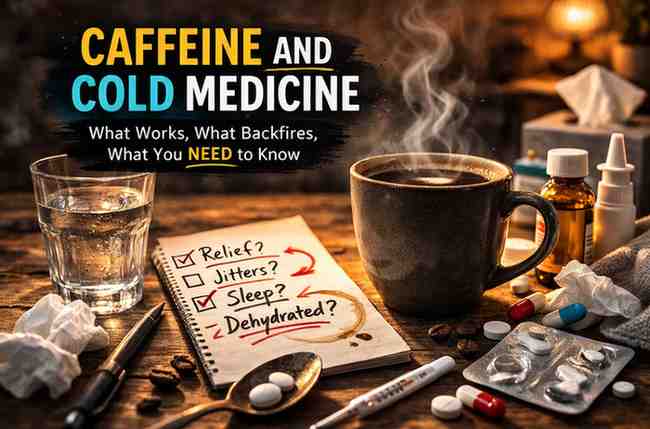
I can’t tell you how many times I’ve watched someone power through a brutal head cold with a cup of strong coffee in one hand and cold medicine in the other.
They’re tired. Congested. Foggy. They’ve got work. Kids. Deadlines. So they reach for relief.
And then a few hours later?
Shaky. Wired but exhausted. Heart racing. Or weirdly… still sleepy.
Caffeine and Cold Medicine sounds harmless enough. It feels practical. Almost efficient.
But from what I’ve seen across friends, family, clients, and people who’ve asked me in a half-panicked text — this combo trips people up more than it helps when they don’t understand what’s actually happening inside their body.
Let’s unpack this the way I wish someone had explained it to them.
Why People Mix Caffeine and Cold Medicine in the First Place
It usually starts with one of three things:
-
“I need to stay awake for work.”
-
“This medicine makes me drowsy.”
-
“I feel like death. Coffee might help.”
Totally understandable.
Most cold medicines in the U.S. contain one or more of these:
-
Decongestants (like pseudoephedrine or phenylephrine)
-
Antihistamines
-
Cough suppressants
-
Pain relievers
Some of these stimulate you. Some sedate you. And caffeine? It’s a stimulant. A strong one.
What people don’t realize is they’re often stacking stimulants on top of stimulants.
Or fighting sedation with stimulation.
Both can backfire.
What Actually Happens When You Combine Caffeine and Cold Medicine
Here’s the part that surprises most people.
Caffeine doesn’t “cancel out” cold medicine side effects.
It compounds them.
From what I’ve seen:
1. If Your Cold Medicine Contains a Decongestant
Decongestants already increase heart rate and blood pressure.
Add caffeine and you might get:
-
Racing heart
-
Jitters
-
Anxiety spikes
-
Trouble sleeping
-
That wired-but-miserable feeling
I’ve watched people assume they were “having a bad reaction” to the cold medicine… when really it was the caffeine stacking on top.
Almost everyone I’ve seen struggle with this does one thing wrong:
They take their morning dose with coffee.
Then have a second cup.
Then wonder why their chest feels tight by noon.
2. If Your Cold Medicine Contains an Antihistamine
Older antihistamines can make you drowsy.
So people drink coffee to “balance it out.”
Sometimes it works. For a bit.
But here’s what I’ve noticed:
-
They feel alert mentally
-
But still physically drained
-
Then crash harder later
This honestly surprised me after watching so many people try it. The caffeine doesn’t restore energy — it masks fatigue.
And when the crash hits? It’s worse.
3. If You’re Already Sick and Dehydrated
This one gets overlooked.
Colds dehydrate you.
Caffeine is mildly dehydrating.
Dehydration worsens:
-
Headaches
-
Fatigue
-
Dizziness
-
That heavy, pressure-filled sinus feeling
So sometimes the caffeine makes you feel sharper for 45 minutes… but drags recovery out longer.
Not dramatic. Just subtle. Slower healing.
“Is It Safe to Mix Caffeine and Cold Medicine?”
Short answer:
For most healthy adults, small amounts of caffeine with standard cold medicine are not automatically dangerous.
But “not dangerous” and “a good idea” aren’t the same thing.
From what I’ve seen, it depends on:
-
Your blood pressure
-
Your anxiety baseline
-
How sensitive you are to caffeine
-
The exact ingredients in your cold medicine
-
How much caffeine you’re consuming
The problems usually show up when people:
-
Don’t check labels
-
Take multi-symptom formulas blindly
-
Combine with energy drinks (big mistake)
-
Double-dose accidentally
And yes — I’ve seen that happen more than once.
What Most People Get Wrong
Let me be blunt.
Most people don’t read the ingredient label.
They go by brand name.
Cold medicines in the U.S. vary widely. Some daytime formulas already include mild stimulants. Others don’t.
People assume:
“Daytime = safe with coffee.”
Not always.
Another mistake I keep seeing:
They use caffeine to fight sleep instead of resting.
Recovery slows down.
Cold lingers.
They blame the medicine.
How Long Does It Take to Feel Effects?
If you’re combining caffeine and cold medicine:
-
Caffeine hits within 15–45 minutes.
-
Decongestants typically peak within 1–2 hours.
-
Antihistamines may cause drowsiness within an hour.
Stacked together?
You may feel stimulation fast. But side effects like jitteriness or insomnia can show up later — especially if doses overlap.
The people I’ve seen struggle the most usually realize the issue at night.
They’re exhausted.
But wired.
And can’t sleep.
That cycle slows healing.
When It Actually Makes Sense
I’m not anti-caffeine. At all.
There are situations where moderate caffeine intake with cold medicine makes sense:
-
You’re taking a non-drowsy formula without decongestants.
-
You’re limiting caffeine to one small serving.
-
You’re well hydrated.
-
You have normal blood pressure.
-
You’re not prone to anxiety or heart palpitations.
From what I’ve observed, people who approach it cautiously tend to do fine.
It’s the “business as usual” coffee routine that causes problems.
Who Should Be Careful (Or Avoid Mixing)
Based on repeated patterns I’ve seen, these groups struggle more:
-
People with high blood pressure
-
Anyone with panic disorder or anxiety sensitivity
-
Those prone to heart palpitations
-
People already feeling weak or dehydrated
-
Anyone taking multiple stimulant-based medications
If you’re in one of those categories, caffeine and cold medicine is more likely to feel awful than helpful.
Common Mistakes That Make It Worse
Most people I’ve worked with mess this up at first:
-
Drinking coffee on an empty stomach while medicated
-
Adding energy drinks “just this once”
-
Ignoring sleep
-
Forgetting hydration
-
Taking second doses too soon
Almost everyone I’ve seen struggle with this does that one hydration mistake.
They underestimate how much fluids matter.
It’s boring advice.
But it works.
Quick FAQ (People Also Ask)
Can caffeine reduce cold symptoms?
Not directly. It may temporarily reduce fatigue and slightly help headaches, but it does not treat congestion or infection.
Does caffeine make decongestants stronger?
It can amplify stimulant effects like increased heart rate and jitteriness.
Can I drink coffee with DayQuil?
It depends on the formula. Some versions contain phenylephrine, which combined with caffeine may increase stimulation.
Will caffeine slow recovery?
Indirectly, yes — if it interferes with sleep or hydration.
Objections I Hear All the Time
“But I’ve done this before and felt fine.”
You probably were fine.
The issue isn’t that it always causes problems. It’s that when it does, people don’t connect the dots.
“I can’t just stop caffeine when I’m sick.”
I get it.
Withdrawal headaches plus a cold? Miserable.
That said, reducing intake slightly instead of quitting abruptly tends to go better.
“I need to function.”
Then scale, don’t stack.
One small coffee. Not three.
The Reality Check Most People Don’t Want
Caffeine won’t fix exhaustion caused by illness.
It disguises it.
And the body usually wins eventually.
From what I’ve seen, people who recover fastest:
-
Prioritize sleep
-
Stay hydrated
-
Use targeted medication (not multi-symptom everything)
-
Reduce stimulation slightly
It’s not glamorous advice.
But it consistently works better.
Practical Takeaways
If you’re considering mixing caffeine and cold medicine:
Do this:
-
Read ingredient labels carefully.
-
Limit caffeine to one moderate serving.
-
Drink extra fluids.
-
Monitor heart rate and anxiety.
-
Prioritize sleep.
Avoid this:
-
Energy drinks while medicated.
-
Stacking multiple stimulant medications.
-
Ignoring racing heart symptoms.
-
Taking “more” because you feel miserable.
Emotionally?
Expect frustration.
You’ll want quick relief.
You may feel impatient.
That’s normal.
What patience looks like in practice:
-
Taking one day slower.
-
Cutting caffeine by 25–50%.
-
Accepting slightly lower productivity.
-
Letting your body recover.
It’s not weakness.
It’s strategy.
Here’s the honest truth.
Caffeine and Cold Medicine isn’t some forbidden combination. It’s just misunderstood.
I’ve watched enough people feel worse simply because they didn’t realize they were stacking stimulation on top of an already stressed system.
And I’ve watched others recover smoothly once they adjusted — smaller coffee, more water, earlier bedtime.
No magic. No drama.
Just fewer avoidable mistakes.
So no — you’re not overthinking it.
But you don’t need to panic either.
Just adjust. Pay attention. And give your body a little less fight while it’s already fighting something else.
Sometimes that small shift is the real relief.