I can’t tell you how many times I’ve watched someone clean up their diet, cut sugar, start walking daily… and still feel puffy, stuck, and discouraged.
They’re doing “everything right.”
Calories down. Protein up. Water intake solid.
But the scale won’t move. Or worse — it goes down for a week and then jumps back up three pounds overnight.
From what I’ve seen working closely with people trying to lose weight, one quiet issue keeps showing up: they completely overlook potassium rich foods for weight loss.
Not because they’re lazy.
Because no one talks about it in a way that makes sense.
And honestly? Most people I’ve worked with mess this up at first.
Why Potassium Keeps Showing Up in Weight Loss Conversations
Here’s what usually happens.
Someone reduces carbs. Or starts meal prepping. Or tries intermittent fasting. But they also start eating a lot of:
-
Processed “low calorie” snacks
-
Protein bars
-
Packaged meals
-
Restaurant salads drowning in sodium
Sodium goes up. Potassium stays low.
What happens next?
Water retention. Bloating. Fatigue. Cravings. Headaches.
They think they’re gaining fat.
They’re usually holding water.
This honestly surprised me after watching so many people try it. The body doesn’t just care about calories. It cares about mineral balance.
Potassium helps balance sodium. It supports muscle contraction. It supports nerve signals. It affects fluid balance. And indirectly, it affects how “lean” someone looks and feels.
When potassium intake improves, I’ve repeatedly seen:
-
Less bloating within 5–10 days
-
Fewer sugar cravings
-
More stable energy
-
Better gym performance
-
Slight but noticeable drop in scale weight (mostly water at first)
Not magic.
But real.
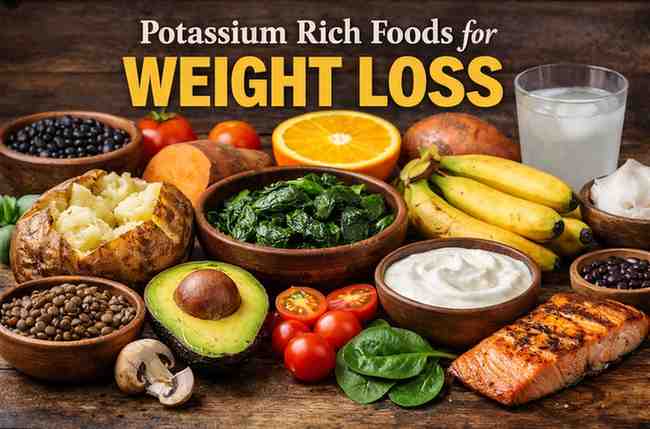
17 Potassium Rich Foods for Weight Loss (That Actually Make a Difference)
These are the ones I see work consistently in real routines — not just nutrition → textbooks.
1. Spinach (Cooked)
-
~840 mg per cup cooked
-
Low calorie, high volume
Cooked spinach surprises people. Raw is fine, but cooked delivers way more potassium per serving.
Almost everyone I’ve seen struggle with bloating improves when leafy greens become consistent.
2. Avocado
-
~700 mg per fruit
People avoid it because of calories.
But from what I’ve seen, adding half an avocado daily actually reduces late-night snacking. The satiety effect matters more than the calorie fear.
3. Sweet Potatoes
-
~540 mg per medium potato
-
High fiber
These help stabilize energy. Especially for people cutting carbs too aggressively.
4. White Potatoes
-
~900 mg per medium
Yes. Regular potatoes.
Most people I’ve worked with were shocked when I suggested potatoes for weight loss. But plain baked potatoes are filling, high potassium, and surprisingly supportive for appetite control.
5. Greek Yogurt (Plain)
-
~500–600 mg per cup
High protein + potassium. Strong combination.
6. Lentils
-
~730 mg per cup cooked
I’ve seen lentils reduce afternoon energy crashes dramatically.
7. Black Beans
-
~600 mg per cup
Fiber + potassium + satiety.
8. Salmon
-
~600 mg per 3 oz
Helps reduce inflammation, which matters more than people realize when trying to lose weight →.
9. Coconut Water
-
~470 mg per cup
Useful after workouts. Not necessary daily. But helpful in hot climates (especially in parts of the U.S. with high heat).
10. Bananas
-
~420 mg per medium
Not the highest. But convenient.
11. Beet Greens
Often ignored. Very high potassium. Harder to find, but powerful.
12. Tomato Sauce (No Added Sugar)
People don’t expect this one. But it adds up quickly in meals.
13. Mushrooms
-
~400 mg per cup cooked
Great for volume eating.
14. Edamame
Excellent snack swap for chips.
15. Butternut Squash
Comfort food alternative that supports mineral balance.
16. Oranges
Hydrating + potassium.
17. Plain Milk
Still underrated.
What Most People Get Wrong About Potassium and Weight Loss
This part matters.
Mistake #1: Thinking Potassium Burns Fat
It doesn’t directly burn fat.
What I’ve observed is this:
Better potassium intake → less water retention → better gym output → more consistent calorie control → actual fat loss over time.
It’s indirect.
Subtle.
But powerful.
Mistake #2: Trying Supplements First
Almost everyone I’ve seen struggle with this does this one thing wrong:
They buy potassium pills.
Most over-the-counter supplements are very low dose anyway. And high-dose supplementation can be risky without medical supervision.
Food works better. Safer. Sustainable.
Mistake #3: Ignoring Sodium
If someone eats high sodium daily, increasing potassium helps — but it won’t fix everything.
Balance matters.
How Long Does It Take to See Results?
From patterns I’ve watched across dozens of people:
-
3–5 days: Less bloating
-
7–10 days: Slight drop in scale (mostly water)
-
2–3 weeks: More stable energy
-
4–6 weeks: Better adherence to calorie goals
Fat loss itself depends on overall intake.
But potassium often improves the “feeling stuck” phase quickly.
Is It Worth It?
If someone feels:
-
Puffy
-
Constantly bloated
-
Tired during workouts
-
Stuck despite calorie control
Then yes. It’s worth adjusting potassium intake.
If someone already eats whole foods, lots of produce, minimal sodium?
Then this probably isn’t their missing piece.
This is not for people expecting a dramatic fat-burning hack.
This is for people who feel “off” despite effort.
Who Should Avoid Aggressively Increasing Potassium?
Important.
People with:
-
Kidney disease
-
Certain heart conditions
-
Those on potassium-sparing medications
Should talk to a doctor first.
From what I’ve seen, most healthy adults can increase potassium from food safely. But context matters.
Objections I Hear All the Time
“I already eat bananas.”
One banana isn’t enough.
“Carbs make me gain weight.”
Cutting carbs too hard often reduces potassium intake. That backfires.
“I just need to cut more calories.”
Maybe.
But if water retention is masking progress, cutting more can make the body stress harder.
Reality Check Section
This will not:
-
Melt fat
-
Replace calorie control
-
Override poor sleep
-
Cancel binge eating
I’ve seen people try to “biohack” with potassium while still eating ultra-processed meals.
It doesn’t work like that.
It works when it supports an already decent foundation.
Quick FAQ (Straight Answers)
Do potassium rich foods for weight loss help burn fat?
Not directly. They improve fluid balance and energy, which supports fat loss consistency.
Can too much potassium be dangerous?
Yes, especially with kidney issues. Food sources are generally safe for healthy adults.
How much potassium do adults need?
Roughly 2,600–3,400 mg per day depending on sex and size.
What’s the fastest food-based fix?
Adding cooked spinach + potatoes + yogurt daily shifts intake quickly.
What I’ve Consistently Seen Work
Simple routine:
-
1 cup cooked spinach daily
-
1 baked potato or sweet potato
-
1 cup Greek yogurt
-
1 potassium-rich legume serving
That alone changes mineral balance fast.
Not complicated.
Just consistent.
Practical Takeaways
If you’re trying this:
Do:
-
Focus on whole foods
-
Track sodium for awareness
-
Notice how you feel, not just scale weight
-
Give it 2 weeks
Avoid:
-
High-dose supplements without guidance
-
Expecting instant fat loss
-
Ignoring calories entirely
Expect emotionally:
-
Relief when bloating drops
-
Frustration if weight doesn’t plummet
-
Gradual confidence as energy stabilizes
Patience here looks boring.
It looks like repeating the same mineral-supportive meals daily.
It looks like trusting slow shifts.
I’ve watched enough people finally stop feeling puffy and defeated once they corrected this one overlooked piece.
No — potassium rich foods for weight loss aren’t magic.
But when someone feels stuck and nothing else seems wrong?
This is often the quiet adjustment that makes everything else start working again.
And sometimes that small shift — the one that makes you feel normal again — is the real turning point.