Honestly, most people I’ve watched try to lose weight hit the same wall.
They clean up their diet. Cut calories. Maybe even start walking every morning. The scale moves for a week or two… then stalls. Or worse — it goes up overnight and they spiral.
And somewhere in that frustration spiral, someone mentions electrolytes. Or bloating. Or sodium. And eventually the idea pops up: “Potassium helps you lose weight.”
From what I’ve seen working closely with people navigating this, that statement isn’t wrong.
But it’s wildly misunderstood.
Potassium isn’t some secret fat-burning mineral. It’s not magic. But in the right context? It quietly fixes problems that are blocking progress.
And I didn’t expect it to be such a common issue until I started seeing the pattern → over and over again.
Why People Start Looking at Potassium in the First Place
Usually it begins with one of these situations:
-
Constant bloating despite eating “clean”
-
Puffy face in the morning
-
Stubborn scale fluctuations
-
Low-carb fatigue and headaches
-
Cravings that feel hormonal, not hunger-driven
-
Plateau after early weight loss success
Most people I’ve worked with mess this up at first.
They think weight loss is just calories. And yes, calories matter. But once sodium, water retention, and electrolyte imbalance enter the picture… things get weird fast.
Especially in the U.S., where sodium intake is high and potassium intake is often low.
That imbalance creates a very specific pattern.
Water retention.
Inflammation feeling.
Sluggishness.
Muscle fatigue.
Scale anxiety.
And then they blame themselves.
The Part No One Explains Clearly
Here’s the grounded version.
Potassium helps regulate fluid balance in your body.
When sodium is high and potassium is low, your body holds onto water.
Not fat. Water.
But when you step on a scale, you don’t see the difference.
I’ve seen people gain 3–5 pounds overnight from sodium-heavy meals. They assume they “blew it.” They restrict harder. Stress increases cortisol. More water retention.
Cycle repeats.
When potassium intake improves, especially through food, something shifts:
-
Bloating decreases.
-
Water retention stabilizes.
-
Muscles feel less tight.
-
Energy improves.
-
Cravings calm down slightly.
It’s not dramatic.
It’s subtle. But consistent.
And that consistency changes behavior.
That’s where weight loss actually happens.
So… Does Potassium Burn Fat?
Short answer:
No.
Long answer:
Not directly. But indirectly? It removes friction.
From what I’ve seen, potassium supports weight loss in three indirect but powerful ways:
1. It balances sodium → reduces water retention
When sodium and potassium are balanced, your body stops clinging to excess water.
People often drop 1–4 pounds of water weight in the first 1–2 weeks of correcting this.
This honestly surprised me after watching so many people try it.
They thought it was fat loss. It wasn’t. But it gave psychological momentum.
Momentum matters.
2. It improves muscle function → better workouts
Low potassium can cause:
-
Muscle cramps
-
Weakness
-
Fatigue
-
Poor recovery
Almost everyone I’ve seen struggle with plateau workouts ignores electrolytes.
When potassium intake improves, workouts feel smoother. That leads to:
-
More consistent exercise
-
Slightly higher intensity
-
Better long-term calorie burn
It’s not flashy.
But it stacks over time.
3. It stabilizes blood pressure & stress response
Chronic stress messes with fluid retention and cravings.
Potassium supports cardiovascular balance. That reduces some stress load.
It doesn’t eliminate emotional eating. But I’ve seen people feel “less wired.”
Subtle again. But real.
The Mistake Almost Everyone Makes
They jump to supplements.
Before adjusting food.
I’ve watched this play out dozens of times.
Someone hears “potassium helps you lose weight.”
They buy high-dose potassium tablets.
They take it randomly.
They don’t track sodium.
They don’t increase vegetables.
They don’t fix overall diet.
Then nothing happens.
Because the issue wasn’t a pill deficiency.
It was a pattern problem.
What Actually Works (From What I’ve Observed)
When potassium helps weight loss, it’s usually inside a bigger routine shift.
Here’s the pattern that consistently works:
-
Increase potassium-rich whole foods.
-
Moderate sodium instead of eliminating it.
-
Stay hydrated.
-
Maintain protein intake.
-
Walk daily.
-
Avoid extreme calorie restriction.
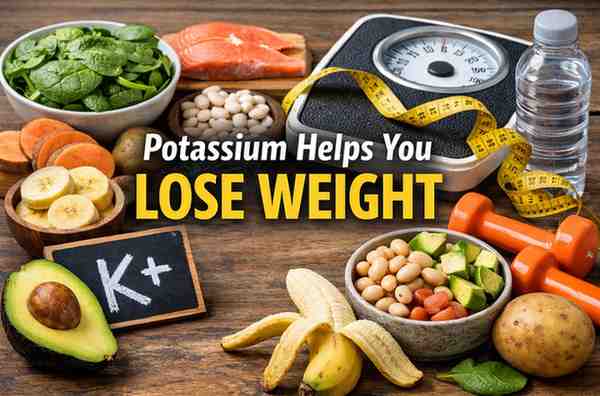
Foods I’ve repeatedly seen make a difference:
-
Spinach
-
Avocados
-
Sweet potatoes
-
Beans
-
Greek yogurt
-
Salmon
-
Bananas (yes, they’re fine)
People overcomplicate this.
It’s usually just replacing ultra-processed sides with potassium-dense options.
And doing it consistently.
How Long Does It Take to Notice a Difference?
From what I’ve seen:
Water retention changes: 5–14 days
Workout energy improvements: 1–3 weeks
Visible body composition changes: 4–8+ weeks
If someone expects dramatic fat loss in a week, they’ll quit.
The people who succeed treat potassium as support, not the solution.
That mindset shift alone changes outcomes.
Who This Is NOT For
Let’s be clear.
Potassium adjustments are not appropriate for:
-
Those on potassium-sparing medications
-
Individuals with certain heart conditions
-
Anyone without medical clearance if health issues exist
I’ve seen people assume “natural = safe.”
Not always.
Electrolytes affect heart rhythm. Respect that.
Common Mistakes That Slow Results
From what I’ve witnessed repeatedly:
1. Ignoring sodium entirely
Cutting sodium too low makes people feel awful.
Headaches.
Fatigue.
Irritability.
Balance matters more than elimination.
2. Assuming water weight equals failure
Scale spikes are usually fluid shifts.
Almost everyone I’ve seen struggle emotionally does this one thing wrong:
They react to daily scale changes.
Weekly averages tell the truth.
3. Under-eating potassium while dieting
Low-carb diets often drop fruit and starchy vegetables.
That’s where potassium lives.
People accidentally create imbalance while trying to be disciplined.
I didn’t expect this to be such a common issue until I saw the pattern across multiple clients.
Is It Worth Trying?
If someone is:
-
Bloated often
-
Eating high sodium
-
Plateaued despite consistency
-
Feeling drained during workouts
Then yes.
Correcting potassium intake is low-risk (if medically cleared), food-based, and often helpful.
If someone expects:
-
Rapid fat melting
-
Overnight body transformation
-
A replacement for calorie balance
Then no.
This will disappoint them.
Quick FAQ (People Also Ask Style)
Does potassium help burn belly fat?
No direct fat-burning effect. It may reduce bloating, which can make the stomach appear flatter.
Can too much potassium be dangerous?
Yes. Especially with kidney issues or certain medications. Always prioritize food sources and medical guidance.
How much potassium do adults need?
U.S. guidelines generally recommend around 2,600–3,400 mg per day depending on sex and age.
Should I take a supplement?
Only if advised by a healthcare professional. Food-first approach works best for most people.
Objections I Hear All the Time
“I already eat healthy.”
Maybe. But when we actually review intake, potassium-rich foods are often low.
Healthy doesn’t always equal balanced.
“I tried bananas. Nothing changed.”
One banana isn’t a strategy.
Consistency across multiple meals matters.
“Isn’t this just water weight?”
Partially, yes.
But water regulation affects comfort, performance, and motivation.
That ripple effect changes adherence.
And adherence changes fat loss.
A Reality Check Most People Need
Potassium helps you lose weight only in the sense that:
It removes obstacles.
It doesn’t override:
-
Overeating
-
Sedentary lifestyle
-
Chronic stress
-
Sleep deprivation
I’ve seen people fix electrolytes and still sabotage progress with 4 hours of sleep and weekend binge cycles.
No mineral can outwork that.
Still… when foundations are in place, correcting potassium imbalance makes the process feel smoother.
Less chaotic.
Less punishing.
That psychological relief is underrated.
Practical Takeaways
If I were guiding someone starting today, I’d suggest:
-
Track sodium and potassium for 3 days.
-
Add one potassium-rich food to two meals daily.
-
Stay hydrated.
-
Stop reacting to daily scale noise.
-
Give it 2–4 weeks before judging.
Expect:
-
Subtle early changes.
-
Reduced puffiness.
-
Slight energy improvement.
-
Emotional relief when scale stabilizes.
Don’t expect:
-
Dramatic fat drop.
-
Instant waist shrink.
-
Miracle transformation.
Patience here looks boring.
But boring routines build real results.
I won’t pretend potassium is some breakthrough discovery.
It’s not.
But I’ve watched enough people feel less stuck once they corrected this imbalance.
Sometimes the win isn’t fat melting away.
It’s removing the silent friction that kept them spinning their wheels.
And honestly? That shift alone has been enough to help people stay consistent long enough to finally see real change.