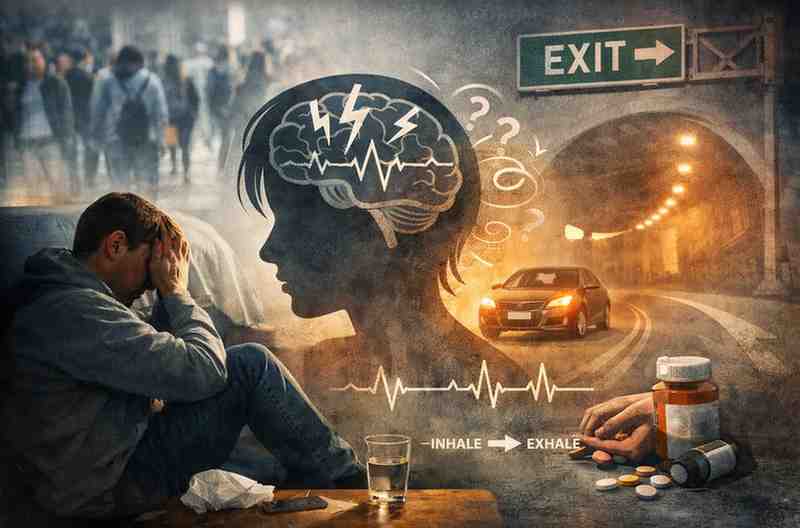
Honestly, I didn’t think this would work. I’d already tried three other things and felt stupid for hoping again. Panic Anxiety Disorder had been sitting on my chest for months—sometimes quiet, sometimes loud enough to hijack my whole day. Grocery store aisles felt like tunnels. My phone buzzing made my heart sprint. I kept telling myself I was being dramatic. I wasn’t. I was scared, exhausted, and tired of pretending I had it together.
Not gonna lie… the first few weeks were messy. I’d “commit” to a plan in the morning and bail by noon. I messed this up at first. A lot. But slowly—annoyingly slowly—things shifted. Not in a movie-montage way. More like: one fewer meltdown in a week. Then a morning where my coffee didn’t trigger a spiral. Small wins. The kind you don’t post about.
If you’re here because panic attacks are wrecking your routines or your confidence, I get it. I also get the skepticism. I rolled my eyes at half the advice I was given. Some of it helped. Some of it made things worse. Here’s the lived-in version of what Panic Anxiety Disorder has actually looked like for me—and what I’d do differently if I had to start over.
What I thought Panic Anxiety Disorder was (and what it actually felt like)
I used to think panic was just “big anxiety.” Like worry on steroids. That misunderstanding cost me months.
What it felt like in my body:
-
Sudden heat flashes.
-
Heart doing parkour.
-
Hands buzzing.
-
A weird floaty head feeling that made me sure I was about to pass out.
-
The urge to escape wherever I was. Immediately.
The mental side:
-
“This is it. Something is wrong with me.”
-
“I’m going to embarrass myself.”
-
“I won’t be able to stop this.”
I kept waiting for a clear trigger. Sometimes there was one (crowds, caffeine, bad sleep). Sometimes… nothing. Panic would just show up like a rude guest and rearrange the furniture.
What surprised me:
The fear of the next attack became louder than the attacks themselves. I started planning my life around “what if.” That avoidance shrunk my world fast.
Why I finally tried to change anything
Two reasons:
-
I was tired of negotiating with my nervous system every morning.
-
I realized “powering through” was actually making it worse.
From what I’ve seen, at least, Panic Anxiety Disorder feeds on control. The harder I tried to clamp down on symptoms, the more intense they got. That honestly surprised me. I thought willpower was the fix. Turns out, it was part of the problem.
What I tried first (and why some of it failed)
Let me save you some time and embarrassment.
1) Avoiding triggers completely
I dodged coffee. Then crowds. Then driving far. Then the gym.
Result? Temporary relief. Long-term… panic got louder.
Why it failed:
Avoidance taught my brain that normal stuff was dangerous. My comfort zone shrank.
2) Googling symptoms mid-attack
Terrible idea. Truly.
Why it failed:
Every symptom had a scary explanation online. My panic ate that up.
3) Forcing calm
Deep breathing with clenched teeth. Repeating “I’m fine” like a threat.
Why it failed:
My body read that as “we’re in danger.” Tension told my nervous system to keep the alarm blaring.
4) White-knuckling social stuff
I’d go out and pretend I was okay. Then crash later.
Why it failed:
No processing. Just pressure. Panic builds a tab. It always collects.
The shift that actually changed the trajectory
This is where I stopped fighting symptoms and started getting curious about them. Not in a woo-woo way. In a “what if I let this wave pass instead of trying to dam it” way.
Here’s what that looked like in real life:
-
When my heart raced, I stopped checking my pulse.
-
When dizziness hit, I sat down instead of bolting.
-
When the urge to escape showed up, I stayed for 60 seconds longer than I wanted to.
This honestly surprised me. The attacks didn’t disappear overnight. But they peaked faster. And they didn’t leave me as wrecked afterward.
Why this works (from what I can tell):
Panic Anxiety Disorder runs on the fear of fear. When I stopped treating symptoms like emergencies, my body slowly learned they weren’t.
My scrappy, imperfect routine (nothing fancy)
I tried to build a “perfect” routine. I failed. So I built a doable one.
Daily basics I could stick to (most days)
-
Sleep guardrails:
Not perfect sleep. Just consistent-ish bedtimes. -
Caffeine boundaries:
Not zero. Just not on an empty stomach. -
Movement:
Walks. Boring, reliable walks. -
One nervous-system check-in:
A minute of slow exhale breathing. Not a whole meditation saga.
During an attack (my real-time script)
-
“This is uncomfortable, not dangerous.”
-
Slow exhale (in 4, out 6).
-
Feel my feet on the ground.
-
Name 3 things I can see.
-
Wait 90 seconds before deciding to escape.
I didn’t expect that at all… but giving myself a tiny delay before running made a huge difference. Panic likes urgency. I started adding speed bumps.
What therapy taught me (and what it didn’t)
Therapy wasn’t instant relief. It was more like untangling old wires.
What helped:
-
Learning how panic escalates in stages.
-
Catching my “what if” spirals early.
-
Exposure done gently, not like punishment.
What didn’t magically help:
-
Talking about my childhood for weeks without tools.
-
Insight without practice.
-
Hoping one “breakthrough session” would cure me.
If therapy felt slow, you’re not broken. Panic Anxiety Disorder is stubborn. Progress looks boring before it looks impressive.
How long did it take to feel different?
People always want a timeline. I did too.
Here’s my messy, honest one:
-
2–3 weeks: attacks still happened, but I recovered faster.
-
6–8 weeks: fewer “full-blown” episodes. More “waves.”
-
3–4 months: I trusted my body again. Not completely. Enough.
-
6 months: panic wasn’t running the schedule anymore.
Still, progress wasn’t linear. Bad weeks popped up. Travel weeks wrecked my routine. Stress spiked symptoms. That didn’t mean I was back at zero. It just meant I was human.
Common mistakes that slowed everything down
If I could text my past self, it’d be this:
-
Trying to fix panic while panicking
Learn skills when you’re calm. Use them when you’re not. -
Measuring success by “no symptoms”
Better metric: “Did I handle this differently?” -
Comparing my timeline to strangers online
Panic doesn’t read other people’s progress charts. -
Skipping basics when I felt better
The boring stuff (sleep, food, movement) kept the floor from falling out.
“Is this even worth trying?” (the real talk)
Short answer: for me, yes.
Longer answer: it depends on what you expect.
If you’re hoping for:
-
A hack that ends Panic Anxiety Disorder forever
-
A supplement that erases attacks
-
A mindset shift that works instantly
…you’re probably going to be disappointed. I was.
If you’re okay with:
-
Gradual relief
-
Awkward practice
-
Some backslides
-
Learning how to surf the wave instead of deleting the ocean
Then yeah. It’s worth trying.
Objections I had (and how they played out)
“I don’t have time for all this.”
I said this while spending hours recovering from attacks. The time was already being taken. I just redirected some of it.
“Breathing exercises don’t work for me.”
They didn’t at first. I was doing them like a hostage negotiation. Once I practiced when calm, they started helping under pressure.
“If I let panic happen, won’t it get worse?”
This was my biggest fear. From what I’ve seen, at least, allowing the sensations without adding fear shortened them. Fighting them stretched them out.
“I’ll look weird if I do grounding in public.”
Yeah, sometimes. I learned subtle versions: feeling my toes in my shoes. Counting ceiling lights. No one noticed.
Reality check: what can go wrong
Let’s not sugarcoat this.
-
Exposure can backfire if rushed.
Forcing yourself into the scariest situations too fast can spike symptoms. Build gradually. -
Bad advice exists.
“Just ignore it” made me feel like a failure. Ignoring isn’t the same as allowing. -
Some days you’ll do everything ‘right’ and still feel awful.
That’s not proof it’s not working. It’s proof bodies are weird. -
If panic is tied to trauma, you may need more support.
Self-help alone didn’t cut it for me there.
Who this approach is NOT for
This is important.
-
If you’re dealing with medical symptoms that haven’t been checked out, get that ruled out first. Peace of mind matters.
-
If your panic is linked to substance use or withdrawal, this needs professional support.
-
If you’re in constant crisis mode with zero safety net, please loop in a clinician. DIY-ing Panic Anxiety Disorder alone can be brutal.
No shame in needing backup. I needed it.
Short FAQ (for the stuff people always ask)
Can Panic Anxiety Disorder go away completely?
Sometimes symptoms fade a lot. Sometimes they become background noise. My goal shifted from “never again” to “I know how to handle this.”
What’s the fastest way to stop a panic attack?
There’s no guaranteed off-switch. Slowing the exhale, grounding your senses, and not adding catastrophic thoughts can shorten the ride.
Do meds help?
They help some people a lot. They didn’t erase my panic, but they lowered the volume when I needed breathing room. This is a personal call with a professional.
Will exercise cure it?
No. But consistent movement made my baseline calmer. Think support, not cure.
Is this all in my head?
Nope. Panic is a body response. Your nervous system is doing what it learned to do. We’re teaching it new habits.
Patterns I noticed over time
These took me a while to see:
-
Panic spiked when I was under-fueled (skipping meals).
-
My worst weeks followed bad sleep + high caffeine + zero movement.
-
Anticipatory anxiety was often worse than the actual event.
-
Being kind to myself after an attack shortened the next one.
-
Tracking tiny wins kept me from quitting on low days.
From what I’ve seen, at least, Panic Anxiety Disorder hates compassion. Not because compassion is bad—but because compassion dissolves the shame that keeps panic looping.
The “don’t repeat my mistake” list
-
Don’t wait for confidence before you practice.
-
Don’t punish yourself for having symptoms.
-
Don’t make your whole identity “the anxious one.”
-
Don’t expect consistency in the early months.
-
Don’t ghost the basics when you feel better.
I learned these the slow way.
Practical takeaways (no hype, just doable stuff)
-
Build skills when calm.
Breathing, grounding, self-talk. Practice off the battlefield. -
Let sensations be there without storytelling.
“Heart racing” is data. “I’m dying” is the story. -
Add tiny exposures.
Stay 30–60 seconds longer. Then leave if you need to. -
Track recovery, not perfection.
How fast did you come down? That’s progress. -
Protect your baseline.
Sleep, food, movement. Boring. Effective. -
Ask for backup when you’re stuck.
Therapy, groups, medical support. This isn’t a solo sport. -
Expect emotional weirdness.
Relief can feel scary at first. Your nervous system isn’t used to calm.
So yeah—this isn’t magic. Panic Anxiety Disorder didn’t vanish because I read the right paragraph or nailed the perfect breathing rhythm. It changed because I stopped treating panic like an enemy and started treating it like a loud, anxious part of me that needed new instructions.
Some days I still get that old flutter. It doesn’t mean I failed. It means my body remembered an old pattern and I reminded it of a new one. That’s the work. Quiet. Repetitive. Not glamorous.
But for me? It stopped feeling impossible. And that was enough to keep going.