Not gonna lie… the whole idea of nutrient-dense foods used to annoy me.
Like, seriously. The phrase sounds like something a fitness blogger would whisper before selling you a $59 meal plan.
I always thought eating healthy was simple:
Less junk. More veggies. Boom. Done.
But apparently it’s not that simple, because every time I thought I was “doing it right,” something in my body disagreed — low energy, cravings, random bloating, or that weird tired-but-wired feeling at night.
So yeah… I eventually wandered into the world of nutrient-dense foods, mostly out of frustration, partly out of curiosity, and maybe a little bit because my jeans were giving me attitude.
This is the story of how I finally figured it out — with mistakes, confusion, and a few “oh crap” moments in-between.
1. I Used to Think ‘Nutrient-Dense Foods’ Meant Eating Like a Rabbit
This honestly makes me laugh now.
If you’d asked me a couple years back what nutrient-dense foods were, I would’ve given you the most embarrassing answer: “You know… salads. And maybe quinoa? And those weird chia things?”
Yeah. No.
I was wrong.
Turns out the idea is stupidly simple:
Nutrient-dense foods = foods that actually give your body something useful per bite.
Meanwhile I was eating things that looked healthy but were basically decorative.
Like those giant smoothie bowls that cost $14 and are basically sugar with good lighting.
Once I understood that nutrient-dense foods weren’t just vegetables or “fit girl snacks,” a LOT of things made sense.
2. The Moment I Realized My Diet Was… Hollow
Here’s the moment that got me:
I was eating enough calories, but I still felt tired all day.
Like I was running on fumes.
And when I finally looked at what I was eating, it hit me like a brick:
I was eating a bunch of low-nutrient foods disguised as “healthy”:
-
low-fat everything
-
flavorless cereal
-
granola bars pretending to be nutritious
-
smoothies with more fruit than common sense
-
bread with a vitamin label trying too hard
-
veggie chips (they should be illegal for how misleading they are)
No wonder I needed coffee like a religion.
I wasn’t feeding myself.
I was… stuffing myself.
Huge difference.
3. The First Week I Switched to Nutrient-Dense Foods Was Honestly Annoying
I’m not gonna sugarcoat this:
The first week was rough.
Not because the food was bad — it wasn’t.
But because:
-
cravings hit
-
I got bored
-
I wanted my usual comfort snacks
-
my brain was like “okay but what if we had fries instead?”
It didn’t feel natural at first.
But something weird happened around day 7:
My energy picked up.
My bloating went down.
My skin stopped being rude.
My mood wasn’t so up-and-down.
It was like my body went: “Finally, bro. This is what I’ve been asking for.”
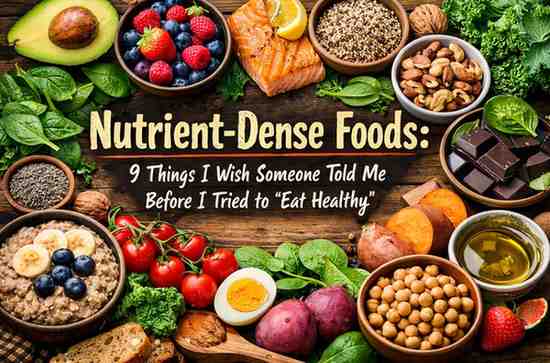
4. My Go-To List of Nutrient-Dense Foods (That Don’t Taste Like Sadness)
I’m not here to judge, but if your idea of nutrient-dense foods is steamed broccoli and sadness…
please let me upgrade your life.
Here’s what actually helped me — taste-wise AND energy-wise.
1. Eggs
Cheap. Fast. High-protein.
Perfect for when you’re lazy.
2. Greek yogurt
The plain one, not the sugary dessert version.
3. Berries
Blueberries became my emotional support fruit.
4. Salmon
Yes, it’s pricey, but it’s worth it when you can.
5. Avocado
Healthy fats. And it goes on literally anything.
6. Sweet potatoes
Like carbs, but with manners.
7. Leafy greens
Not iceberg lettuce. Actual greens.
8. Beans
Black beans. Chickpeas. Lentils.
Cheap protein kings.
9. Nuts
Not the whole bag.
Learn from my mistakes.
10. Oats
Warm. Filling. Comforting.
The least judgmental breakfast.
11. Lean meats
Chicken, turkey, all that basic-but-reliable stuff.
12. Olive oil
Honestly changed the game for me.
13. Mushrooms
Weird texture. Big benefits.
14. Broccoli
Yes, the classic. But roasted — not boiled like punishment.
15. Dark chocolate
80% or higher. Trust me.
That’s the list I wish someone handed me in the beginning instead of those trendy “superfoods.”
5. The Weird Thing Nobody Tells You About Eating This Way
This is the part that surprised me most:
Nutrient-dense foods stop cravings.
Like… actually stop them.
I didn’t expect this.
I thought my cravings were emotional (they sometimes are), but they were also biological.
My body wasn’t asking for snacks.
It was asking for nutrients.
Once I fed it properly?
The noise in my brain shut up.
The “I need chocolate” voice chilled out.
The random binges stopped.
It was honestly wild.
6. Here’s Where I Messed Up (Learn From My Chaos)
Okay. Time for confessions.
I made some dumb mistakes when I first started with nutrient-dense foods:
Mistake #1: Going TOO healthy
I tried eating like a monk and lasted… 2 days.
Mistake #2: Cutting carbs
Terrible idea.
My body loves carbs. I love carbs.
Why did I do this.
Mistake #3: Eating the same thing every day
I got bored. Then I rebelled.
It wasn’t cute.
Mistake #4: Overdoing protein
My stomach was like,
“Ma’am. Please.”
Mistake #5: Starving then overeating
Classic chaos cycle.
Mistake #6: Not adding enough fat
Healthy fats = satisfaction.
Without them I was basically hangry at all times.
Once I stopped making these mistakes, everything got easier.
7. A Simple Way I Eat More Nutrient-Dense Foods Without Losing My Mind
I swear this changed everything for me.
Instead of trying to overhaul my life, I just created a rule:
Add ONE nutrient-dense food to every meal.
Not replace.
Not restrict.
Just… add.
It looked like:
-
oatmeal + berries
-
lunch + a handful of greens
-
dinner + beans or avocado
-
snack + nuts or yogurt
That’s it.
No drama.
No overthinking.
And somehow, without even trying, my whole diet shifted.
8. The U.S. Food Culture Makes This Harder Than It Should Be
I live in the U.S.
And let me be brutally honest:
The food system here is… not helping.
Every aisle is:
-
cheap junk
-
sugary “health” snacks
-
frozen dinners pretending to be nutritious
-
food that’s engineered to make you crave more
Eating nutrient-dense foods in America sometimes feels like swimming upstream.
But once I found my staple foods, it felt doable.
And honestly?
It’s cheaper than buying “health foods” anyway.
Eggs, beans, oats, veggies — these aren’t expensive.
They’re just not marketed like sexy wellness products.
Thank God.
9. The Part Nobody Talks About: This Isn’t About Weight
I swear, this was the biggest mental shift for me.
The moment I stopped focusing on weight
and started focusing on energy, strength, mood, sleep…
eating nutrient-dense foods felt natural.
It wasn’t punishment.
It wasn’t restriction.
It wasn’t “dieting.”
It was nourishment.
And once that happened?
My body responded in ways I didn’t expect:
-
I slept deeper
-
My stress dropped
-
My digestion chilled
-
My brain felt sharper
-
My moods stabilized
-
I felt alive, not just surviving
The changes were subtle but steady.
And real.
What I Know Now (That I Didn’t Know Before)
If I had to simplify everything I learned into a few truths, here’s what sticks:
1. Nutrient-dense foods aren’t fancy.
They’re basic, everyday foods.
2. Your body knows when it’s fed well.
The peace you feel is real.
3. You can’t out-supplement a bad diet.
Tried it. Failed it.
4. Variety matters.
Don’t torture yourself with the same meals.
5. This isn’t a diet.
It’s a way to stop feeling like crap.
6. You’ll have slip-ups.
It’s fine. Eat your fries.
7. Start small.
Small changes stick the longest.
Honestly?
I didn’t expect nutrient-dense foods to change my life even a tiny bit.
I thought it was hype. Or just another “clean eating” trend.
But when you finally give your body what it’s been asking for…
everything feels different.
Not perfect.
Not magical.
Just… calmer.
Lighter.
More you.
So no — this isn’t a miracle.
But for me?
Yeah. It made everything feel a little more manageable.