I’ve watched more people panic over lab results than I can count.
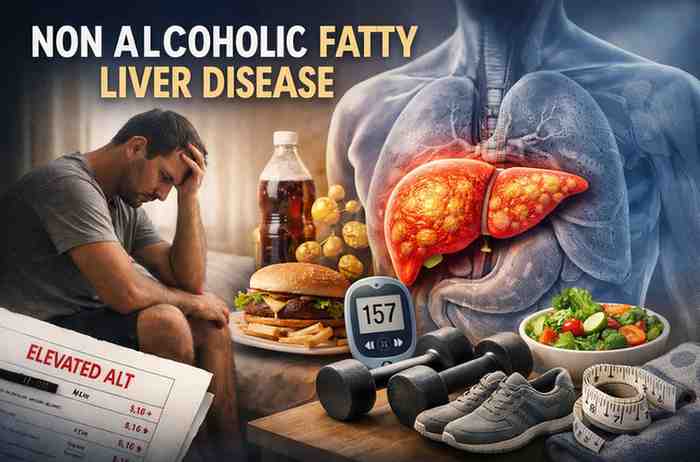
It usually starts the same way. A routine blood test. Slightly elevated ALT. A doctor says, “You have Non Alcoholic Fatty Liver Disease.” And suddenly they’re googling worst-case scenarios at midnight.
From what I’ve seen, the hardest part isn’t the diagnosis. It’s the confusion after.
They don’t drink. Or maybe barely. They don’t feel sick. So how is their liver “fatty”? And why does every article either sound terrifying or weirdly casual about it?
Non Alcoholic Fatty Liver Disease (NAFLD) isn’t rare anymore. It’s everywhere in the U.S. I’ve seen it in busy corporate professionals, suburban moms, construction workers, fitness beginners, even people who look “normal weight.”
And almost everyone makes the same mistakes in the beginning.
Let’s talk about what I’ve actually seen work. And what quietly backfires.
First, What Non Alcoholic Fatty Liver Disease Actually Is (Without the Medical Lecture)
At its simplest:
Non Alcoholic Fatty Liver Disease = excess fat stored in the liver in people → who don’t drink heavily.
That’s it.
But here’s what surprised me after watching so many cases: it’s rarely just about fat in the liver. It’s usually a metabolic signal.
From what I’ve seen, NAFLD often travels with:
-
Insulin resistance
-
Belly fat (even if overall weight isn’t extreme)
-
High triglycerides
-
Slightly elevated fasting glucose
-
Sedentary lifestyle
-
Chronic stress
-
Sleep issues
It’s less a liver problem in isolation… and more a metabolism story showing up in the liver first.
That shift in understanding changes everything.
Why So Many Americans End Up Here
I didn’t expect this to be such a common issue. But after watching patterns repeat across dozens of people, it makes sense.
Most people with NAFLD in the U.S. share a few lifestyle rhythms:
-
High-carb, low-protein breakfast (bagels, cereal, pastries)
-
Sitting 8–10 hours daily
-
Late-night eating
-
Weekend “reset” mentality
-
Stress-driven snacking
-
Sleep under 6–7 hours
Not extreme. Just… consistent.
And the liver doesn’t care about intentions. It responds to patterns.
Almost everyone I’ve seen struggle with this does this one thing wrong at first:
They try to fix it fast.
The Panic Phase (And Why It Backfires)
Here’s what usually happens in week one after diagnosis:
-
They cut all carbs overnight.
-
They start extreme fasting.
-
They buy liver detox supplements.
-
They try to lose 10 pounds in 2 weeks.
-
They eliminate entire food groups.
And for about 10 days?
They feel powerful.
Then:
-
Energy crashes.
-
Cravings spike.
-
They binge.
-
They feel like they “failed.”
-
Labs don’t instantly normalize.
-
Motivation tanks.
Most people I’ve worked with mess this up at first because they assume urgency means aggression.
But the liver doesn’t need punishment. It needs consistency.
What Actually Moves the Needle (From What I’ve Seen)
There are three patterns I’ve repeatedly seen improve Non Alcoholic Fatty Liver Disease.
Not flashy. Not dramatic. But reliable.
1. 7–10% Body Weight Reduction (Slowly)
This is boring advice. I know.
But when people lose about 7–10% of their body weight → gradually (over 4–6 months), liver enzymes almost always improve.
Not always instantly.
Not always dramatically.
But steadily.
The people who rush this? They rebound.
The people who take 20 weeks instead of 4? They win.
2. Protein Anchoring
This honestly surprised me.
When people focus on:
-
25–40g protein per meal
-
Whole foods
-
Fiber-rich carbs
-
Reduced liquid sugar
Their appetite stabilizes.
Which stabilizes insulin.
Which reduces fat storage pressure on the liver.
It’s not about “no carbs.” It’s about blood sugar → rhythm.
3. Walking. Not Killing Yourself at the Gym.
Almost everyone thinks they need intense workouts.
What I’ve consistently seen work:
-
8,000–10,000 steps daily
-
2–3 resistance sessions weekly
-
Nothing extreme
The liver responds to insulin sensitivity improvements. And walking does more for that than people expect.
How Long Does It Take to Reverse Non Alcoholic Fatty Liver Disease?
This is the question everyone wants answered.
Here’s what I’ve observed across real cases:
-
Mild NAFLD: 3–6 months to see measurable improvement
-
Moderate cases: 6–12 months
-
Severe fatty infiltration: longer, sometimes 12+ months
Blood markers often improve before imaging does.
And here’s the emotional part no one talks about:
Progress feels invisible at first.
People expect to “feel” their liver healing. They don’t.
What they notice instead:
-
Less bloating
-
Better energy
-
Fewer sugar crashes
-
Slight waist reduction
The lab results catch up later.
What Consistently Fails
Let me be blunt.
These approaches look good online but rarely hold up in real life:
-
Liver detox teas
-
3-day juice cleanses
-
Zero-carb forever plans
-
Random supplement stacking
-
Weekend-only discipline
-
“I’ll fix it after this trip” thinking
Almost everyone I’ve seen struggle with NAFLD gets trapped in intensity cycles.
Extreme effort → burnout → guilt → repeat.
The liver prefers boring consistency over dramatic bursts.
FAQ (Straight Answers)
Can Non Alcoholic Fatty Liver Disease be reversed?
Yes — especially in early stages.
From what I’ve seen, fat accumulation is often reversible with weight reduction and metabolic improvement.
Is NAFLD dangerous?
It can be.
Most cases stay stable.
Some progress to inflammation (NASH), fibrosis, or cirrhosis.
The risk increases if metabolic issues remain unaddressed.
Do you need medication?
Usually lifestyle changes come first.
Medication is considered if there are advanced changes or other metabolic conditions.
Can skinny people get it?
Yes. I’ve seen it.
Normal BMI doesn’t guarantee metabolic health.
Common Mistakes That Slow Results
Let’s talk about the subtle ones.
-
Skipping protein at breakfast →
-
Drinking “healthy” smoothies loaded with sugar
-
Underestimating liquid calories
-
Sleeping 5 hours nightly
-
Ignoring stress
-
Losing weight too fast
-
Not retesting labs
Most people focus only on food.
But stress and sleep are quiet drivers.
I’ve seen liver enzymes improve just from consistent sleep correction alone. That surprised me.
Who This Approach Is NOT For
Let’s be honest.
If someone wants:
-
Rapid 30-day transformation
-
Zero patience
-
A supplement-only solution
-
To keep current habits unchanged
They’ll hate this.
This path requires repetition. And boring days.
It’s not glamorous.
Objections I Hear All the Time
“But I don’t drink. How did this happen?”
Because alcohol isn’t the only fat-storage driver.
Insulin resistance is.
“My doctor didn’t seem worried.”
Many aren’t — unless numbers are severe.
But early intervention prevents escalation.
“I tried dieting before.”
Most people tried aggressive dieting before.
This is metabolic repair. Different mindset.
Reality Check: What Patience Actually Looks Like
This part matters.
Improving Non Alcoholic Fatty Liver Disease often looks like:
-
Eating similarly structured meals most weekdays
-
Planning ahead for travel
-
Not spiraling after one off-plan meal
-
Checking labs every 3–6 months
-
Adjusting gradually
It’s less heroic than people expect.
But it works.
The Emotional Side No One Mentions
I’ve watched people feel:
-
Ashamed
-
Confused
-
Angry at themselves
-
Scared about long-term damage
Then slowly shift into empowerment once they realize:
This isn’t a moral failure. It’s a metabolic signal.
And that shift? That’s where change sticks.
When people stop trying to punish themselves and start stabilizing their biology.
That’s when liver numbers start moving.
Practical Takeaways
If you’re dealing with Non Alcoholic Fatty Liver Disease in the U.S., here’s the grounded path I’d suggest based on what I’ve seen repeatedly work:
Do This:
-
Aim for 7–10% gradual weight loss
-
Anchor meals around protein
-
Walk daily
-
Lift weights 2–3x weekly
-
Improve sleep to 7+ hours
-
Reduce added sugars and refined carbs
-
Retest labs every few months
Avoid This:
-
Detox fads
-
Crash dieting
-
Ignoring stress
-
Waiting for symptoms
-
Relying only on supplements
Expect This Emotionally:
-
Slow start
-
Doubt in month one
-
Momentum around month three
-
Visible lab changes later than you want
Still — steady progress builds quiet confidence.
Here’s the honest truth →.
Non Alcoholic Fatty Liver Disease isn’t rare. It isn’t a death sentence either.
From what I’ve seen, the people who improve aren’t the most extreme. They’re the most consistent.
No magic.
No dramatic “before and after.”
Just small metabolic shifts stacking up.
So no — this isn’t a miracle fix.
But I’ve watched enough people stop feeling helpless once they understood what was actually happening inside their bodies. Sometimes that clarity alone changes everything.
And sometimes… that’s the real relief.