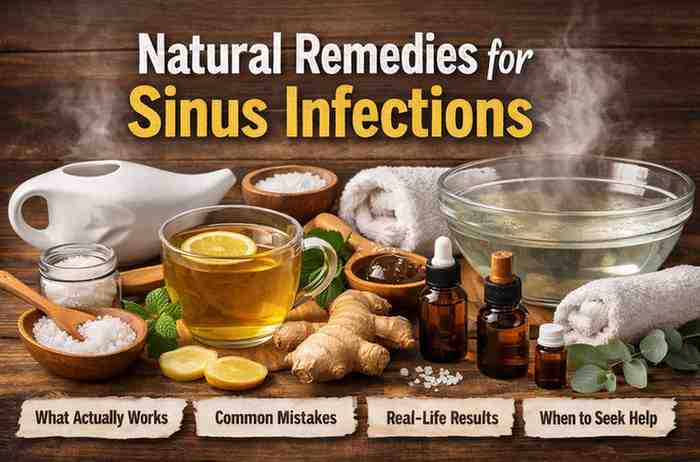
Honestly, most people I’ve watched deal with sinus infections don’t start with curiosity.
They start exhausted.
It’s usually after the third bad night. The pressure behind the eyes. That dull headache that won’t quit. The way your face feels swollen even when it isn’t. Someone I know once described it as “having a brick slowly expanding behind my nose.”
And that’s when they start looking into natural remedies for sinus infections — not because they’re anti-medication, but because they’re tired of the cycle. Antibiotics. Temporary relief. Then it comes back. Or they’re told it’s viral and to “wait it out.”
From what I’ve seen, people don’t want theory. They want something that helps them breathe tonight.
So let’s talk about what actually works in the real world. What people mess up. What surprised me after watching so many try this. And who probably shouldn’t bother.
Why People Turn to Natural Remedies (And What They’re Really Hoping For)
Most people I’ve worked with aren’t trying to be holistic purists.
They’re hoping for one of three things:
-
Relief without another round of antibiotics
-
Fewer side effects (no stomach upset, no brain fog)
-
Something they can control at home
But here’s the disconnect.
Almost everyone assumes natural means slow and mild.
That’s not always true.
Some of the most effective natural approaches work quickly — if done correctly. The problem is that most people do them halfway. Or inconsistently. Or in the wrong order.
And then they assume it “doesn’t work.”
First: What a Sinus Infection Actually Is (Without Getting Academic)
From what I’ve observed across dozens of real cases:
-
Many sinus infections start as a cold.
-
Inflammation blocks drainage.
-
Mucus thickens.
-
Pressure builds.
-
Bacteria sometimes join the party.
The key word is drainage.
Every natural remedy that works well shares one goal:
Reduce inflammation + improve drainage.
If it doesn’t do one of those two things, it’s usually just comfort therapy.
Comfort is fine. But comfort alone won’t clear it.
Remedy #1: Saline Rinsing (Done Properly — Not Casually)
This one consistently works.
And almost everyone messes it up at first.
They:
-
Use too little saline
-
Don’t lean forward enough
-
Don’t do it daily
-
Stop once they feel 20% better
From what I’ve seen, proper saline rinsing does three things:
-
Physically clears mucus
-
Reduces inflammatory load
-
Improves airflow within days
What surprised me?
People who commit to twice daily rinsing for 5–7 days often improve faster than those hopping between five different remedies.
That said — use distilled or previously boiled water. Non-negotiable.
Remedy #2: Steam — But With Structure
Steam alone isn’t magic.
But structured steam? That’s different.
The people who get results:
-
Do 10–15 minutes
-
Lean forward
-
Breathe slowly through the nose
-
Follow immediately with saline rinse
Steam loosens. Saline clears.
That combo is underrated.
What fails?
Quick face-over-a-bowl-for-60-seconds sessions. That’s just symbolic effort.
Remedy #3: Hydration (Yes, But Not Just “Drink Water”)
Everyone rolls their eyes at this.
But here’s the pattern I’ve noticed:
People who increase fluids meaningfully — not casually — see thinner mucus within 48 hours.
Meaningfully means:
-
Steady intake across the day
-
Warm fluids (broths, herbal teas)
-
Electrolytes if mildly dehydrated
Dehydrated sinuses = sticky congestion.
Simple. Not glamorous.
But real.
Remedy #4: Humidification (If Your Environment Is Dry)
I didn’t expect this to be such a common issue, but indoor air in many U.S. homes — especially during winter — is dry enough to prolong sinus irritation.
Signs this is your issue:
-
Worse at night
-
Dry throat on waking
-
Nose feels tight or burning
A humidifier won’t cure infection.
But it reduces irritation, which helps drainage normalize.
Subtle. But helpful.
Remedy #5: Anti-Inflammatory Support (Food & Lifestyle)
From what I’ve seen:
Inflammation is often the bottleneck.
People who:
-
Reduce dairy temporarily (if mucus feels thick)
-
Cut excess sugar
-
Prioritize sleep
…recover more smoothly.
Is dairy evil? No.
But some people clearly produce thicker mucus when inflamed.
It’s individual.
And most people don’t test this long enough to know.
Remedy #6: Warm Compresses for Pressure Relief
This one’s about comfort — but real comfort matters.
Applied over:
-
Cheeks
-
Forehead
-
Between the eyes
It improves circulation and reduces facial pressure.
It won’t fix the infection.
But it makes the waiting less miserable.
And that emotional relief matters more than people admit.
Remedy #7: Gentle Movement
This surprised me.
Light movement — even slow walking — improves sinus drainage.
Stagnation makes pressure worse.
People who stay in bed all day often feel worse by evening.
Not because they’re lazy.
Because gravity helps.
How Long Do Natural Remedies for Sinus Infections Take?
From real-world observation:
-
Mild viral cases: 5–10 days
-
Moderate congestion with inflammation: 7–14 days
-
Chronic or recurring cases: weeks (with lifestyle shifts)
If nothing improves after 10 days — or symptoms worsen — it’s time for medical evaluation.
Natural approaches aren’t about avoiding doctors.
They’re about reducing unnecessary escalation.
Common Mistakes I Keep Seeing
Almost everyone I’ve seen struggle with this does one of these:
-
Stops too early
-
Jumps between remedies daily
-
Ignores hydration
-
Assumes pressure means antibiotics are required
-
Doesn’t rule out allergies
The stop-start cycle is the biggest issue.
Consistency beats variety.
When Natural Remedies Don’t Work
Let’s be honest.
Sometimes it’s bacterial.
Red flags:
-
Fever above 101°F
-
Symptoms worsening after initial improvement
-
Severe one-sided facial pain
-
Thick green discharge lasting beyond 10 days
At that point, stubbornness isn’t wisdom.
Get checked.
Natural remedies are supportive tools — not identity badges.
Quick FAQ (People Also Ask Style)
Do natural remedies cure sinus infections?
They can help the body resolve many mild to moderate cases. They don’t replace medical treatment when needed.
Is it safe to avoid antibiotics?
In mild viral cases, yes. But worsening or persistent symptoms need evaluation.
What works fastest?
Steam + saline + hydration combination tends to show the quickest noticeable relief.
Can this prevent recurrence?
Sometimes — especially if inflammation triggers are addressed.
Objections I Hear All the Time
“If this worked, doctors would recommend it.”
Many do recommend saline rinsing and hydration. It’s just not dramatic advice.
“I tried steam once. Didn’t work.”
Once isn’t a protocol.
“I don’t have time for all this.”
Then prioritize:
-
Saline rinse
-
Hydration
-
Sleep
Start there.
Reality Check Section
This approach is NOT for:
-
Severe infections with high fever
-
People with immune compromise
-
Chronic sinus disease needing surgical evaluation
Also:
Results aren’t always linear.
You might feel better day three. Worse day four. Then better again.
That emotional rollercoaster trips people up.
They assume regression means failure.
Often it’s just inflammation fluctuating.
What Actually Works Most Consistently (From What I’ve Seen)
If I had to narrow it down based on patterns:
-
Twice daily saline
-
Steam before rinsing
-
Aggressive hydration
-
Sleep protection
-
Avoiding inflammatory triggers
Simple. Repeated.
Boring, honestly.
But effective.
Practical Takeaways
If you’re trying natural remedies for sinus infections, here’s what I’d suggest:
-
Commit to 5–7 days before judging
-
Stack steam + rinse
-
Track symptoms daily
-
Rest more than you think you need
-
Escalate to medical care if red flags appear
Emotionally?
Expect impatience.
Expect doubt.
Expect day-four frustration.
That doesn’t mean it’s failing.
It means healing isn’t instant.
I’ve watched enough people finally stop feeling stuck once they approached this calmly and consistently.
No — it’s not magic.
And yes — sometimes antibiotics are absolutely necessary.
But for a lot of mild-to-moderate cases, this slower, structured approach gives people something they’ve been missing:
Control.
And sometimes that shift alone changes everything.