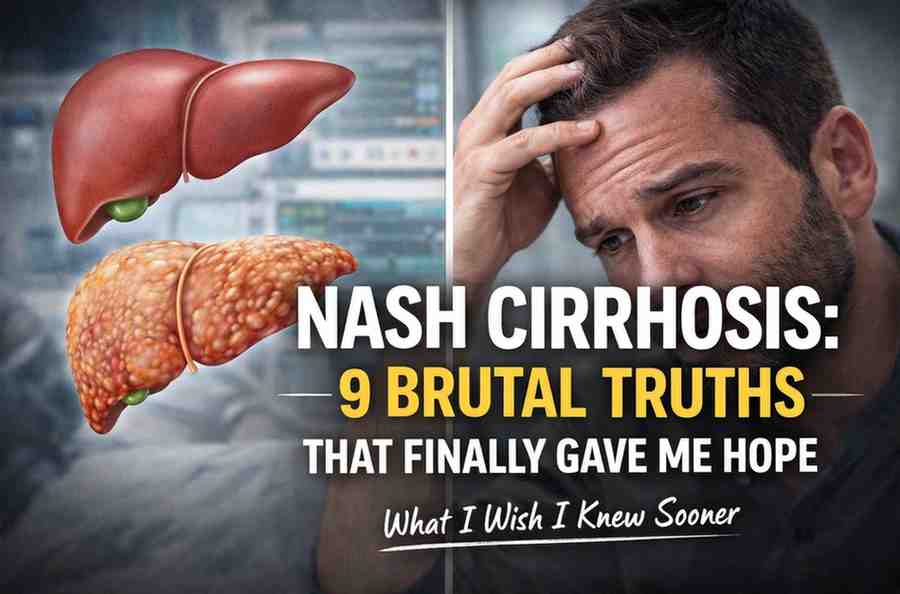
I didn’t even know what NASH cirrhosis was the day a doctor said it out loud.
I nodded like I understood.
I didn’t. Not even close.
All I heard was “cirrhosis,” and my brain jumped straight to images of people who drank themselves into liver failure. I don’t drink like that. I barely drink at all. So my first reaction was pure confusion mixed with a little anger. Like… how does this even happen to someone who thought they were “mostly healthy”?
Not gonna lie, I left that appointment feeling weirdly embarrassed.
Like I’d been accused of something I didn’t do.
And yeah, this whole thing messed with me more than I expected.
Physically, sure.
But mentally? Way worse.
So this is me being honest about what it’s been like to deal with NASH cirrhosis, the stuff I misunderstood at first, the routines that actually helped, the things that did nothing, and the parts no one really talks about unless you ask the awkward questions.
This might ramble a bit.
That’s kind of how my head has been since all this started.
The Moment It Became Real (And Why I Didn’t Take It Seriously at First)
The diagnosis didn’t feel real → at first.
It felt like a typo.
I’d gone in for routine blood work.
Some numbers were off.
Then came an ultrasound.
Then more labs.
Then a specialist.
By the time the word “cirrhosis” landed, I was already numb.
What messed me up is how quiet this disease can be.
No dramatic pain.
No obvious warning signs.
Just slow damage happening in the background while you’re busy with life.
I honestly thought:
-
“Maybe they’re overreacting.”
-
“Maybe this will fix itself.”
-
“Maybe I’ll just eat better for a month and it’ll go away.”
Yeah… no.
This honestly surprised me:
Your liver can be struggling hard → while you feel… mostly fine.
That delay between cause and effect is dangerous.
It tricks you into thinking you have time.
Sometimes you don’t.
What I Got Wrong in the Beginning (So Many Things, Actually)
I messed this up at first.
Big time.
Here’s the stuff I believed that turned out to be wrong:
-
❌ I thought only heavy drinkers got cirrhosis
-
❌ I thought I’d feel sick if something was seriously wrong
-
❌ I thought cutting sugar for a few weeks would “fix it”
-
❌ I thought exercise alone could undo years of damage
-
❌ I thought doctors would hand me a clear plan
-
❌ I thought I could half-try and still get results
Turns out, NASH cirrhosis doesn’t care about your good intentions.
It responds to boring, consistent habits over time.
And yeah, that’s way less exciting than a miracle cure.
The Emotional Whiplash No One Warns You About
I expected fear.
What I didn’t expect was the weird mix of emotions:
-
relief that I finally → had answers
-
shame about my past habits
-
anger at my own body
-
jealousy of people who could eat whatever
-
random hope followed by random panic
-
exhaustion from thinking about food all the time
Some days I felt motivated.
Other days I felt like, what’s the point?
This part doesn’t get talked about enough.
Chronic conditions mess with your head.
Not in one dramatic moment.
In tiny, annoying ways that stack up.
I didn’t expect that at all.
What Daily Life Looks Like Now (The Not-So-Instagram Version)
There’s no dramatic montage.
No heroic music.
It’s mostly small choices, over and over again.
Mornings
I used to skip breakfast.
Now I don’t.
Nothing fancy.
Just something with protein so I don’t crash later and make dumb food choices.
Food
This part is annoying.
Not because it’s hard to understand, but because it’s boring to follow.
What helped me:
-
cooking more at home
-
keeping snacks simple
-
not buying food I know I’ll binge
-
eating slower
-
stopping when I’m full (still learning this)
What didn’t help:
-
extreme diets
-
“detox” nonsense
-
starving myself
-
pretending weekends don’t count
-
moralizing food
I messed up a lot early on by going too extreme, then rebounding hard.
Consistency beats intensity.
I had to learn that the slow way →.
Movement
I thought I had to suddenly become a gym person.
I am not a gym person.
What worked:
-
walking
-
light strength stuff at home
-
being active in boring ways
-
not overdoing it
-
doing something most days
What didn’t:
-
going too hard and burning → out
-
thinking soreness meant progress
-
comparing myself to fitness influencers
From what I’ve seen, at least…
Slow and steady doesn’t feel impressive.
But it actually works.
The Stuff That Helped More Than I Expected
Some things surprised me in a good way →.
1. Writing things down
Food, mood, energy levels.
Patterns showed up fast when I tracked them.
2. Saying no more often
To late nights.
To random junk food runs.
To plans that wreck my routine.
3. Drinking more water
This sounds basic.
It helped more than I thought it would.
4. Sleeping
Bad sleep made everything worse.
My cravings.
My mood.
My motivation.
5. Asking dumb questions at appointments
I stopped pretending I understood medical words.
I asked for plain English.
That changed everything.
The Stuff That Didn’t Help (But I Tried Anyway)
I tried a bunch of things out of panic.
-
supplements I didn’t need
-
random internet protocols
-
extreme fasting
-
cutting entire food groups
-
stress-eating “healthy” food
-
beating myself up for slip-ups
Most of it just added stress.
And stress makes everything harder.
Honestly, managing NASH cirrhosis feels less about hacks and more about patience.
I hated that answer.
I still do.
How Long It Took to Feel Any Difference
Not fast.
That’s the honest answer.
I wanted changes in weeks.
My body needed months.
Small wins came first:
-
slightly better energy
-
labs stabilizing
-
fewer bad days
-
less bloating
-
better sleep
-
more predictable moods
Big changes took longer.
This part messed with my head because progress felt invisible for a while.
If you’re in that phase, you’re not crazy.
You’re just early.
The “What If It Doesn’t Work?” Spiral
This question haunted me.
What if I do all this and still get worse?
What if I’m just delaying the inevitable?
What if I screw this up?
I still think about that sometimes.
What helped was reframing it:
Even if outcomes aren’t perfect,
showing up for my health still matters.
Control what you can.
Let go of the rest.
Easier said than done.
Still practicing.
How I Explain This to Other People (Without Turning It Into a TED Talk)
Most people don’t know what this condition is.
And honestly, I don’t want to give a lecture every time.
So I keep it simple:
“My liver’s not happy. I’m fixing my habits.”
That’s usually enough.
You don’t owe anyone your medical backstory.
Protect your energy.
Practical Takeaways (Stuff I’d Actually Tell a Friend)
If someone texted me about NASH cirrhosis at 1 a.m., I’d say:
-
Don’t panic. Learn first.
-
Ask dumb questions.
-
Fix routines before chasing hacks.
-
Be consistent, not perfect.
-
Expect slow change.
-
Protect your sleep.
-
Move your body gently.
-
Eat in a way you can live with.
-
Don’t let one bad day become a bad month.
-
Find support, even if it’s just one person.
No hype.
No miracle talk.
Just boring stuff that actually adds up.
I still have days where this whole thing feels heavy.
Some days I’m hopeful.
Some days I’m tired of thinking about my liver at all.
But it’s not all doom.
There’s this weird clarity that comes from being forced to pay attention to your body.
I didn’t ask for this wake-up call.
But I’m listening now.
So no — it’s not magic.
It’s not easy.
But for me?
It finally made things feel… manageable →.