I can’t tell you how many times I’ve watched someone clean up their diet, feel proud for adding “healthy” foods like mushrooms… and then quietly start feeling worse.
Bloating that doesn’t make sense. Random nausea. Brain fog after a salad that should’ve felt light. Skin acting weird.
And the first thing they say?
“It can’t be the mushrooms. They’re healthy.”
That’s usually where the confusion around mushroom intolerance symptoms starts. Not dramatic. Not obvious. Just enough discomfort to make someone doubt themselves.
From what I’ve seen, people don’t suspect mushrooms until months later. Sometimes years.
And by then, they’re exhausted.
Let’s walk through what I’ve consistently observed — the patterns, the mistakes, the small wins, and the reality checks.
What Mushroom Intolerance Symptoms Actually Look Like (In Real Life)
Most people expect a food reaction to look dramatic.
Hives. Swelling. An ER visit.
That’s an allergy.
Mushroom intolerance symptoms are usually quieter. Slower. Annoying in a way that makes you second-guess yourself.
Here’s what I’ve repeatedly seen:
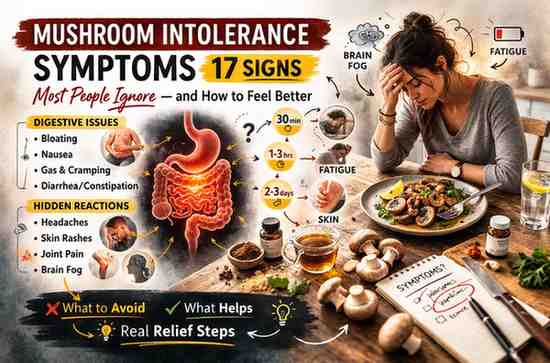
Digestive Symptoms (Most Common)
Almost everyone I’ve worked with messes this up at first — they assume it’s “just sensitive digestion.”
-
Bloating within 30 minutes to 4 hours
-
Heavy, full feeling after small portions
-
Nausea (especially with cooked mushrooms)
-
Cramping
-
Loose stools or sudden urgency
-
Gas that smells unusually strong
-
Acid reflux flare-ups
One pattern surprised me: people who tolerate small amounts in mixed dishes but react badly to mushroom-heavy meals. Think mushroom pasta, stuffed mushrooms, or mushroom broths.
Dose matters more than people think.
Brain & Energy Symptoms (Often Overlooked)
This is where people get confused.
They don’t connect mushrooms to:
-
Brain fog
-
Mild dizziness
-
Fatigue after eating
-
Headaches within a few hours
-
Feeling “off” but not sick
I didn’t expect this to be such a common issue until I watched multiple clients describe the exact same timeline:
Eat mushrooms → feel fine → 1–3 hours later feel foggy and drained.
Not dramatic. Just disruptive.
Skin & Inflammatory Reactions
Less common, but I’ve seen it enough times to notice:
-
Itchy skin without rash →
-
Flushing
-
Eczema flares
-
Puffy eyes
-
Mild joint stiffness the next day
It’s subtle. But repeatable.
When someone removes mushrooms for a few weeks and these calm down? That’s when the lightbulb goes off.
Why People Try Mushrooms in the First Place (And Why It Backfires)
Let’s be honest.
Mushrooms are marketed as:
-
Immune-supporting
-
Anti-inflammatory
-
Gut-friendly
-
A “clean” meat substitute
And for many people, they are.
But here’s what most misunderstand:
Mushrooms contain mannitol, a type of sugar alcohol. It’s part of the FODMAP family.
If someone already has:
-
IBS
-
SIBO
-
Sensitive gut lining
-
Histamine sensitivity
…mushrooms can quietly become a trigger.
Most people I’ve seen struggle with this already had a sensitive digestive system.
Mushrooms weren’t the root problem.
They were the tipping point.
The Pattern I See Again and Again
Let me map this out the way it usually unfolds:
-
Someone improves their diet.
-
They add more vegetables and plant-based meals.
-
Mushrooms become a staple.
-
Digestive symptoms slowly increase.
-
They blame stress, hormones, or “just getting older.”
-
They never question mushrooms.
Months pass.
Then they accidentally skip mushrooms for a week — travel, busy schedule, whatever — and feel noticeably better.
That moment of confusion?
That’s usually the clue.
Common Mistakes That Delay Relief
Almost everyone I’ve seen struggle with this does at least one of these.
1. They Test Too Many Foods at Once
They remove gluten, dairy, sugar, and mushrooms all in one go.
Then feel better.
Now they have no idea which one was the trigger.
Slow changes reveal patterns. Fast overhauls create confusion.
2. They Ignore Portion Size
“I can’t be intolerant. I only ate a little.”
But intolerance is often dose-dependent.
Half a cup? Fine.
Two cups sautéed? Not fine.
This honestly surprised me after watching so many people try elimination diets incorrectly.
3. They Assume It’s an Allergy
If there’s no rash or throat swelling, they dismiss it.
Intolerance ≠ allergy.
Different mechanism. Slower reaction. More digestive.
4. They Overlook Hidden Mushrooms
Broths. Sauces. Vegan meat alternatives. Supplements like reishi or lion’s mane.
I’ve seen people eliminate mushrooms from meals but continue mushroom powders daily.
Then say, “It didn’t work.”
How Long Do Mushroom Intolerance Symptoms Take to Improve?
Short answer?
Most people notice digestive relief within 3–7 days after removing mushrooms completely.
Brain fog and skin symptoms can take 2–3 weeks.
But here’s the real nuance:
If someone has underlying gut issues, removing mushrooms helps — but doesn’t fix everything.
I always tell people:
“If mushrooms are the spark, we still need to check what’s making the system so flammable.”
What If It’s Not Mushrooms?
Important reality check.
Sometimes it’s:
-
Garlic cooked with mushrooms
-
Butter or cream sauces
-
High-fat meals
-
Overall FODMAP load that day
That’s why I suggest testing mushrooms alone, simply cooked, moderate portion.
Not inside a complex dish.
Clean experiments reveal clean answers.
Is This Worth Testing?
If you experience:
-
Repeated bloating after mushroom meals
-
Foggy brain after plant-based dishes
-
IBS that won’t settle
-
Reactions to mushroom supplements
Then yes.
A simple 2–3 week elimination is low risk and high clarity.
If you eat mushrooms once a month and feel fine?
Probably not necessary.
Who this is NOT for:
-
People without any symptoms
-
People chasing perfect digestion
-
Anyone expecting instant transformation
This is about pattern recognition. Not food fear.
Quick FAQ (Straight Answers)
Can you suddenly develop mushroom intolerance?
Yes. I’ve seen it happen after gut infections, antibiotics, or major stress.
Is mushroom intolerance the same as an allergy?
No. Allergies are immune-driven and often immediate. Intolerance is typically digestive and delayed.
Do all mushrooms cause symptoms?
Not always. Some tolerate button mushrooms but react to shiitake or portobello. It varies.
Can cooking reduce symptoms?
Sometimes. Cooking breaks down certain compounds, but mannitol remains.
Will this go away permanently?
In some people, yes — once gut health improves. In others, it remains dose-dependent long term.
Objections I Hear All the Time
“But mushrooms are healthy.”
They are.
So is broccoli. So are beans.
Healthiness doesn’t equal tolerance.
“It’s probably just stress.”
Maybe.
But if symptoms consistently follow mushroom meals? That’s data.
“I don’t want to cut more foods.”
I get that.
This isn’t about restriction forever. It’s about temporary clarity.
The Emotional Side No One Talks About
I’ve watched people feel embarrassed over this.
They think they’re being dramatic.
Or picky.
Or “high maintenance.”
Honestly? That frustration is usually worse than the symptoms.
Food is supposed to nourish you.
If something repeatedly makes you feel worse, paying attention isn’t weakness. It’s awareness.
Practical Takeaways (What Actually Works)
If you suspect mushroom intolerance symptoms:
-
Remove all mushrooms for 2–3 weeks. Completely.
-
Watch digestion, energy, skin.
-
Reintroduce a moderate portion alone.
-
Observe for 24 hours.
-
Document honestly.
What to expect emotionally:
-
Doubt at first
-
Surprise if symptoms calm
-
Confusion during reintroduction
-
Relief if patterns → become clear
Patience looks like:
-
Not rushing conclusions after one meal
-
Not blaming yourself
-
Not spiraling into extreme restrictions
Small experiments. Calm observation.
That’s usually enough.
Still — this isn’t magic.
Not everyone who bloats after mushrooms is intolerant. And not every improvement means mushrooms were the villain.
But I’ve watched enough people quietly struggle with mushroom intolerance symptoms — dismissing their own patterns — that I can’t ignore how often this gets missed.
Sometimes the win isn’t dramatic.
It’s just eating a meal and not feeling foggy two hours later.
And honestly?
For most people I’ve seen finally figure this out, that quiet relief feels bigger than they expected.