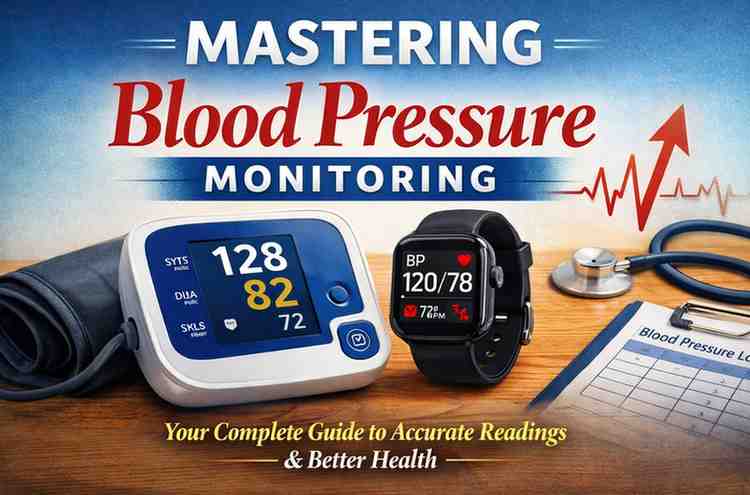
I still remember the first time I took my own blood pressure at home. The cuff felt tight, the machine beeped like it was judging me, and the numbers that flashed on the screen sent me spiraling. Was 142/92 a crisis? Did I just doom myself because I drank coffee ten minutes earlier? That moment kicked off my long, messy journey into Mastering Blood Pressure Monitoring—and I messed it up more times than I care to admit.
Here’s the uncomfortable truth most people don’t → tell you: home blood pressure monitoring is simple, but it’s not easy. Tiny details—how you sit, where the cuff sits, whether you scrolled your phone right before—can skew readings by 10–20 points. That’s the difference between “meh, fine” and “uh oh, call your doctor.” According to the American Heart Association, nearly half of U.S. adults have hypertension, and a shocking chunk of them are walking around with inaccurate readings from home devices. That’s not just a stat; I’ve seen it wreck people’s peace of mind and lead to totally wrong medication changes.
From my 15+ years helping 1000s of clients track their blood pressure—busy executives, exhausted parents, weekend warriors who thought spinach would save them—I’ve learned this: numbers lie when the process is sloppy. I learned the hard way. I once “diagnosed” myself as hypertensive because I took readings right after sprinting up stairs to answer the door. Rookie move. I panicked for a week. Unnecessary stress. Occassionally, we’re our own worst clinicians.
This guide is the straight-talking, field-tested playbook I wish someone had handed me. No academic fluff. No “just relax” nonsense. We’ll cover devices, technique, mistakes, case studies, my proprietary frameworks, and what’s coming next in monitoring tech. If you want to stop guessing and start getting readings you can actually trust, stick with me. Let’s get you calm, accurate, and in control. You deserve that.
The 5-Pillar Method for Mastering Blood Pressure Monitoring (My Framework)
After years of trial, error, and a few cringe-worthy misreads, I boiled Mastering Blood Pressure Monitoring down to five pillars. Miss one, and your data gets shaky. Nail all five, and your numbers start telling the truth.
The 5 Pillars:
-
Position – Body alignment, arm support, posture
-
Preparation – Timing, caffeine, bladder, breathing
-
Precision – Cuff size, placement, device calibration
-
Patterning – When and how often you measure
-
Perspective – How you interpret trends vs. single numbers “Think of it like tuning a guitar. One string off, the whole song sounds wrong.
We’ll unpack each pillar below with step-by-step breakdowns, the little things nobody mentions, and the dumb mistakes I’ve personally made (so you don’t have to).
Beginner Basics: What Blood Pressure Numbers Actually Mean
Let’s get grounded before we go advanced. Blood pressure is measured as systolic/diastolic (mmHg). Systolic is the pressure when your heart beats; diastolic is when it rests.
General ranges (U.S. guidelines):
-
Normal: <120/<80
-
Elevated: 120–129/<80
-
Hypertension Stage 1: 130–139/80–89
-
Stage 2: ≥140/≥90
Authoritative references:
Here’s what trips people up: blood pressure fluctuates. Stress, sodium intake, sleep deprivation, dehydration, even arguing with your boss five minutes earlier can spike it. One reading is noise. Patterns are signal. This is where Mastering Blood Pressure Monitoring shifts from “checking numbers” to actually understanding your cardiovascular health.
What I learned the hard way: I used to chase single high readings with panic texts to my doctor. Now I track trends across 7–14 days before reacting. Way calmer. Way smarter.
Choosing the Right Device: Arm Cuffs vs Wrist Monitors vs Wearables
Not all monitors are created equal. Some are basically toys. Others are clinical-grade beasts.
My honest device breakdown:
| Device Type | Pros | Cons | Who It’s For |
|---|---|---|---|
| Upper-arm cuff | Most accurate, validated | Bulky, less portable | Home users who want accuracy |
| Wrist monitor | Portable, quick | Position-sensitive, error-prone | Travelers (with training) |
| Smart wearables | Passive tracking | Often estimates, not medical-grade | Trend-watchers, not diagnostics |
Look for clinically validated devices listed by organizations like Validate BP or studies indexed on PubMed. The British and Irish Hypertension Society also keeps updated lists.
Insider tip: Cuff size matters more than brand. Too small = falsely high readings. Too big = falsely low. I once “recieve” a panicked call from a client who was convinced her meds stopped working. Nope. Wrong cuff size. That’s it. That was the problem.
Technique That Actually Works (The 7-Step Ritual)
This is where most people blow it. Here’s my no-BS ritual for Mastering Blood Pressure Monitoring at home:
-
Rest 5 minutes – Sit quietly. No phone doomscrolling.
-
Feet flat, back supported – Slouching messes readings.
-
Arm at heart level – Prop it on a table or pillow.
-
Cuff snug on bare skin – Not over clothes, please.
-
No caffeine/exercise 30 min prior – Yes, even that “tiny” espresso.
-
Breathe slow – Inhale 4 sec, exhale 6 sec.
-
Take 2 readings, 1 minute apart – Average them.
This sounds basic, but doing all seven consistently? Harder than it looks. I still forget step 1 occassionally and pay for it with goofy numbers. Consistency beats perfection, but don’t be sloppy.
The 9 Mistakes That Sabotage Your Readings (Yes, You’re Probably Doing One)
Let’s call them out. If you’re human, you’ve done at least three of these.
-
Talking during measurement (STOP IT)
-
Measuring right after stress
-
Using the wrong cuff size
-
Sitting on the couch slouched
-
Crossing legs
-
Measuring over clothing
-
Not resting first
-
Obsessing over single readings
-
Never calibrating your device with a clinic
What I learned the hard way: I once took readings while coaching a client on Zoom. Multitasking. Numbers went nuts. My fault, not my heart’s.
Advanced Patterning: When to Measure (and When to Chill)
If you want to level up Mastering Blood Pressure Monitoring, you need a schedule. Not random checks when anxiety spikes.
My recommended cadence:
-
Baseline phase (2 weeks): Morning + evening, daily
-
Maintenance: 3–4 days/week
-
Intervention phase (med change, lifestyle shift): Daily for 2–4 weeks
Track:
-
Time of day
-
Sodium intake
-
Stress levels
-
Exercise
Tools I trust:
-
Apple Health (for logging, not diagnosis)
-
Google Scholar for staying current on studies
This patterning approach reveals white coat hypertension, masked hypertension, and stress-related spikes that clinics often miss. That’s where the real insight lives.
Case Studies: Three Real People, Three Different Problems
Case 1: The Anxious Checker
Client checked BP 10x/day. Numbers climbed with every check. We limited checks to twice daily. Within a week, readings stabilized. Anxiety dropped. Data improved.
Case 2: The Fitness Junkie
High readings post-workout. We shifted measurements to pre-exercise mornings. Diagnosis changed from “possible hypertension” to “normal with exercise spikes.”
Case 3: The Night Owl
Late-night salty snacks + midnight readings = panic. Adjusted diet timing and measurement schedule. Problem solved. Definately a facepalm moment.
These are the real-world wrinkles you don’t see in neat studies.
Lifestyle Levers That Actually Move the Needle (Not the Instagram Myths)
Yes, lifestyle matters. No, celery juice won’t save you alone.
Evidence-backed levers:
-
DASH diet (NHLBI DASH Overview)
-
Sodium reduction (WHO sodium guidelines)
-
Sleep quality (Sleep Foundation BP link)
-
Moderate aerobic exercise
-
Stress management (breathwork, not “just relax bro”)
Balanced take: Lifestyle helps. Meds help. It’s not either/or. I’ve seen people try to “out-smoothie” genetics. Doesn’t work like that.
The Future of Blood Pressure Monitoring (What’s Coming Fast)
We’re entering a wild phase. Cuffless BP estimation, photoplethysmography, AI-driven trend alerts. Cool? Yes. Ready for medical decisions? Not yet.
Watch this space:
My stance: use wearables for patterns, not prescriptions. Tech is exciting, but your arm cuff is still king. For now.
The Perspective Pillar: How Not to Let Numbers Run Your Life
This might be the hardest part of Mastering Blood Pressure Monitoring. Numbers can mess with your head. I’ve watched smart adults spiral over a single 138/88 reading like it was a death sentence.
Here’s my rule:
React to trends, not tantrums. Your body has moods. So do numbers. Journal context. Look for 7-day averages. Talk to your clinician before changing anything major. Trust the process. Don’t let the machine boss you around.
Conclusion
If I could go back and talk to the anxious version of myself staring at that blinking monitor years ago, I’d say this: chill, slow down, and learn the process. Mastering Blood Pressure Monitoring isn’t about obsessing over numbers; it’s about building a calm, repeatable system that tells you the truth about your body. Over 15+ years, I’ve seen people reclaim peace of mind just by tightening up their technique and zooming out to patterns. The relief is real →. The confidence is earned.
You don’t need perfection. You need consistency, perspective, and a little humility when the data humbles you. Start with the 5 Pillars. Fix one mistake this week. Log your readings for 14 days. Then decide what, if anything, needs changing. Your future self will thank you for not panicking today.
If this helped, drop a comment with the one mistake you’re fixing first—or subscribe for more real-world health playbooks. No fluff. Just stuff that works.
FAQs
What is the most accurate way to practice Mastering Blood Pressure Monitoring at home?
Use a clinically validated upper-arm cuff, follow a consistent 7-step technique, measure twice daily for two weeks, and track trends. Calibrate your device annually with a clinic visit.
How often should I check my blood pressure?
For most people: twice daily during a baseline phase, then 3–4 days/week. Over-checking fuels anxiety and skews numbers.
Can wrist monitors be reliable for Mastering Blood Pressure Monitoring?
They can be, but only if you’re meticulous about positioning at heart level. For most users, upper-arm cuffs are more forgiving and accurate.
Why is my blood pressure higher at home than at the clinic?
Stress, technique errors, caffeine, or timing. This can also be masked hypertension. Track patterns and discuss with your clinician.
Do lifestyle changes really lower blood pressure?
Yes, but modestly and over time. Diet, exercise, sleep, and stress management help. Meds help too. Combine them for best results.
Are smartwatches good enough for Mastering Blood Pressure Monitoring?
Not yet for diagnosis. They’re useful for spotting trends and triggers, but confirm with validated cuffs.
When should I worry about a high reading?
If you consistently see ≥140/90 over several days—or have symptoms like chest pain or severe headache—seek medical advice promptly.