I’ve watched more people → go down the masseter botox path than I expected. It usually starts the same way — jaw pain they’ve ignored for months, teeth grinding they only notice when it’s bad, or someone casually saying, “Your face looks tense all the time.”
Then they try quick fixes first. Night guards. Stress apps. Random YouTube jaw massages.
And when that doesn’t fully fix it… they land here.
Honestly, most people I’ve seen don’t walk into this feeling confident. It’s more like… tired. Slightly skeptical. Hoping this might finally quiet something that’s been building for a while.
What Actually Brings People to Masseter Botox
From what I’ve seen, people don’t start here. They arrive here.
There’s usually a pattern:
- Chronic jaw clenching (especially at night)
- Morning headaches that don’t feel like “normal” headaches
- Teeth sensitivity from grinding
- A square or bulky jaw that wasn’t always like that
- Stress that shows up physically, not just mentally
And then one day, someone says:
“Have you tried botox for that?”
That’s the pivot point.
Some people jump in quickly. Others sit on it for months, reading mixed opinions, worrying about side effects, or feeling weird about the idea of injecting anything into their face.
Fair.
What Most People Get Wrong at First
This part… I didn’t expect to be so consistent across different people.
Almost everyone I’ve worked with or observed messes up expectations.
They assume one of two things:
1. “This will fix everything immediately”
No.
Masseter botox → is not a switch. It’s more like… slowly turning down a volume knob.
- Week 1: nothing obvious
- Week 2–3: subtle easing
- Week 4+: noticeable change →
People panic too early.
2. “This is just for cosmetic jaw slimming”
This one’s interesting.
A lot of people go in thinking → it’s purely aesthetic. But after treatment, they say things like:
- “I didn’t realize how tight my jaw always felt”
- “I stopped waking up tired”
- “My headaches just… disappeared”
The relief catches them off guard.
What Masseter Botox Actually Does (In Real Life Terms)
Let me keep this simple.
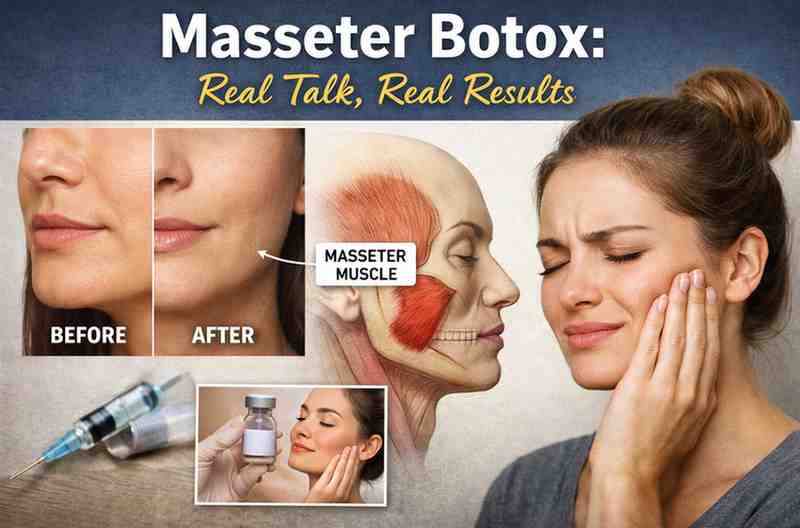
It weakens the masseter muscle — the big chewing muscle at the side of your jaw.
Less muscle activity =
- Less clenching
- Less grinding
- Less tension
- Gradual reduction in muscle bulk
But here’s the nuance most people miss:
👉 It doesn’t remove stress
👉 It doesn’t fix habits overnight
👉 It doesn’t stop you from clenching completely
It just… makes it harder to do it intensely.
That distinction matters.
What I’ve Seen Actually Work
Across different people, different reasons, different expectations — a few patterns → repeat.
What consistently works:
- Starting with a conservative dose
- People who go aggressive too early sometimes regret the “heavy” feeling
- Combining with awareness
- Just noticing clenching during the day speeds up results
- Following up at the right time (3–6 months)
- Not too early, not too late
And something subtle:
People who treat this as support, not a “fix,” do better long-term.
What Repeatedly Fails (Or Feels Disappointing)
This is where I’ve seen the most frustration.
1. Going in for face slimming only
Some people expect a dramatic jawline transformation.
Reality:
- Changes are gradual
- Sometimes subtle
- Not guaranteed to be dramatic
If someone is already lean, results can be minimal.
2. Expecting permanent results
Masseter botox wears off.
Usually:
- 3 to 6 months for most people
And when it fades, habits can creep back.
3. Ignoring underlying habits
This one’s huge.
People who:
- chew gum constantly
- clench during work
- grind due to stress
…often see shorter-lasting results.
How Long Does It Take to See Results?
This is one of the most common questions.
From what I’ve seen across real cases:
- Days 1–7: almost nothing
- Weeks 2–3: slight softening, less tension
- Weeks 4–6: clear improvement
- 2–3 months: peak effect
And then slowly, it fades.
What surprises people:
It’s not dramatic. It’s gradual enough that you almost don’t notice… until you do.
What People Feel (Emotionally) After
This part isn’t talked about enough.
The first phase: doubt
- “Did this even work?”
- “I don’t feel anything”
The second phase: realization
- “Wait… my jaw isn’t tight anymore”
- “I haven’t had a headache in days”
The third phase: adjustment
Some people feel:
- slightly weaker chewing
- different bite pressure
Usually temporary. But it throws people off at first.
Common Mistakes I Keep Seeing
If I had to narrow it down…
Almost everyone who struggles does at least one of these:
- Goes to a low-experience injector
- Expects instant visible change →
- Doesn’t track symptoms before/after
- Skips follow-up timing
- Treats it as a one-time solution
And honestly…
Choosing the wrong provider is probably the biggest issue.
This isn’t just about injecting. It’s about placement, dosing, and balance.
Who This Is Actually Worth It For
From what I’ve seen, masseter botox is most worth it for people who:
- have chronic jaw tension or pain
- wake up with tightness or headaches
- grind teeth regularly (even unknowingly)
- feel their jaw is constantly “active”
These people tend to say:
“I wish I did this earlier.”
Who Will Probably Be Disappointed
Let’s be honest.
This isn’t for everyone.
You might not love it if:
- you only want dramatic facial slimming
- your jaw bulk is genetic, not muscular
- you expect permanent results
- you’re uncomfortable with maintenance treatments
Also…
If your expectations are based on social media transformations → — you might feel underwhelmed.
Quick FAQ (Real Questions I Hear Repeatedly)
Does masseter botox hurt?
Not really.
Most people describe it as:
- quick pinches
- mild discomfort
- over in minutes
Can it make your face look weird?
Rare, but possible with poor technique.
That’s why provider choice matters a lot.
Will I have trouble eating?
For a few weeks:
- tough foods might feel different
- chewing may feel weaker
Then your body adjusts.
How often do you need it?
Most people:
- every 4–6 months
Some stretch it longer after repeated treatments.
Objections I Hear (And What Usually Happens)
“I don’t want to depend on it forever”
Fair.
What I’ve seen →:
- Some people use it short-term to break the clenching cycle
- Others continue because the relief is worth it
It’s not all-or-nothing.
“What if it doesn’t work for me?”
It happens.
Usually because:
- wrong dose
- wrong placement
- unrealistic expectation
Sometimes it just needs adjustment next session.
“Is it worth the money?”
This depends heavily on why you’re doing it.
For pain relief → → often yes
For aesthetics only → depends on expectations
Reality Check (This Part Matters)
Let me be very clear.
Masseter botox is not magic.
It:
- doesn’t remove stress
- doesn’t cure grinding permanently
- doesn’t reshape your face overnight
What it does is… create space.
Space for your muscles to relax.
Space for habits to shift.
Space for relief.
And for a lot of people — → that’s enough.
What I’d Tell Someone Considering It (Based on Everything I’ve Seen)
If you’re thinking about this, here’s the grounded version:
Do this:
- Choose an experienced injector
- Take photos before starting
- Notice your habits (clenching, chewing, stress)
- Give it at least 4 weeks before judging
Avoid this:
- rushing expectations
- chasing dramatic slimming results
- going for the cheapest option
- skipping follow-ups
Expect this emotionally:
- uncertainty at first
- subtle changes, not dramatic
- eventual “oh… it worked” moment
One Thing That Honestly Surprised Me
I didn’t expect → this to be such a quality of life shift for some people.
Not cosmetic.
Not dramatic.
Just… quieter.
Less tension.
Less awareness of discomfort.
Less background noise in the body.
That’s the part people don’t → post about.
Visualizing What Changes Over Time
Small Wins I’ve Seen People Overlook
These don’t sound big… but they matter.
- Not waking up with jaw soreness
- Fewer tension headaches
- Feeling less “tight” during stressful moments
- Catching yourself before clenching
These are the signs it’s working.
Still…
This isn’t one of those things where everyone walks away amazed.
Some feel relief →.
Some feel neutral.
Some wish they managed expectations better.
And that’s the honest range.
If you’re stuck, frustrated, or just tired of that constant jaw tension…
This might help.
Not perfectly. Not permanently.
But enough to shift things in a better direction.
And from what I’ve seen… sometimes that’s all people → were really looking for in the first place.