Honestly, I didn’t think this would work.
I’d already tried the expensive serums, the “miracle” facials, the cutting-everything-out diets that made me cranky and still breaking out. I felt kind of dumb hoping again. My skin looked tired. Uneven. Random breakouts along my jaw that showed up right when I finally felt okay about my face.
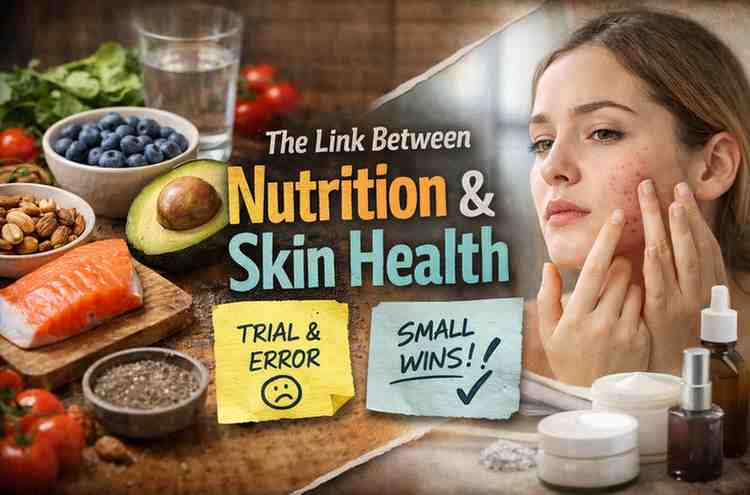
At some point I stopped searching for another product and started poking at the link between nutrition and skin health. Not because I was enlightened. Because I was annoyed. Because I was spending money and getting nowhere. Because my dermatologist’s advice (“gentle cleanser, sunscreen”) helped, but didn’t fix the stubborn stuff that made me avoid mirrors on bad days.
Not gonna lie… I messed this up at first.
A lot.
And some of what “worked” felt embarrassingly basic.
This is me, after trial-and-error, telling you what I actually learned. The parts I got wrong. The small wins that added up. The parts that are annoying but real.
Why I even tried changing what I ate (and what I misunderstood)
I used to think skin problems were either:
-
Genetics
-
Hormones
-
Bad luck
-
Or me doing skincare wrong
Food felt… optional. Like a wellness influencer thing. Green smoothies and smugness.
What pushed me wasn’t a dramatic transformation story. It was noticing patterns I couldn’t unsee:
-
My skin looked angrier after weekends of takeout and beer.
-
Breakouts clustered after sugar-heavy days.
-
When I ate like garbage for a week, my face showed it before my jeans did.
Still, I misunderstood the whole thing at first. I thought: “Okay, I’ll just cut sugar and dairy and boom—perfect skin.”
Yeah. No.
What actually happened:
-
I cut too much, too fast.
-
I got stressed about eating “right.”
-
My skin didn’t magically clear in two weeks, so I almost quit.
This honestly surprised me:
It wasn’t about one villain food. It was patterns. Consistency. And some boring basics I wanted to ignore.
What I tried first (and why it failed)
Here’s the messy part.
The stuff I tried that didn’t work (or backfired)
-
Cutting entire food groups overnight
I went low-carb, dairy-free, sugar-free, joy-free. My skin? Meh. My mood? Terrible. Stress alone can wreck your skin. Learned that the hard way. -
Detoxes and “skin-clearing teas”
They made me feel virtuous for three days and then… nothing. My breakouts did not care about my expensive leaf water. -
Chasing supplements without fixing basics
Zinc, collagen, biotin. I threw money at pills while still living on caffeine and convenience food. This was backwards. -
Expecting results in 7–14 days
I kept staring at my face like, “Hello? I ate one salad.”
Skin turnover takes time. Weeks. Sometimes months. I didn’t want to hear that.
Don’t repeat my mistake:
If you turn nutrition into punishment, you’ll quit before your skin even gets a chance to respond.
What actually moved the needle (from what I’ve seen, at least)
No miracles. Just boring, repeatable changes that slowly made my skin less dramatic.
The basics that mattered more than I expected
-
Protein at every meal
Not fancy. Just enough. My skin stopped looking as thin and tired. Healing sped up. -
Consistent hydration
I rolled my eyes at this. Then I drank more water for two weeks and my skin looked… calmer. Not perfect. Calmer. -
Adding fats instead of fearing them
Avocado, olive oil, nuts. My face felt less tight. Makeup sat better. Didn’t expect that at all. -
Fiber (ugh, yes, fiber)
Gut stuff is unsexy. But when my digestion improved, my skin flare-ups cooled down. Coincidence? Maybe. Pattern? Definitely. -
Actually eating micronutrients
Not pills first. Food first.-
Vitamin C from real fruits
-
Zinc from seeds, meat
-
Omega-3s from fish or flax
-
The “quiet” changes that didn’t look dramatic but added up
-
Less late-night sugar
-
Fewer ultra-processed snacks
-
More regular meals
-
Not skipping breakfast and then binging later
This wasn’t a cleanse. It was boring consistency. And yeah, I hated that it worked.
How long did it take to see changes?
This is where people quit.
Short answer (featured snippet style):
Most people won’t see meaningful skin → changes from nutrition alone for 3–8 weeks, sometimes longer.
My timeline, roughly:
-
Week 1–2:
Nothing exciting. Maybe fewer new breakouts. Hard to tell. -
Week 3–4:
Less redness. Healing a bit faster. Still breaking out, but not as aggressively. -
Week 6–8:
This is when I noticed my skin didn’t freak out as much. Fewer “angry” days. Texture improved. -
After 2–3 months:
The baseline improved. I wasn’t constantly trying to “fix” my face anymore.
If you’re looking for overnight glow-ups, this will feel slow. It is slow. Skin cells take time to cycle. Hormonal stuff takes time to settle. Your body isn’t Amazon Prime.
Common mistakes that slow results (I made most of these)
-
Being inconsistent on weekends
Five good days, two chaos days. Your skin sees → the chaos. -
Changing too many things at once
Then you don’t know what helped or hurt. -
Over-restricting
Stress shows up on your face. So does under-eating. -
Ignoring sleep
You can’t out-eat bad sleep. I tried. Didn’t work. -
Expecting food to replace skincare or medical help
Nutrition supports skin. It doesn’t cure cystic acne by itself. That was a humbling realization.
The part people don’t like hearing: this isn’t magic
Let’s reality-check this.
Nutrition helps your skin behave better.
It doesn’t rewrite your genetics.
It doesn’t erase hormonal swings.
It doesn’t mean you’ll never break out again.
From what I’ve seen →:
-
Food sets the baseline
-
Stress, sleep, hormones decide the spikes
-
Skincare manages the surface
-
Medical care handles the stubborn stuff
If your skin issues are severe or painful, nutrition is support—not a replacement for a dermatologist.
Objections I had (and what I think now)
“Is this even worth trying?”
If you’re already eating decently and your skin issues are mostly hormonal or genetic? The improvement might be subtle.
If your diet is chaotic and ultra-processed? This can be a noticeable upgrade.
“I don’t want to give up foods I love.”
You don’t have to. I didn’t.
I adjusted frequency, not identity. Pizza still exists in my life.
“This sounds like too much work.”
It’s work at first. Then it becomes autopilot.
The mental load fades once routines settle.
“What if it doesn’t work for me?”
Then you’ve ruled out one variable.
That’s still useful. Clarity is progress, even when results aren’t dramatic.
Who this approach is NOT for
Let’s be honest about limits.
This probably isn’t your main solution if:
-
You have severe cystic acne that needs medical treatment
-
Your skin issues are driven by medications or diagnosed conditions
-
You’re prone to disordered eating or obsessive tracking
-
You want fast, visible changes for an event next week
Nutrition is slow leverage.
Not emergency makeup.
Short FAQ (for the questions people actually Google)
Does sugar cause acne?
For some people, high sugar spikes inflammation and breakouts. Not everyone reacts the same. Patterns matter more than one dessert.
Is dairy bad for skin?
Some people break out with certain dairy (especially skim milk). Others don’t. It’s individual. Try reducing, not panicking.
Can drinking water clear skin?
Hydration helps skin function and heal, but it won’t cure acne alone. Think support, not solution.
Do supplements fix skin problems?
Sometimes they help deficiencies. They don’t replace real food. I learned that after wasting money.
Can diet fix hormonal acne?
It can help manage inflammation and insulin spikes, which can influence hormones. It won’t override your biology completely.
The emotional side no one talks about
This stuff messed with my head more than I expected.
There were days I felt hopeful.
Then days I felt stupid for caring so much about my face.
Days I stared at new breakouts like, “Cool. So what was the point?”
What helped was shifting the goal:
Not perfect skin.
Just calmer skin.
More predictable skin.
Less war with my own face.
Small wins count:
-
Breakouts that healed faster
-
Less redness in photos
-
Not panicking every time I ate something “bad”
That’s progress. Quiet, boring progress.
Practical takeaways (no hype, just real talk)
What to do:
-
Eat protein regularly
-
Add healthy fats
-
Drink more water than you think you need
-
Eat fiber from real food
-
Keep changes boring and repeatable
What to avoid:
-
Extreme restriction
-
Expecting 2-week miracles
-
Chasing supplements before basics
-
Stress-eating and then blaming food alone
What to expect emotionally:
-
Impatience
-
Doubt
-
“Is this even working?” moments
-
Small, almost unexciting improvements
What patience actually looks like:
-
Sticking with boring habits when nothing dramatic is happening
-
Not quitting after one breakout
-
Letting your baseline shift slowly
No guarantees.
No perfect skin promise.
Just better odds.
I won’t pretend the link between nutrition and skin health fixed everything for me. My face still has moods. I still get random breakouts at the worst times. But it stopped feeling like my skin was constantly working against me.
So no—this isn’t magic.
But it made the problem smaller.
And honestly? That was enough to keep going.