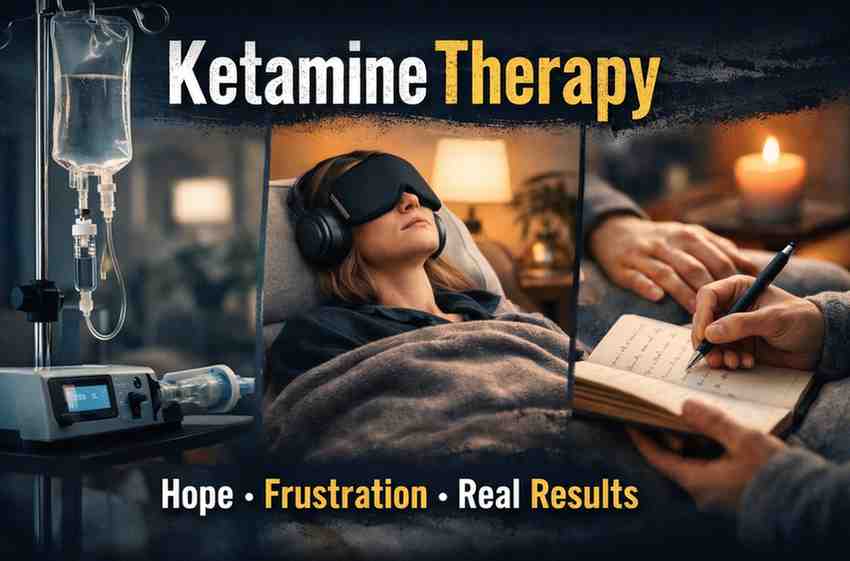
I can’t tell you how many late-night calls I’ve sat through where someone whispers, “I’ve tried everything.” Meds. Therapy. Supplements. Meditation apps. One woman I worked closely with had a spreadsheet of antidepressants going back ten years. She wasn’t dramatic. Just tired.
Ketamine Therapy kept coming up in those conversations. Sometimes with hope. Sometimes with suspicion. Usually both.
And from what I’ve seen across dozens of real people navigating it—friends, referrals, clients of clinicians I collaborate with—it’s rarely what people expect. Not magic. Not reckless. Not simple either.
Most people walk into it either thinking it’s their last lifeline or their secret shortcut.
It’s neither.
Let me tell you what I’ve actually watched happen.
Why People End Up Looking at Ketamine Therapy
Almost nobody starts here.
By the time someone considers Ketamine Therapy, they’ve usually hit at least one of these walls:
-
Multiple antidepressants with partial relief
-
Therapy that helps insight but not symptoms
-
Anxiety that feels physical and relentless
-
Depression that comes back every few years
-
Trauma work that keeps reopening wounds without relief →
What I’ve noticed is this: it’s rarely impulsive. It’s quiet desperation mixed with cautious hope.
And honestly, that emotional mix matters more than people realize.
Because your expectations going in shape everything.
What Ketamine Therapy Actually Is (In Plain Terms)
Let’s keep this simple.
Ketamine has been used medically for decades as an anesthetic. In much lower doses, administered in controlled settings, it’s being used for:
-
Treatment-resistant depression
-
PTSD
-
Severe anxiety
-
Suicidal ideation
-
Chronic pain (sometimes)
In the U.S., this is typically done through:
-
IV infusions
-
Intramuscular injections
-
Nasal spray (like Spravato, which is FDA-approved)
-
At-home lozenges through telehealth providers
From what I’ve seen, the setting and structure make a huge difference. The same medication feels very different in a sterile clinic versus a therapeutic environment with integration support.
And most people underestimate that part.
The First Big Surprise: It’s Not About the “Trip”
Almost everyone I’ve worked with messes this up at first.
They think the psychedelic-like experience is the point.
It’s not.
Some sessions are profound. Emotional. Insightful. Almost mystical.
Others? Honestly kind of weird. Or flat. Or confusing.
But here’s what consistently matters more than the intensity of the session:
-
What happens in the 72 hours after
-
Whether there’s therapy or integration
-
Sleep quality post-session
-
Stress load in daily life
This honestly surprised me after watching so many people try it.
The people who treat it like a biological reset + psychological window do better.
The ones chasing peak experiences usually plateau fast.
How Ketamine Therapy Works (From What I’ve Observed)
Mechanism-wise, ketamine interacts with glutamate and helps promote neuroplasticity. That’s the science explanation.
In real life?
It seems to create a temporary “softening” in rigid mental loops.
People describe:
-
Thoughts feeling less sticky
-
Trauma memories feeling less charged
-
Emotional distance from self-criticism
-
A pause between trigger and reaction
That window can last days or weeks.
But here’s the catch:
If nothing new is introduced during that window, old patterns creep back.
I’ve seen this repeatedly.
Ketamine opens the door.
You still have to walk through it.
How Long Does Ketamine Therapy Take to Work?
Short answer: sometimes fast. Sometimes slower than people want.
Patterns I’ve seen:
-
Some feel noticeable relief after 1–2 sessions.
-
Many need 4–6 sessions before real change stabilizes.
-
A smaller group feels worse before better (emotional surfacing).
Most standard protocols in the U.S. start with 6 sessions over 2–3 weeks.
But that doesn’t mean you’re “fixed” in three weeks.
The people who do well usually:
-
Combine it with therapy.
-
Adjust sleep and stress habits.
-
Plan for maintenance sessions thoughtfully.
The ones expecting a permanent reset from six infusions alone? That’s where disappointment creeps in.
Common Mistakes I’ve Watched People Make
Almost everyone I’ve seen struggle with this does at least one of these:
1. They Don’t Prepare Emotionally
They show up anxious, skeptical, overstimulated.
Preparation matters. Calm nervous system = better experience.
2. They Skip Integration
No journaling. No therapy. No reflection.
It becomes just another medical procedure instead of a psychological opportunity.
3. They Overdo It
More sessions. Higher doses. Chasing intensity.
This often backfires.
4. They Don’t Adjust Life Stress
Ketamine can soften depression, but it won’t fix:
-
A toxic job
-
A draining relationship
-
Severe sleep deprivation
I didn’t expect this to be such a common issue, but it is.
People want it to outwork their environment.
It can’t.
Who Ketamine Therapy Is Actually For (From What I’ve Seen)
It tends to work best for:
-
Treatment-resistant depression
-
People stuck in rumination loops
-
Trauma survivors who feel emotionally numb
-
Those open to both biological and psychological change
It’s often less effective for:
-
Severe personality disorders without therapy
-
Active substance abuse
-
People looking for a recreational experience
-
Those unwilling to make lifestyle adjustments
And if someone is pregnant, has uncontrolled high blood pressure, or certain cardiac conditions—clinicians will usually screen carefully or advise against it.
The Emotional Rollercoaster Nobody Talks About
This part matters.
The first time someone feels relief after years of depression?
It’s overwhelming.
I’ve seen grown adults cry in parking lots after sessions. Not because of the experience. But because their mind finally felt quiet.
Then comes fear.
“What if it stops working?”
That anxiety is real. Almost universal.
And sometimes there is a dip between sessions.
That doesn’t mean it failed.
From what I’ve seen, stabilization takes time.
Patience here isn’t passive. It’s structured.
Is Ketamine Therapy Worth It?
This is the question everyone really wants answered.
Here’s my honest take after watching dozens of cases unfold:
If you’ve tried multiple standard treatments with limited success, it can absolutely be worth exploring.
But only if:
-
You choose a reputable provider.
-
You commit to integration.
-
You don’t treat it like a miracle cure.
It’s not cheap in the U.S.
IV sessions can range from $400–$800 each. Insurance coverage varies. Spravato may be covered more often.
So it becomes a cost-benefit decision.
Financially. Emotionally.
And I’ve seen people say it was the best money they ever spent.
I’ve also seen people quit after three sessions because expectations were unrealistic.
What Happens If Ketamine Therapy Doesn’t Work?
Good question.
Sometimes:
-
Dosing needs adjusting.
-
Delivery method changes help.
-
Trauma therapy needs to run alongside it.
-
Or it’s simply not the right intervention.
Not responding doesn’t mean you’re broken.
It means depression and anxiety are complex.
I’ve seen people pivot to:
-
TMS therapy
-
Different medication classes
-
Intensive trauma therapy
-
Lifestyle-based nervous system regulation
Ketamine isn’t the only path.
It’s one tool.
Quick FAQ (Straight Answers)
Does Ketamine Therapy get you high?
At therapeutic doses, it can feel dissociative or dreamlike. But it’s medically supervised. It’s not recreational use.
Is it addictive?
In controlled medical settings, addiction risk is low. Recreational misuse is a different story.
How long do benefits last?
Varies. Weeks to months. Maintenance sessions are common.
Can it cure depression permanently?
No reliable evidence suggests permanent cure. It can create meaningful remission periods.
Objections I Hear All the Time
“It sounds extreme.”
Maybe. But so is living with unrelenting depression for years.
“Isn’t it just a party drug?”
That’s recreational ketamine. Clinical dosing and structure are different.
“What if it changes my personality?”
From what I’ve seen, it tends to reduce distortions—not alter core identity.
Still, this is why provider screening matters.
A Reality Check Most Clinics Won’t Emphasize
Ketamine Therapy is a catalyst.
Not a replacement for:
-
Therapy
-
Boundaries
-
Sleep
-
Hard conversations
-
Lifestyle repair
If someone expects it to erase the need for those things, they usually end up disappointed.
But when used strategically?
It can make those changes possible.
That’s the difference.
Practical Takeaways (If You’re Seriously Considering It)
If you’re exploring Ketamine Therapy in the U.S., here’s what I’d suggest based on real-world patterns:
Do this:
-
Vet providers thoroughly.
-
Ask about integration support.
-
Plan therapy sessions around treatment.
-
Reduce stress during your treatment window.
-
Journal after sessions.
Avoid this:
-
Chasing intense experiences.
-
Comparing your response to others.
-
Stopping too early without evaluation.
-
Ignoring physical health basics.
Expect this emotionally:
-
Hope.
-
Fear.
-
Temporary dips.
-
Subtle shifts before dramatic ones.
Patience here looks like tracking progress weekly, not hourly.
I won’t pretend Ketamine Therapy is for everyone.
But I’ve watched people who were stuck for years finally experience mental space they forgot existed.
Not euphoria.
Space.
And sometimes that’s enough to rebuild from.
So no — it’s not magic. It’s not effortless. It’s not guaranteed.
But from what I’ve seen, when it’s approached intentionally, it can open doors that felt permanently sealed.
And sometimes, opening the door is the hardest part.