I can’t tell you how many people I’ve watched quietly spiral over an itchy rash on your wrist fast. It starts small. A little red patch. A faint itch. Then three days later they’re scratching during meetings, rubbing it against their jeans, googling at 1 a.m. wondering if it’s an allergy, eczema, fungus… or something worse.
Most of them assume it’ll just go away.
It usually doesn’t. Not without a little course correction.
From what I’ve seen across friends, clients, gym buddies, and even a few stressed-out new moms — wrist rashes are rarely random. There’s almost always a trigger. And almost everyone tries the wrong thing first.
Let’s talk about what actually works.
Why This Tiny Rash Feels So Big
It’s “just” your wrist.
But your wrist moves constantly. It bends. Sweats. Rubs against clothing. Sits under watchbands and fitness trackers.
And that friction? It keeps irritation alive.
Most people I’ve worked with mess this up at first. They treat it once. It calms slightly. Then they strap their Apple Watch back on. Or wear tight sleeves. Or wash dishes without drying properly.
Three steps forward. Two steps back.
And that’s the pattern.
What Usually Causes an Itchy Wrist Rash (From What I’ve Seen)
Not textbook definitions. Just real patterns.
1. Contact dermatitis (the most common culprit)
This is usually the winner.
-
New soap
-
Cheap metal watchbands
-
Leather straps trapping sweat
-
Laundry detergent residue
-
Fragrance-heavy lotion
Almost everyone I’ve seen struggle with this does one thing wrong: they keep exposing the skin → to the trigger while trying to treat it.
It’s like mopping the floor while the sink is still overflowing.
2. Sweat + friction combo
Gym-goers. Runners. Anyone in humid states (hello, Florida, Texas).
Sweat sits under a strap. Bacteria grow. Skin gets irritated. You scratch. Micro-tears form.
This honestly surprised me after watching so many people try to “air it out” only at night. The damage was happening during the day.
3. Mild eczema flare
If someone has even a small history of dry, sensitive skin, stress can trigger a patch on the wrist.
And yes — stress. I didn’t expect this to be such a common issue. But it is.
4. Fungal rash (less common, but sneaky)
If the rash:
-
Has a clearer center
-
Looks slightly ring-shaped
-
Gets worse with steroid cream
Then we pause. Because steroids can actually make fungal rashes worse.
I’ve seen this mistake more than once.
What People Try First (And Why It Often Fails)
Let’s be honest.
Here’s the usual first attempt:
-
Random over-the-counter cream
-
Slathering lotion constantly
-
Ignoring it for a week
-
Scratching it “just a little”
-
Covering it with a watch
And then confusion when it doesn’t disappear.
The problem isn’t that treatments don’t work.
It’s that they’re incomplete.
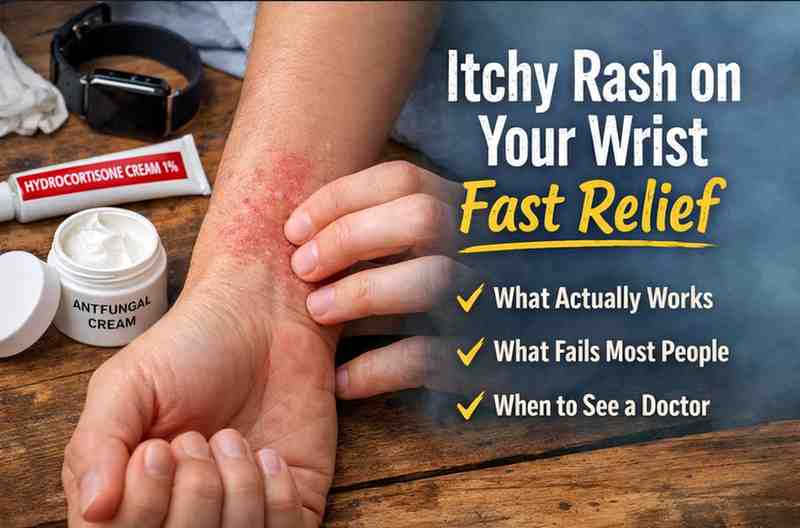
If You Want Itchy Rash on Your Wrist Fast Relief — Do This Instead
This is the pattern I’ve seen consistently work.
Step 1: Remove All Possible Triggers (48–72 Hours)
No watch.
No bracelets.
Switch to fragrance-free soap.
Pat dry after washing — don’t rub.
Almost everyone resists this part.
They think, “It can’t be my watch.”
It often is.
Even expensive metal bands can cause nickel irritation.
Step 2: Use the Right Type of Cream
For mild irritation or contact dermatitis:
-
1% hydrocortisone cream (thin layer, twice daily, max 7 days)
-
Fragrance-free moisturizer on top after 10–15 minutes
For suspected fungal rash:
-
Clotrimazole or miconazole cream
-
No steroids
Most people mix these up.
That’s where progress stalls.
Step 3: Control Moisture
Keep it dry.
But not dry-dry cracked.
There’s a difference.
Sweaty skin worsens irritation. Over-dried skin cracks and prolongs healing.
It’s a balance.
How Long Does It Take?
From what I’ve seen across dozens of cases:
-
Mild contact irritation: 3–5 days
-
Moderate dermatitis: 7–10 days
-
Fungal rash: 2–3 weeks
If there’s no improvement in 7 days, that’s your sign to reconsider the diagnosis.
Almost every delayed recovery I’ve seen came down to one of these:
-
Still wearing the watch
-
Using the wrong cream
-
Scratching at night
-
Not being consistent
Consistency beats intensity here.
What Consistently Works vs. What Sounds Good on Paper
Works consistently:
-
Removing friction entirely
-
Short-term steroid use (when appropriate)
-
Identifying the trigger
-
Keeping skin → clean and gently moisturized
Sounds good but fails:
-
Essential oils
-
Toothpaste (yes, people try this)
-
Alcohol wipes
-
Ignoring it
I’ve watched more than one person make it worse trying DIY hacks from TikTok.
Don’t.
Quick Answers (FAQ Style)
What causes an itchy rash → on the wrist suddenly?
Most commonly contact irritation — soap, metal, sweat, or friction.
Can stress cause a wrist rash?
Yes. Especially if you already have sensitive skin or eczema tendencies.
Is it contagious?
Contact dermatitis is not. Fungal infections can spread through skin contact or shared items.
Should I cover it?
Not unless you need to protect it from friction. Otherwise, let it breathe.
When should I see a doctor?
If there’s spreading redness, pus, fever, severe swelling, or no improvement after a week.
Common Mistakes I Keep Seeing
This part matters.
-
Applying thick cream 6–7 times a day
-
Switching treatments every 24 hours
-
Scratching unconsciously
-
Assuming “natural” means safer
-
Ignoring it until it doubles in size
Almost everyone I’ve seen struggle with this does one thing wrong: they panic and over-correct.
Skin likes calm. Not chaos.
Objections I Hear All the Time
“But I’ve had this before and it went away on its own.”
Sure. Sometimes it does.
But repeated flares usually mean repeated exposure.
If you don’t find the trigger, it’ll come back.
“Hydrocortisone scares me.”
Used short term, it’s generally safe. Long-term misuse is the issue.
Seven days. Not seven weeks.
“It’s small. It’s not a big deal.”
True.
Until it spreads. Or cracks. Or gets infected from scratching.
Small doesn’t mean ignore.
Who This Is NOT For
Let’s be clear.
This guidance isn’t enough if:
-
The rash is rapidly spreading
-
There’s intense pain
-
You have diabetes and slow healing
-
It’s oozing or crusting heavily
-
You suspect shingles
Those situations need medical care.
No guessing.
Reality Check
Here’s what usually surprises people.
The itch often gets slightly worse before it gets better.
Especially when you stop scratching.
Your brain has gotten used to the scratch-relief cycle.
Breaking it feels uncomfortable.
But that’s part of healing.
Also — healing skin looks dry and flaky sometimes. That’s normal.
It doesn’t mean it’s failing.
Practical Takeaways
If you want fast relief:
-
Remove wrist accessories immediately
-
Switch to fragrance-free products
-
Choose the correct cream
-
Be consistent for 5–7 days
-
Don’t scratch (trim nails if needed)
Emotionally?
Expect impatience.
Expect second-guessing.
Most people I’ve seen improve had one thing in common: they stopped experimenting every day.
They picked a reasonable plan. Stuck with it.
What Patience Actually Looks Like
It looks like:
Day 1: Slight reduction in redness
Day 3: Less itching
Day 5: Flaking
Day 7: Mostly calm skin
Not overnight magic.
Steady decline.
Still… if it worsens or doesn’t respond at all? That’s useful data. That’s when you pivot or see a clinician.
I’ve watched enough people go from frustrated and scratching during Zoom calls to quietly relieved a week later just because they simplified things.
So no — this isn’t some miracle fix.
But most itchy wrist rashes aren’t mysterious. They’re reactive.
And when you treat the cause instead of just the itch… things usually settle down.
Sometimes that alone is the relief people were looking for.