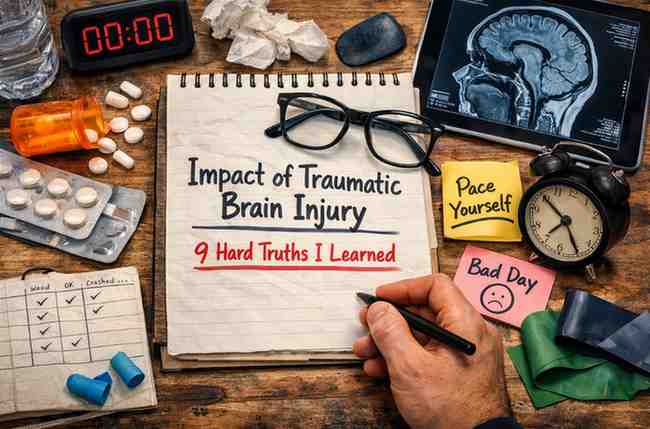


Honestly, I didn’t think this would work.
I’d already tried three other “plans” and felt kind of dumb for hoping again. The Impact of Traumatic Brain Injury didn’t hit me like a single moment. It crept in. Foggy mornings. Short temper. Forgetting words mid-sentence. A weird heaviness that made normal days feel like uphill hikes with a bad backpack. Not dramatic enough for people to worry. Too heavy for me to ignore.
Not gonna lie… I spent months telling myself it would just pass. I was wrong.
And yeah, I messed this up at first.
What follows isn’t a medical lecture. It’s what living inside this actually taught me—what helped, what didn’t, and the stuff I wish someone had told me before I burned energy on the wrong things.
What I misunderstood about brain injury (and paid for)
I thought recovery was:
-
Rest a lot
-
Push a little
-
Repeat
-
Wait for a “normal” switch to flip back on
That model failed me fast.
Here’s what I didn’t get:
-
Symptoms change day to day.
Yesterday I could read. Today? Two paragraphs and my brain feels like it’s overheating. -
Pushing through isn’t brave. It’s expensive.
I kept “powering through” headaches and paid with three-day crashes. -
Progress isn’t linear.
You can have a good week and then randomly feel like you’re back at week one. It messes with your head.
The impact of traumatic brain injury isn’t just physical.
It messes with your identity. Your patience. Your relationships. Your sense of time.
That part surprised me the most.
The stuff I tried first that didn’t work (so you don’t repeat it)
I went full chaos-mode at the start. Tried everything at once. Big mistake.
What failed (or backfired):
-
“Just grind through it” days
I treated fatigue like a character flaw. Spoiler: it’s neurological. Grinding made symptoms louder. -
Random supplements without a plan
Threw money at hope. Some did nothing. One made me nauseous. None were magic. -
Over-stimulation
Podcasts while scrolling while TV in the background. I called it “staying engaged.” My brain called it “nope.” -
Comparing my timeline to other people’s
This one hurt. I saw recovery stories online and felt broken for not matching them.
What I’d do differently:
-
Pick one change at a time
-
Track symptoms like a nerd
-
Stop pretending rest = laziness
What actually started helping (slowly, annoyingly, for real)
This honestly surprised me. The helpful stuff wasn’t flashy. It was boring and consistent.
1) Energy budgeting (aka: stop spending brain money you don’t have)
I started thinking of energy like cash.
If I wake up with $100, I can’t spend $150.
My rough “budget” looked like:
-
30% on work / thinking
-
20% on screens
-
20% on people
-
30% saved for “unknown crashes”
When I blew the budget?
Next day was trash.
This changed everything. Not overnight. But I stopped the multi-day crashes.
2) Ruthless sleep protection
I used to brag about running on 5 hours.
Now? I guard sleep like it’s rent money.
-
Same bedtime most nights
-
No screens 45 minutes before bed
-
Dark room, cool temp
-
If sleep is bad → the next day is lighter. No negotiations.
Is it annoying? Yes.
Does it work? From what I’ve seen →, at least… yeah.
3) One symptom, one strategy
Instead of “fixing my brain,” I tackled symptoms:
-
Headaches → hydration + fewer screens + scheduled breaks
-
Brain fog → write everything down + one-task rule
-
Irritability → earlier meals + walking it out
-
Memory slips → notes app + alarms + zero shame
Small wins stack.
That part I didn’t expect at all.
4) Professional help (but with boundaries)
Therapy helped.
Neurology helped.
Rehab exercises helped.
But I had to learn:
-
Ask questions
-
Say when something wasn’t working
-
Leave plans that made me worse
Blind trust cost me time.
Informed collaboration gave me progress.
How long does it take to feel better? (the real answer)
This is where people hate the answer.
Short answer: It depends.
Honest answer: Longer than you want. Shorter than it feels.
For me:
-
The first noticeable improvement: ~6–8 weeks of consistent habits
-
Fewer crashes: ~3 months
-
Feeling like “myself-ish” again: ongoing
The impact of traumatic brain injury doesn’t follow a neat timeline.
It’s more like:
-
two steps forward
-
one weird step sideways
-
one step back
-
then… suddenly a better week
If nothing improves after a few months of honest consistency, that’s a sign to reassess the plan—not to give up.
Common mistakes that slow everything down
If I could tattoo this on my past self:
-
Ignoring early warning signs
Headache = stop. Not “push 10 more minutes.” -
Overloading good days
Feeling okay doesn’t mean you’re cured. It means pace smarter. -
Doing too much at once
You can’t tell what’s helping if you change 10 variables. -
Hiding symptoms to look “normal”
This backfires socially and physically. Be boringly honest. -
Waiting for motivation
Motivation is flaky. Systems are better.
Is it worth trying to actively manage recovery?
Not gonna lie… I asked myself this on bad days.
Because the routines are annoying. The pacing feels limiting. The progress is slow.
Why it’s worth it (for me):
-
Fewer symptom spirals
-
Less fear of random crashes
-
More control over my day
-
I stopped feeling like my brain was a wild animal
Why some people hate this approach:
-
It’s not dramatic
-
It’s slow
-
It asks for boring consistency
-
It doesn’t promise a miracle
If you’re looking for a fast “fix,” you’ll be disappointed.
If you want fewer bad days over time, this path makes sense.
Objections I had (and how I see them now)
“I don’t have time to rest.”
I said this. Then lost three days to a crash. Time showed up either way.
“Other people recovered faster.”
Comparison is poison. Different injuries, different brains, different lives.
“This feels too small to matter.”
Small changes compound. Big overhauls collapse.
“What if I’m just being weak?”
You’re adapting to a changed system. That’s not weakness. That’s strategy.
Reality check: what can go wrong
Let’s not sugarcoat this.
-
You might follow a plan and still have bad weeks
-
Some symptoms may linger longer than you want
-
People around you might not “get it”
-
You can burn out emotionally trying to be patient
This is not a straight climb.
It’s more like learning a new terrain.
And yeah… some days still suck.
Who this approach is NOT for
Be honest with yourself here:
-
If you want a quick fix
-
If you’re not willing to change routines
-
If you hate tracking symptoms
-
If you need dramatic results fast to stay motivated
This will probably frustrate you.
It’s built for people who can tolerate slow, unsexy progress.
Short FAQ (real questions I kept Googling)
Does the impact of traumatic brain injury ever fully go away?
Sometimes. Sometimes not fully. Many people get close enough that life feels normal again—with adjustments.
What if I try this and nothing changes?
Then the plan is wrong, not you. Reassess with a professional. Change one variable. Keep learning.
Can stress make symptoms worse?
Yes. Way worse. I didn’t believe this at first. I was wrong.
Is exercise good or bad?
Both, depending on timing and intensity. Gentle movement helped me. Overdoing it wrecked me.
Should I avoid screens completely?
Not always. I learned to dose screens instead of banning them. Timers saved me.
Practical takeaways (no hype, just what I’d actually do)
What to do:
-
Pick one symptom to work on this week
-
Track what makes it better or worse
-
Protect sleep like it’s non-negotiable
-
Budget your energy
-
Ask for help early
What to avoid:
-
Hero days followed by crash weeks
-
Ten new supplements at once
-
Comparing timelines
-
Ignoring early symptoms
What to expect emotionally:
-
Impatience
-
Doubt
-
Random hope spikes
-
Frustration when progress stalls
-
Relief when small things start working
What patience looks like (for real):
-
Doing the boring stuff even when it feels pointless
-
Adjusting plans without self-blame
-
Letting “better” be good enough for now
No guarantees.
No miracle timelines.
Just fewer bad days over time.
Still… I won’t pretend this turned everything into sunshine.
Some parts of the impact of traumatic brain injury stick around longer than you want. Some days you’ll feel like you’re back at zero for no obvious reason. That messes with your confidence. With your mood. With how you see yourself.
But for me?
It stopped feeling impossible. And that was enough to keep going.