
Honestly, most people I’ve watched try to slim their thighs → run into the same quiet frustration.
They start with good intentions.
A few workouts. Some YouTube routines. Maybe a diet shift.
Two weeks later they’re staring in the mirror thinking:
“Why do my legs look… bigger?”
And that’s the moment the confusion starts.
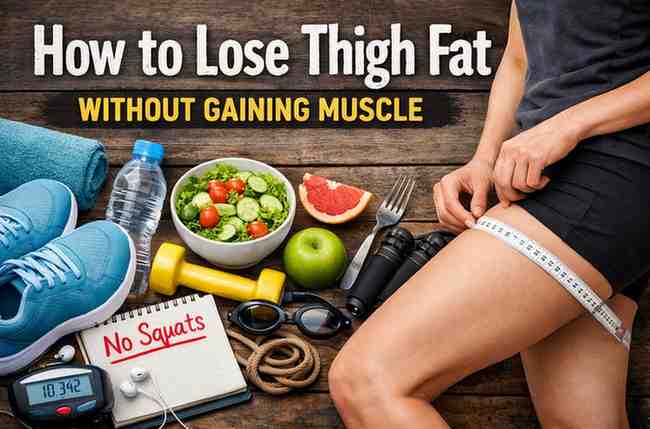
Because the goal they usually have is very specific: how to lose thigh fat without gaining muscle.
Not stronger thighs.
Not bigger quads.
Not a full-body bodybuilding plan.
They just want their legs to look slimmer in jeans. Softer. Less bulky.
I didn’t realize how common this frustration was until I started paying attention to the patterns around me — friends trying new workout plans, people asking for advice after months of effort, even trainers quietly admitting that a lot of routines accidentally do the opposite of what people want.
And after watching dozens of people experiment, struggle, adjust… some patterns show up again and again.
Some things work.
Some things look good on paper but backfire.
And a few mistakes almost everyone makes at first.
Let’s walk through what I’ve seen.
Why People Specifically Want to Lose Thigh Fat (Without Building Muscle)
This goal is more common than people think.
Most people aren’t trying to build athletic legs.
They usually say things like:
-
“My thighs touch and it makes clothes uncomfortable.”
-
“I don’t want bulky legs.”
-
“Every time I exercise my legs get bigger.”
-
“My upper body is slim but my thighs hold weight.”
From what I’ve seen, this concern shows up most often in people who:
-
Naturally carry fat in the lower body
-
Tried strength workouts that grew their quads
-
Followed influencer workouts that were basically leg-building routines
The surprising part?
A lot of mainstream fitness advice accidentally encourages thigh muscle growth.
Squats.
Lunges.
Weighted leg exercises.
Those are great for strength — but if your only goal is slimmer thighs, they often create the opposite feeling people are chasing.
I’ve seen this happen so many times.
Someone starts a “leg day” routine and within three weeks says:
“My thighs feel harder… but they look bigger.”
That reaction is incredibly common.
The First Misunderstanding Most People Have
Almost everyone assumes one thing at the beginning:
“If I exercise my thighs, the fat will disappear there.”
But bodies don’t work that way.
From what I’ve seen across a lot of people trying this:
Fat loss is systemic, not local.
Meaning:
You can strengthen a muscle locally.
But fat reduction usually happens gradually across the body.
That doesn’t mean thigh fat never reduces.
It does.
But it tends to happen through a mix of:
-
overall fat reduction
-
low-impact movement
-
avoiding excessive muscle stimulus
And that balance is where people often get tripped up.
The Pattern I Noticed in People Who Eventually Slim Their Thighs
After watching people experiment for months (sometimes years), the ones who finally see noticeable thigh → slimming usually end up doing something like this:
They shift toward fat-burning movement instead of muscle-building workouts.
Not extreme exercise.
Just consistent, steady activity.
The routines that showed the most reliable results usually included things like:
Walking — a lot more than people expect
Walking sounds too simple, but I’ve seen it work more consistently than intense workouts.
People who slim their thighs often:
-
Walk 8,000–12,000 steps daily
-
Take long relaxed walks instead of sprint workouts
-
Avoid heavy resistance training for legs
Walking burns calories without heavily stimulating quad muscle growth.
That balance matters.
Light cycling instead of intense leg workouts
Some people switch from strength training to light cycling.
But there’s a key detail:
Low resistance.
Not hill climbing.
Not spin-class intensity.
Just steady pedaling that keeps the body moving without forcing the legs to build strength.
Swimming (this one surprised me)
I honestly didn’t expect swimming to show up so often in successful cases.
But several people I’ve seen slim their thighs adopted swimming routines.
Why it works well:
-
full-body calorie burn
-
very low joint impact
-
less direct quad overload
The legs move, but they don’t get hammered like in squat workouts.
Nutrition quietly plays a bigger role than workouts
This part tends to surprise people.
Many of the visible thigh changes people noticed didn’t come from exercise adjustments alone.
They came when people reduced overall calorie intake slightly.
Not crash diets.
Just small changes like:
-
reducing liquid calories
-
cutting late-night snacks
-
improving protein balance
-
avoiding constant grazing
Fat loss often followed gradually.
And thighs changed along with it.
What Almost Everyone Gets Wrong at First
This is the part where patterns really stand out.
Most people trying to lose thigh fat accidentally do one of these five things.
1. Doing high-rep squat workouts every day
I’ve seen people follow online routines like:
“100 squats a day for slim thighs.”
And what usually happens?
Their thighs get stronger.
Sometimes more muscular.
But not necessarily smaller.
The quad muscles respond quickly to repeated resistance.
So the leg shape changes… but not always the direction people want.
2. Overdoing HIIT leg workouts
HIIT training is great for fitness.
But when it includes exercises like:
-
jump squats
-
lunges
-
box jumps
-
stair sprints
…it becomes a muscle stimulus for the legs.
Some people actually see their thighs look more defined and thicker.
Which can feel discouraging when the goal was slimming.
3. Expecting thigh fat to disappear first
This expectation creates a lot of frustration.
In many people I’ve seen, thigh fat is the last place to change.
Not the first.
Fat distribution is heavily influenced by genetics and hormones.
So even when someone is losing fat overall, their thighs may lag behind.
That delay makes people think nothing is working.
But sometimes the body is just moving at its own pace.
4. Cutting calories too aggressively
Crash dieting backfires more often than it works.
What I’ve seen happen:
-
energy crashes
-
workouts stop
-
metabolism slows
-
rebound eating
And thigh fat usually returns quickly.
Slow, sustainable fat reduction tends to produce better long-term changes.
5. Following influencer routines designed for muscle
This one is everywhere now.
“Lean legs workouts” that include:
-
resistance bands
-
heavy squats
-
glute bridges
-
weighted lunges
Those exercises are leg-strength routines.
They build shape and muscle.
Which is great for some people.
But if the goal is slimmer thighs, they can create confusion.
How Long Does It Usually Take to See Thigh Fat Reduction?
This question comes up constantly.
From what I’ve seen, realistic timelines look something like this:
First 3–4 weeks
Most changes are internal.
Energy levels shift.
Body feels lighter.
But visible thigh changes are rare.
Weeks 6–8
This is when subtle differences start appearing for some people:
-
pants fitting slightly looser
-
reduced thigh rubbing
-
softer appearance
Still small changes.
But noticeable if someone is paying attention.
3–4 months
This is where more visible leg slimming usually shows up.
Especially if someone has maintained:
-
daily movement
-
balanced nutrition
-
moderate calorie deficit
Consistency matters far more than intensity.
Quick FAQ (Questions People Ask Constantly)
Can you lose thigh fat without exercising?
Technically yes.
Fat loss through nutrition → alone can reduce thigh fat.
But movement helps maintain metabolism and overall health.
Most successful cases include some form of daily activity.
Do squats make thighs bigger?
They can.
Squats build quad muscle.
That doesn’t automatically mean thighs become slimmer.
It depends on body composition.
Is walking enough to slim thighs?
For many people — yes.
Walking supports calorie burn without strong muscle hypertrophy.
That’s why it shows up so often in successful routines.
Why do my thighs look bigger after starting workouts?
Often temporary.
Muscles retain water during early training phases.
Or the routine is stimulating quad growth.
Both situations are common.
The Honest Objections People Have
I’ve heard a few recurring doubts from people trying this approach.
Let’s talk about them.
“Walking feels too slow to make a difference.”
I understand the feeling.
People expect dramatic workouts to produce dramatic results.
But the reality I’ve seen repeatedly:
Slow, consistent movement often beats intense bursts people can’t sustain.
Consistency wins.
“What if my body just stores fat in my thighs?”
That happens.
Genetics influence fat distribution heavily.
Some people lose fat in their face first.
Others in their waist.
Thigh fat can be stubborn.
But gradual fat reduction still affects it eventually.
“I don’t want skinny legs — just smaller thighs.”
That’s actually the most common goal.
The balance usually comes from:
-
moderate activity
-
avoiding heavy leg resistance
-
maintaining general strength elsewhere
Reality Check: Who This Approach May Not Work For
I think it’s important to say this clearly.
This approach isn’t perfect for everyone.
It may not produce dramatic thigh slimming for people who:
-
have extremely low body fat already
-
naturally carry most fat in the lower body
-
have hormonal conditions affecting fat storage
In those cases, changes may be slower or more subtle.
That’s frustrating. I’ve seen people struggle with it.
But realistic expectations prevent a lot of unnecessary self-blame.
What People Often Feel During This Process
Something interesting I noticed:
The emotional journey matters almost as much as the physical one.
People usually move through phases like this:
Phase 1 — excitement
New routine.
High motivation.
Phase 2 — doubt
No visible change yet.
People assume it isn’t working.
Phase 3 — quiet progress
Clothes fit differently.
Energy improves.
Confidence grows slowly.
Phase 4 — acceptance
Instead of obsessing over thighs daily, people notice overall health improving.
That shift tends to make the process sustainable.
Practical Takeaways (From What I’ve Seen Work Most Often)
If someone asked me for the simplest version of what actually helps, it would look something like this.
Focus on consistent low-impact movement
Walking, swimming, light cycling.
Daily movement beats intense bursts.
Avoid heavy resistance leg workouts
If the goal is slimmer thighs.
Squats and lunges build muscle.
Create a gentle calorie deficit
Nothing extreme.
Just small sustainable changes.
Be patient with thigh fat specifically
It often changes slower than other areas.
That delay is normal.
Track clothing fit, not just the mirror
Small changes appear here first.
People often miss them otherwise.
And honestly…
The biggest shift I’ve seen in people who eventually feel better about their thighs isn’t just physical.
It’s mental.
They stop chasing extreme routines.
They stop punishing workouts.
They settle into habits that feel manageable.
And slowly — sometimes quietly — their body changes along with those habits.
So no, learning how to lose thigh fat without gaining muscle isn’t about some secret exercise or miracle routine.
It’s mostly about understanding what your body responds to… and what it doesn’t.
Once people figure that out, the frustration usually fades.
And that alone makes the whole process feel a lot lighter.