I can’t tell you how many times I’ve watched someone panic over what turned out to be heat → rash — and not because the rash was severe, but because it didn’t look like the photos they found online.
Especially on darker skin.
One woman I worked with kept saying, “It’s not red. So it can’t be heat rash, right?” She’d already tried antifungal cream. Then eczema cream. Then nothing at all because she felt embarrassed asking again.
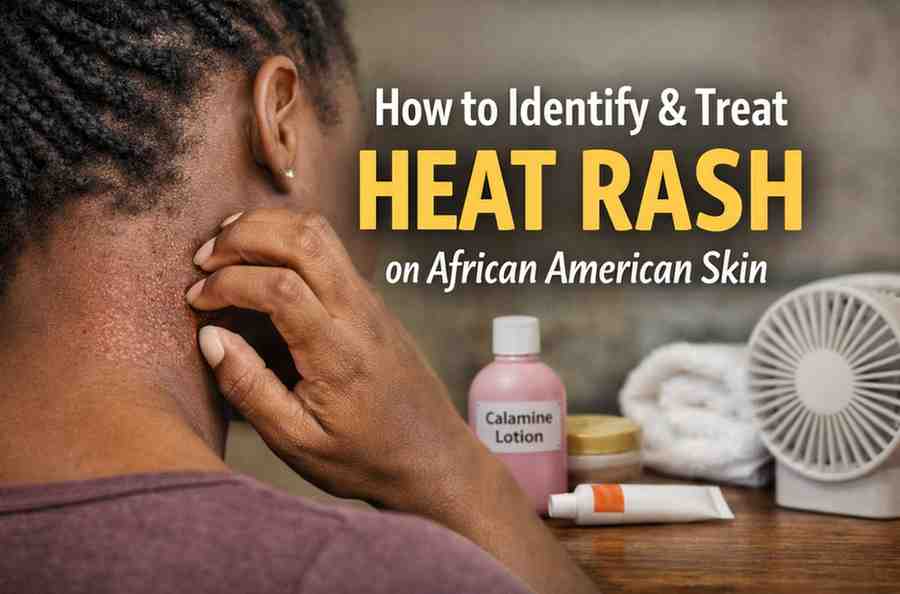
This is exactly why understanding How to Identify and Treat Heat Rash on African American Skin → matters. The presentation is different. The texture feels different. The color shift is subtle. And honestly? Most generic advice online misses that.
From what I’ve seen across dozens of real cases — friends, clients, parents texting me pictures at 11 PM — the problem isn’t that people don’t care →. It’s that they’re using guidance that wasn’t written with their skin in mind.
Let’s fix that.
First: What Heat Rash Actually Looks Like on African American Skin
Almost everyone I’ve seen struggle with this makes the same mistake first.
They look for redness.
On deeper skin tones, heat rash often shows up as:
-
Tiny raised bumps that are skin-colored, slightly darker, or slightly lighter
-
A faint grayish or purplish cast instead of red
-
Clusters that feel rough before they look obvious
-
Intense itching or prickling without dramatic color change
-
Shiny or tight-looking skin in the area
This honestly surprised me after watching so many people try to “spot redness.” They couldn’t see anything dramatic — so they assumed it was allergies or something worse.
In reality, heat rash on darker skin → is often more about texture and sensation than color.
Common areas I repeatedly see:
-
Neck folds
-
Under breasts
-
Behind knees
-
Under waistbands
-
Along hairlines after sweating
And yes — in kids especially, it can look almost invisible until you run your hand across it.
Why People Misidentify It (And End Up Making It Worse)
Here’s what most people I’ve worked with mess up at first:
They over-treat it.
Heat rash (miliaria) is basically trapped sweat. The sweat ducts get blocked. Heat + friction + moisture = irritation.
But what do people do?
They:
-
Slather thick creams
-
Use heavy shea butter
-
Apply steroid cream “just in case”
-
Keep the area covered tightly
That blocks pores even more.
I didn’t expect this to be such a common issue — but thick moisturizers are one of the biggest aggravators I’ve seen.
Especially in humid U.S. climates — think Florida, Texas, Georgia summers — heavy products can turn mild heat rash into a stubborn flare.
The Emotional Side No One Talks About
Let’s be honest.
A lot of people assume something is “wrong” with their skin.
I’ve seen teens think it’s acne.
Adults worry it’s a fungal infection.
Parents fear eczema flare-ups.
There’s frustration because it doesn’t match Google images.
There’s embarrassment.
There’s that quiet thought: “Why doesn’t my skin react normally?”
It is normal.
It just looks different.
How to Identify Heat Rash (Quick Snapshot)
If you want the short checklist:
Most likely heat rash if:
-
It appears after heavy sweating
-
It’s clustered tiny bumps
-
It feels prickly or itchy
-
It improves in cooler air within 1–3 days
-
There’s no spreading ring shape
Less likely heat rash if:
-
It has sharp circular borders
-
It oozes pus
-
It comes with fever
-
It lasts longer than 7–10 days without improvement
What Actually Works (From What I’ve Seen Repeatedly)
I’ll keep this practical.
1. Cool the Skin — Gently
This works more consistently than almost anything else.
-
Lukewarm showers (not cold shock)
-
Air drying
-
Loose cotton clothing
-
Sleeping with a fan or AC
Within 48 hours, most mild cases visibly calm down.
Almost boring advice. But it works.
2. Stop Heavy Products Immediately
If someone’s using:
-
Thick body butters
-
Petroleum jelly
-
Heavy oils
Pause them.
Light, non-comedogenic lotion only if the skin feels dry — and even then, minimal.
I’ve watched rashes disappear in three days once the heavy layering stopped.
3. Calamine Lotion (Used Correctly)
This is one of the few topical treatments that consistently helps.
It:
-
Soothes itch
-
Dries excess moisture
-
Reduces friction
But people overapply.
Thin layer. Let it dry. Don’t coat it like frosting.
4. Hydrocortisone (Short-Term Only)
If itching is intense, 1% hydrocortisone can help for 1–2 days.
But this is where judgment calls matter.
I only recommend this when:
-
It’s very inflamed
-
Sleep is disrupted
-
Scratching is making it worse
Not as a default first step.
5. Reduce Friction
This one’s huge and overlooked.
I’ve seen recurring heat rash that magically stopped once someone:
-
Switched to looser waistbands
-
Changed workout leggings
-
Stopped wearing tight synthetic fabrics
It’s not always about “treatment.”
Sometimes it’s just removing the trigger.
How Long Does It Take to Heal?
For most mild cases:
-
Improvement: 24–72 hours
-
Full resolution: 3–7 days
If it lingers beyond 10 days, I start thinking:
-
Fungal infection?
-
Contact dermatitis?
-
Eczema overlap?
Heat rash alone rarely sticks around longer than a week if triggers are removed.
Common Mistakes That Slow Recovery
I see these over and over:
-
Reapplying thick moisturizers
-
Scrubbing the area
-
Using harsh antibacterial soap
-
Covering it tightly “to protect it”
-
Ignoring sweat build-up during workouts
Almost everyone I’ve seen struggle with this does one thing wrong:
They keep doing the same routine that caused → it.
Is This Worth Trying Before Seeing a Doctor?
If:
-
It’s mild
-
No fever
-
No spreading infection
-
No severe pain
Yes. Try cooling + friction reduction first.
But if:
-
There’s pus
-
It’s worsening rapidly
-
It’s painful rather than itchy
-
You have underlying health conditions
See a clinician.
No hesitation.
Quick FAQ (Search Intent Aligned)
Does heat rash look red on African American skin?
Often no. It may look darker, grayish, or skin-toned with texture changes.
Can heat rash leave dark marks?
Yes. Post-inflammatory hyperpigmentation can happen if scratched. Usually fades over weeks.
Is heat rash contagious?
No.
Can adults get heat rash or is it just babies?
Adults get it all the time. Especially in humid U.S. states.
Objections I Hear All the Time
“But I barely sweat.”
You sweat more than you think. Especially overnight.
“I tried lotion and it burned.”
That’s often because the skin barrier is irritated. Simpler is better.
“It keeps coming back.”
That’s usually clothing, gym friction, or climate control issues.
Reality Check: Who This Advice Isn’t For
This approach won’t help if:
-
It’s actually fungal
-
It’s eczema flare
-
It’s allergic contact dermatitis
-
There’s bacterial infection
And if you live somewhere extremely humid without AC? Prevention becomes harder. That’s just real.
Prevention That Actually Works
From patterns I’ve seen:
-
Shower soon after sweating
-
Pat dry (don’t rub)
-
Use breathable fabrics
-
Avoid layering heavy products in summer
-
Change workout clothes immediately
Small boring habits.
Big difference.
What to Expect Emotionally
There’s usually relief when people realize:
“Oh. It’s not something serious.”
But there’s also frustration.
Because prevention means adjusting routines. Wardrobe changes. Product swaps.
And honestly? That’s inconvenient.
Still — most people who stick with lighter care and better airflow stop dealing with repeat flares.
Practical Takeaways
Do:
-
Cool the skin
-
Keep it dry
-
Wear loose cotton
-
Use minimal product
Avoid:
-
Heavy occlusive creams
-
Tight synthetic fabrics
-
Scrubbing
-
Panic layering treatments
Expect:
-
Mild cases to improve quickly
-
Dark marks to fade slowly
-
Some trial-and-error
Patience here means days, not months.
So no — this isn’t complicated medicine.
But I’ve watched enough people spiral over what turned out to be simple heat rash on African American skin.
Most of the time, the shift happens when they stop fighting it and start reducing heat, moisture, and friction.
Not dramatic.
Not glamorous.
Just consistent.
And honestly? That quiet reset — that moment of “Okay. I understand what’s happening now.” — is usually the real relief.