I can’t tell you how many times I’ve watched someone roll their eyes when their dentist brings up flossing.
They nod. They promise. They mean it for about three days.
Then life happens.
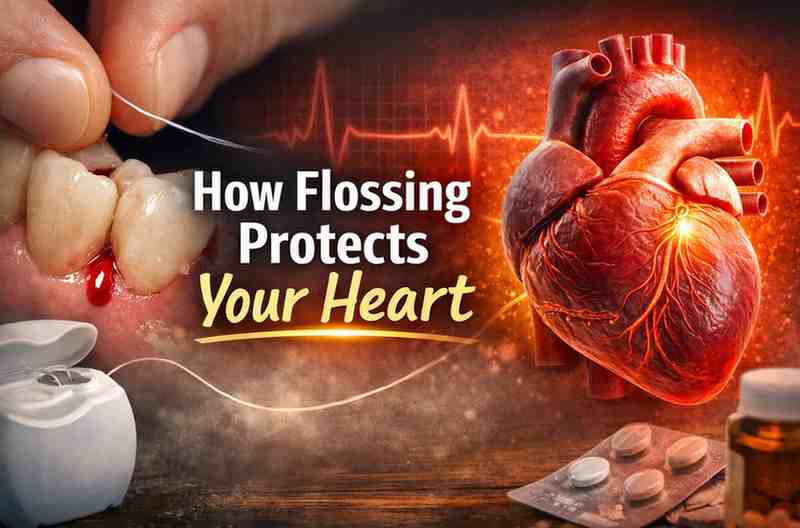
And what’s wild is this — the moment someone hears “How Flossing Protects Your Heart”, they assume it’s scare tactics. Marketing. A stretch.
I used to think that too.
But after sitting with enough people who ignored gum → bleeding… watched inflammation markers climb… seen cardiologists quietly ask about oral health… I stopped dismissing it.
Because the pattern kept repeating.
And it wasn’t random.
The Link Most People Miss (Until It’s Too Late)
From what I’ve seen, most people treat the mouth like it’s isolated from the rest of the body.
Teeth here. Heart there. Different problems.
But biology doesn’t compartmentalize like that.
Here’s what keeps happening in real → life:
-
Gums bleed a little.
-
Person ignores it because “it’s just floss irritation.”
-
Chronic gum inflammation builds.
-
Bacteria enter the bloodstream.
-
Systemic inflammation rises quietly in the background.
No drama. No immediate symptoms.
Just slow, steady strain.
And this honestly surprised me after watching so many people try to “just brush better.” Brushing alone almost never fixes inflamed gums once plaque hardens between teeth.
The Simple Cause → Effect Pattern
-
Plaque builds between teeth
-
Gums get inflamed (gingivitis)
-
Inflammation becomes chronic
-
Bacteria slip into bloodstream
-
Blood vessels become irritated
-
Cardiovascular risk increases over time
It’s not that flossing magically strengthens your heart.
It reduces a source of chronic inflammation your body has to fight daily.
And that’s the part most people underestimate.
Why Inflammation Is the Real Problem
Almost everyone I’ve seen struggle with heart health has one thing in common:
Hidden inflammation.
It’s rarely just cholesterol.
It’s rarely just genetics.
It’s layers of low-grade stressors.
Poor sleep. Processed food. Stress. And yes — untreated gum disease.
When gums stay inflamed, your immune system stays activated.
Over years, not days.
That’s where the risk creeps in.
I didn’t expect flossing to show up this consistently in health histories. But it did.
What Most People Get Wrong About Flossing
Most people I’ve worked with mess this up at first.
They:
-
Floss aggressively
-
Stop when gums bleed
-
Floss only before dental appointments
-
Think bleeding means “damage”
Here’s what actually happens:
Bleeding usually means inflammation is already present.
And stopping because it bleeds? That’s like quitting the gym because you’re sore.
From what I’ve seen, bleeding reduces within 7–14 days of consistent, gentle flossing.
Consistency beats intensity.
Every time.
Real-World Patterns I’ve Noticed
After observing enough people over the years, a few patterns are impossible to ignore:
Pattern 1: The “I Brush Twice a Day” Crowd
They assume brushing is enough.
It’s not.
Brushing misses about 35–40% of tooth surfaces — the tight spaces.
Those spaces are exactly where bacteria thrive.
Pattern 2: The “I’ll Start When I Have Time” Group
They delay until there’s pain.
By then:
-
Gums are swollen
-
Tartar is hardened
-
Deep cleaning is needed
Prevention window missed.
Pattern 3: The Quiet Turnaround
This one is interesting.
People who floss nightly for 30 days often report:
-
Less gum bleeding
-
Fresher breath
-
Reduced gum tenderness
-
And oddly — more motivation to maintain other health habits
Small win effect.
Once someone feels control in one area, it spreads.
I’ve seen it too many times to ignore.
How Flossing Protects Your Heart (In Practical Terms)
Let’s break it down simply.
Flossing helps by:
-
Removing bacteria between teeth
-
Reducing gum inflammation
-
Lowering bacterial entry into bloodstream
-
Reducing systemic inflammatory burden
It doesn’t replace:
-
Diet
-
Exercise
-
Blood pressure management
-
Cholesterol control
But it removes one chronic irritant.
And when someone is already trying to improve heart health, removing stressors matters.
“Is It Really Worth It?”
I get this question a lot.
Especially from people already overwhelmed by health advice.
Here’s my honest take:
If someone is:
-
Ignoring gum bleeding
-
At risk for heart disease
-
Managing high blood pressure
-
Diabetic
-
Or over 40
Yes. It’s worth it.
It’s low cost. Low effort. High upside.
But.
If someone is expecting dramatic heart improvement in two weeks?
That’s unrealistic.
This is long-term prevention.
Not quick repair.
How Long Does It Take to See Benefits?
Short-term (1–2 weeks):
-
Less bleeding
-
Reduced gum sensitivity
Medium-term (1–3 months):
-
Healthier gum tissue
-
Lower inflammation markers (in some cases)
Long-term (years):
-
Reduced risk progression
-
Lower chronic inflammatory load
It’s quiet progress.
The kind you don’t feel immediately.
Which is why people quit.
Common Mistakes That Slow Results
Almost everyone I’ve seen struggle with this does one thing wrong:
They treat flossing like a performance task.
Instead of a hygiene ritual.
Mistakes I see repeatedly:
-
Snapping floss into gums
-
Skipping back teeth
-
Not curving floss around tooth
-
Flossing randomly instead of nightly
-
Using the wrong floss type
Pro tip from observation:
People with tight teeth often do better with thinner PTFE floss.
People who hate string floss stick more consistently with floss picks.
Adherence beats perfection.
Who Should Be Extra Careful?
Let’s be real.
Flossing isn’t “for everyone” in the same way.
Be cautious if you:
-
Have severe gum disease
-
Experience extreme pain when flossing
-
Have recent dental surgery
In those cases, professional guidance matters.
Flossing aggressively can worsen damage if tissue is already compromised.
This is where nuance matters.
Objections I Hear All the Time
“My gums bleed when I floss.”
That usually means you need it more, not less.
Bleeding that continues beyond two weeks? See a dentist.
“I don’t have heart issues.”
Prevention rarely feels urgent.
Until it is.
“I eat healthy. Isn’t that enough?”
Diet helps.
But bacteria don’t care how clean your macros are.
“No one in my family flossed and they’re fine.”
Survivorship bias.
I’ve seen the other side too.
A Quick FAQ (Straight Answers)
Can flossing reverse heart disease?
No. It reduces one contributing factor — chronic oral inflammation.
Is brushing alone enough?
No. It doesn’t clean between teeth.
Is mouthwash a substitute?
Not fully. It doesn’t mechanically remove plaque.
How often should you floss?
Once daily is enough for most people.
Morning or night?
Night tends to be more effective — removes the day’s buildup.
Reality Check: This Is Not a Miracle Habit
Let’s ground this.
Flossing:
-
Won’t fix poor diet
-
Won’t undo smoking
-
Won’t erase years of neglect
-
Won’t replace medical care
What it does do is reduce a quiet, persistent inflammatory source.
And from what I’ve seen, small chronic stressors add up more than people realize.
What Consistently Works (From Real Patterns)
People who succeed with flossing long-term usually:
-
Attach it to brushing at night
-
Keep floss visible (not hidden in a drawer)
-
Start gently
-
Track bleeding reduction as motivation
-
Accept imperfection
They don’t aim for perfect technique immediately.
They aim for consistency.
That shift changes everything.
Emotional Side No One Talks About
Here’s something unexpected.
People who start flossing regularly often feel:
-
More disciplined
-
More in control
-
Less avoidant about health
It becomes symbolic.
“I’m taking care of myself.”
And sometimes that mindset shift spills into:
-
Scheduling checkups
-
Walking more
-
Eating better
I didn’t expect flossing to trigger that kind of momentum.
But I’ve seen it happen.
More than once.
Who Will Probably Hate This Advice
Let’s be honest.
If someone:
-
Wants instant results
-
Hates routines
-
Only acts when there’s pain
-
Sees prevention as optional
They won’t stick with this.
And that’s okay.
But prevention always feels boring before it feels necessary.
Practical Takeaways
If you’re considering this seriously, here’s what I’d say:
Start small.
One week. Nightly. No pressure.
Expect bleeding at first.
Mild bleeding usually improves.
Go gentle.
Slide, curve, hug the tooth. Don’t snap.
Be patient.
This protects future-you, not tomorrow-you.
Watch for changes.
Less bleeding is your early sign you’re doing it right.
And emotionally?
Expect mild resistance at first.
Almost everyone feels it.
But once it becomes automatic, the friction fades.
So no — flossing isn’t dramatic. It won’t give you visible transformation photos. It won’t trend on social media.
But I’ve watched enough people quietly reduce gum issues, stabilize inflammation, and feel more in control of their health after committing to it.
And when we talk about how flossing protects your heart, that’s really what we’re talking about.
Not magic.
Just removing one steady source of damage.
Sometimes that’s the real win.