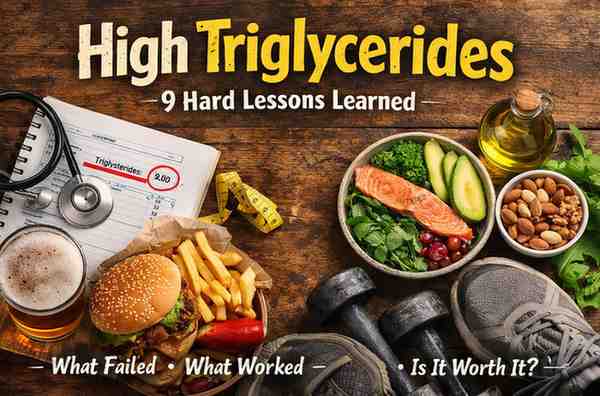
Not gonna lie—I didn’t even know what triglycerides were until a doctor circled the number on my lab report and went quiet for half a second. That pause? It messed with my head more than the number itself. I’d walked in thinking I was “mostly healthy.” I walked out with high triglycerides and this weird mix of shame, fear, and denial. I told myself it was a fluke. Stress week. Bad sleep. Too many takeout meals. I’d fix it “later.”
Later turned into months. The numbers didn’t budge. That’s when it stopped being abstract and started feeling
personal.
What follows isn’t some clean, perfect playbook. It’s the messy version. The stuff I tried that failed. The habits I swore I’d keep and then… didn’t. The small wins that surprised me. The slow relief when the labs finally came back better than before. From what I’ve seen, at least, high triglycerides aren’t about one magic switch. They’re about a handful of unsexy choices you repeat when nobody’s watching.
The first thing I misunderstood (and paid for)
I thought triglycerides were just “another cholesterol thing.” Same fix, same rules. Eat less fat, move a bit more, done.
Nope.
Here’s what tripped me up:
-
I cut fat hard. Went low-fat everything.
-
I replaced it with “healthy carbs.” Oatmeal. Fruit smoothies. Whole-grain crackers.
-
My triglycerides went up.
That honestly surprised me. I’d been doing what I thought was the “clean” version of healthy eating. Turns out triglycerides don’t care about your good intentions. They’re heavily tied to how your body handles sugar and refined carbs, and how much extra energy you’re giving it to store.
That was my first “don’t repeat my mistake” moment. Low-fat + high-carb can backfire hard for triglycerides.
What high triglycerides actually felt like (spoiler: nothing, until it did)
This part is annoying. Most of the time, high triglycerides don’t feel like anything. No pain. No warning signs. You can be walking around thinking you’re fine.
Then the anxiety hits when you read what they’re linked to:
-
Heart disease risk
-
Fatty liver
-
Pancreatitis (rare, but scary when you read about it at 2 a.m.)
I didn’t feel sick. I felt exposed. Like my body was quietly collecting interest on a bad loan.
That mental load mattered. It changed how seriously I took the boring stuff—meals, walks, sleep. Not overnight. But enough.
The stuff I tried that didn’t move the needle (or made it worse)
I want to save you some time here.
1. Going “healthy” without paying attention to sugar
I ate a ton of fruit. Drank smoothies. Snacked on granola bars. All “natural.” All spiking my triglycerides.
2. Weekend damage control
Five perfect weekdays. Then two days of:
-
Drinks
-
Late-night food
-
“I deserve this” energy
My labs didn’t care about my effort. They cared about the pattern.
3. Random supplements
Fish oil, cinnamon, random internet blends. Some helped a little. None fixed the core problem by themselves. More on that later.
4. Overdoing cardio, underdoing consistency
I’d go hard for two weeks. Then disappear for two. The on/off cycle made me feel productive without actually being consistent.
This part stung to admit. Effort isn’t the same as follow-through.
What finally started to work (not perfectly, but enough)
This is where things shifted. Not dramatically. Just… enough.
1. I cut back on sugar and refined carbs (not all carbs)
I didn’t go full no-carb. That would’ve lasted three days and ended in a meltdown.
What I did:
-
Cut sugary drinks completely
-
Stopped pretending fruit juice was “health food”
-
Swapped white bread and pastries for slower carbs
-
Ate carbs with protein/fat so I didn’t spike and crash
The weird part? Once I did this, my cravings calmed down. Not instantly. But noticeably. I didn’t expect that at all.
2. Alcohol got a hard look
This one hurt. Alcohol is one of the fastest ways to push triglycerides up. Even “just on weekends” mattered for me.
I didn’t quit forever. I just stopped lying to myself about the impact.
What changed:
-
Fewer drinks
-
Fewer binge nights
-
More water between drinks
The labs reflected that change faster than anything else I tried.
3. I walked. A lot. Boring, but effective.
Not bootcamps. Not heroic gym sessions.
Just:
-
20–40 minutes of walking
-
Most days
-
Sometimes split into chunks
This felt too simple to matter. It mattered.
Walking helped with:
-
Triglycerides
-
Stress
-
My appetite regulation (huge one)
From what I’ve seen, consistency beats intensity here.
4. I ate fat again (the right kind)
I stopped fearing fat and started paying attention to the type:
-
Olive oil instead of margarine
-
Nuts instead of crackers
-
Fatty fish when I could
This didn’t magically fix everything, but it made meals more satisfying. That helped me stick to the plan longer than two weeks. Which is half the battle.
How long did it take to see change?
This is one of those People Also Ask questions for a reason.
Short answer:
Some people see triglycerides drop in 2–4 weeks. Mine took about 8–12 weeks to show a clear, steady improvement.
Here’s what affected the timeline for me:
-
How consistent I was (not how intense)
-
Whether alcohol was truly reduced
-
Whether I slipped back into sugar-heavy comfort foods
-
Sleep (this one surprised me—bad sleep wrecked my appetite control)
If nothing changes in a month, it doesn’t always mean you’re failing. Sometimes it means one hidden habit is still sabotaging you.
Common mistakes that slow results
I’ve made all of these. Probably twice.
-
“Healthy” sugar binges
Smoothies, dried fruit, honey in everything. Triglycerides don’t care if it’s organic. -
All-or-nothing thinking
One bad day = “screw it, I’ll start Monday.” That spiral delays progress more than the bad day itself. -
Ignoring sleep and stress
When I slept like garbage, I ate like garbage. Then I blamed the food plan. -
Relying on supplements instead of habits
Supplements can help at the margins. They don’t cancel out nightly takeout.
Is lowering high triglycerides actually worth the effort?
I asked myself this when I was tired of tracking meals and skipping drinks.
Honestly? Yes. For me, it was.
Not because I suddenly became some health monk. But because:
-
My labs stopped scaring me
-
I had more energy
-
I felt less out of control around food
-
The anxiety quieted down
It didn’t make life perfect. It made life feel less fragile. That mattered.
Who will hate this approach
Let’s be real. This isn’t for everyone.
You’ll probably hate this if:
-
You want a 7-day reset with dramatic results
-
You don’t want to look at alcohol honestly
-
You’d rather add a supplement than change routines
-
You’re allergic to boring, repeatable habits
This is slow. It’s not glamorous. It’s a grind sometimes.
Objections I had (and how they played out)
“I eat pretty healthy already.”
I thought I did too. Turns out my version of healthy still had a lot of sugar and weekend chaos.
“My numbers aren’t that high.”
That’s how I talked myself into waiting. Waiting didn’t improve anything.
“I’ll do this after life calms down.”
Life didn’t calm down. I had to start anyway.
“Medication will fix this faster.”
For some people, meds are necessary and lifesaving. For me, lifestyle changes moved the needle enough that meds weren’t the first step. This is a real conversation to have with your doctor, not a vibe-based decision.
Reality check (the part nobody loves hearing)
This isn’t magic.
-
Results can stall
-
You can do “everything right” for weeks and still see small changes
-
Some bodies respond slower
-
Genetics matter more than we like to admit
Also: lowering triglycerides doesn’t automatically fix everything else. You can still have other risk factors. This is one piece of a bigger picture.
And yeah—sometimes you’ll backslide. I did. More than once. The trick wasn’t perfection. It was not turning one slip into a full collapse.
Quick FAQ (the stuff people always ask)
Can high triglycerides go down without medication?
Sometimes, yes. Lifestyle changes → alone moved mine. Some people still need meds. Both are valid paths.
What foods lower triglycerides fastest?
From what I’ve seen: fewer sugary drinks, fewer refined carbs, more fiber, more healthy fats, and less alcohol make the biggest difference.
Do I have to give up alcohol forever?
Not always. But if your triglycerides are high, alcohol is often a major driver. Cutting back is usually non-negotiable, at least for a while.
How often should I recheck my levels?
Typically every 2–3 months when you’re making changes. Your doctor can guide this. Watching the trend → helps you stay motivated.
The routines that finally stuck (simple, not heroic)
Here’s what I actually did on a normal week:
-
Breakfast: protein + something slow (eggs and veggies, or yogurt and nuts)
-
Lunch: leftovers or something boring but filling
-
Dinner: normal food, just fewer refined carbs
-
Movement: walking most days
-
Alcohol: fewer nights, fewer drinks
-
Snacks: nuts, cheese, real food instead of sugar bars
No perfect macros. No tracking app obsession. Just fewer blood sugar → roller coasters.
Practical takeaways (no hype, no guarantees)
What to do
-
Cut back on sugar and refined carbs
-
Move in ways you’ll repeat
-
Eat enough protein and healthy fat to stay full
What to avoid
-
All-or-nothing plans
-
“Healthy” sugar traps
-
Waiting for motivation
-
Expecting supplements to do the heavy lifting
What to expect emotionally
-
Frustration in the first few weeks
-
Doubt when progress is slow
-
Small wins that feel weirdly emotional
-
Occasional resentment (yep)
What patience looks like
-
Repeating boring habits
-
Letting imperfect days pass without quitting
-
Checking progress in months, not days
No guarantees. No miracle claims. Just momentum.
So yeah. High triglycerides didn’t ruin my life. But they forced me to stop pretending my habits were “fine.” This path wasn’t dramatic. It was slow, annoying, and sometimes kind of boring.
Still… it took the numbers from scary to manageable. More importantly, it took my mindset from helpless to involved. That shift alone made everything else feel possible again.
So no—this isn’t magic. But for me? It stopped feeling impossible. And that was enough to keep going.