Honestly, most people I’ve watched try to quit bread don’t fail because they “lack discipline.” They fail because no one prepared them for how weirdly emotional bread is.
I’ve seen → it in clients, friends, my own family. Someone decides they need healthier alternatives to bread — maybe their blood sugar → is creeping up, maybe they’re bloated all the time, maybe they just feel heavy and foggy by 3 p.m. They swap it out for a week. Then they’re cranky. Unsatisfied. Standing in the kitchen at 9:40 p.m. staring at a loaf like it personally offended them.
And they assume the problem is willpower.
From what I’ve seen, it’s rarely willpower. It’s strategy. And expectations.
So if you’re here because you’re frustrated →, or tired of feeling stuck in the bread cycle, let’s walk through this like real life. Not theory. Not “just eat lettuce wraps and smile.”
Because I’ve watched enough people try this to know what actually works → — and what looks good on Instagram but falls apart by Wednesday.
Why People Start Looking for Healthy Alternatives to Bread
The pattern is almost always one of these:
-
Blood sugar spikes and crashes
-
Constant bloating
-
Weight plateau that won’t move
-
Low-carb or keto attempt
-
Trying to manage inflammation
-
Just feeling “off” after heavy carb meals
But here’s the misunderstanding I see constantly:
People think → bread itself is evil.
It’s not that simple.
It’s usually:
-
Portion size
-
Frequency
-
Ultra-refined flour
-
What they’re pairing it with
-
Or the fact that it’s replacing fiber and protein
When someone swaps white sandwich bread for something more balanced, energy changes. Hunger stabilizes. Cravings calm down.
But when someone swaps bread for nothing?
That’s when things unravel.
What Actually Makes an Alternative “Healthy”?
From what I’ve seen work long-term, a good replacement needs to do at least one of these:
-
Provide fiber
-
Provide protein
-
Reduce blood sugar spikes →
-
Keep you full for 3–4 hours
-
Feel satisfying, not like punishment
If it doesn’t satisfy you, you’ll rebound.
Almost everyone I’ve seen struggle with this does one thing wrong:
They choose the lowest-calorie option instead of the most satisfying one.
And that backfires.
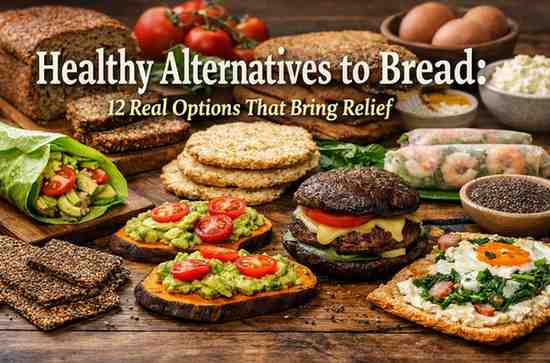
12 Healthy Alternatives to Bread (That Real People Actually Stick With)
1. Lettuce Wraps (When You Use Them Correctly)
Yes. Obvious.
And yes — most people → hate them at first.
The mistake? Using flimsy iceberg lettuce and stuffing it like a burrito.
What works:
-
Butter lettuce or romaine
-
Smaller wraps
-
High-protein fillings (turkey, grilled chicken, egg salad)
These work best for:
-
Lunch
-
Light dinners
-
High-volume eaters who want crunch
They don’t work for:
-
Cold-weather comfort cravings
-
Toast replacements
Be realistic.
2. Ezekiel Bread (For People Who Don’t Want to Fully Quit)
This one surprises people.
I’ve seen blood sugar stabilize significantly when people → switch from white bread to sprouted grain bread.
It’s still bread.
But:
-
Higher protein
-
More fiber
-
Slower digestion
Most people I’ve → worked with feel less “crashy” after breakfast when they use this instead of regular toast.
If you’re not ready to give up bread entirely, this is often the smoothest transition.
3. Sweet Potato Slices (Unexpectedly Filling)
Slice. Roast. Use like toast.
What I didn’t expect → after watching so many people try this?
They stayed full longer than they thought.
Why it works:
-
Fiber
-
Slow-digesting carbs
-
Natural sweetness reduces cravings
Best for:
-
Breakfast
-
Open-face sandwich style meals
Not great for:
-
Quick grab-and-go mornings
Prep matters.
4. Cauliflower Thins
Low-carb crowd loves these.
But here’s what I’ve observed:
People either love them or feel → cheated.
They work well when:
-
You toast them
-
You load them with protein and healthy fats
-
You don’t expect → them to taste like sourdough
They fail when:
-
You compare them to real bread
-
You rely on them for emotional comfort meals
5. Whole Grain Wraps (Portion-Controlled)
Sometimes the healthiest alternative to bread… is less bread.
Smaller, higher-fiber wraps can:
-
Reduce total carb intake
-
Increase satiety
-
Keep structure (which people psychologically need)
I’ve seen people → succeed more often with moderation than elimination.
That said — check labels.
“Whole grain” doesn’t always mean high fiber.
6. Portobello Mushroom Caps
Messy. Juicy. Surprisingly satisfying.
From what I’ve seen, this works well for:
-
Burger swaps
-
Dinner situations
-
Low-carb goals
It doesn’t work for:
-
Meal prep → longevity (they get soggy)
Still — emotionally? People feel like they’re eating something substantial.
That matters.
7. Oat-Based Flatbreads
People trying to improve gut health → tend to do well here.
Oats bring:
-
Beta-glucan fiber
-
Improved fullness
-
Smoother digestion
The key:
Pair with protein.
Almost everyone I’ve seen struggle with this approach underestimates protein →.
Then they’re hungry two hours later.
8. Almond Flour Bread
High fat. Low carb. Filling.
Works well for:
-
Keto
-
Blood sugar management
But here’s the honest part:
If you’re not used to higher fat intake, digestion can feel… weird at first.
Adjustment period: 1–2 weeks for most people I’ve observed.
9. Chia & Flax Crackers
Dense. Nutty. Crunchy.
Best for:
-
Open-face toppings
-
Light lunches
-
Snacking without blood sugar chaos
Not ideal if:
You want sandwich flexibility.
10. Rice Paper Wraps
This honestly surprised me after watching so many people try → it.
They expected it to feel “diet-y.”
Instead, when filled with protein and veggies, it feels fresh and light — not restrictive.
Best in warmer months.
11. Egg Wraps
High protein. Very filling.
Most people who struggle → with mid-morning hunger do better when replacing toast with eggs used as the base.
The energy difference is noticeable within a week.
12. Cottage Cheese Flatbread (Trending for a Reason)
I was skeptical.
But from what I’ve seen?
High protein. Surprisingly flexible. Keeps cravings calm.
Not a gimmick.
Just protein doing its job.
How Long Does It Take to Notice a Difference?
For most people I’ve worked with:
-
Bloating: 3–7 days
-
Energy stability: 1–2 weeks
-
Cravings calming down: 10–14 days
-
Weight shift (if that’s your goal): 2–4 weeks
Still — this assumes you’re replacing bread strategically.
Not just removing it.
Common Mistakes I See Over and Over
-
Replacing bread with nothing
-
Ignoring protein
-
Choosing ultra-processed “low carb” products
-
Expecting identical taste
-
Changing everything at once
Almost everyone I’ve seen struggle does at least two of these.
FAQ (Short, Direct Answers)
Are healthy alternatives to bread worth it?
If you struggle with blood sugar swings, bloating, or overeating — yes. If you tolerate bread well and eat balanced meals, maybe not necessary.
Can I lose weight just by cutting bread?
Sometimes. But only if it reduces total calorie intake and stabilizes hunger.
Is gluten the real problem?
For some people, yes. For many others, it’s refined flour and portion size.
Who should avoid low-carb bread alternatives?
Highly active athletes. People who rely on carbs for performance. Anyone who becomes obsessive around food rules.
Objections I Hear (And What Actually Happens)
“I’ll feel deprived.”
Only if you don’t replace satisfaction.
“It’s too much work.”
At first, yes. Then it becomes routine.
“My family won’t eat this.”
You don’t need everyone to switch. Start with one meal.
Reality Check: Who This Is NOT For
This approach probably won’t help if:
-
You already eat high-quality sourdough in moderation
-
You’re underweight
-
You have a history of restrictive eating
-
You’re chasing fast results
This is a slow stability play.
Not a crash diet.
Practical Takeaways
If I were advising someone starting tomorrow, I’d say:
-
Replace one meal first.
-
Increase protein.
-
Expect a 7–14 day adjustment.
-
Don’t chase perfection.
-
Track energy, not just weight.
Emotionally?
Expect irritation at first.
Then steadiness.
That steadiness is usually the turning point.
I’ve watched enough people quietly fix → their relationship with bread to know this isn’t about elimination. It’s about awareness.
So no — healthy alternatives to bread aren’t magic.
But when chosen thoughtfully?
They remove friction.
And sometimes that’s all someone needs to stop feeling stuck →.