Honestly, most people I’ve watched dig into foods high in copper didn’t start because they were curious about minerals.
They started because something felt off.
Low energy that wouldn’t budge.
Hair thinning that didn’t make sense.
Cold hands all the time.
Iron supplements that somehow made things worse instead of better.
And here’s what I’ve seen over and over — they fixate on iron. Or B12. Or magnesium. Copper barely gets mentioned.
Until labs come back borderline. Or anemia won’t correct. Or someone finally connects the dots.
From what I’ve seen across dozens of conversations, copper deficiency doesn’t scream. It whispers. And that’s why people miss it.
So if you’re here looking for foods high in copper, you’re probably not just browsing. You’re trying to fix something.
Let’s talk about what actually works — and what people consistently mess up at first.
First, Why People Even Start Looking at Copper
Most people I’ve worked with don’t wake up thinking, “I need more copper.”
They land here because of:
-
Iron deficiency that doesn’t improve
-
Chronic fatigue that feels disproportionate
-
Pale skin or brittle hair
-
Low white blood cell counts
-
Weird neurological symptoms no one can explain
-
Zinc overload (this one is more common than people realize)
Copper helps with:
-
Iron metabolism (huge)
-
Red blood cell formation
-
Collagen production
-
Nervous system function
-
Immune balance
And here’s the kicker.
Almost everyone I’ve seen struggle with persistent low iron was unknowingly low in copper too.
That connection surprises people.
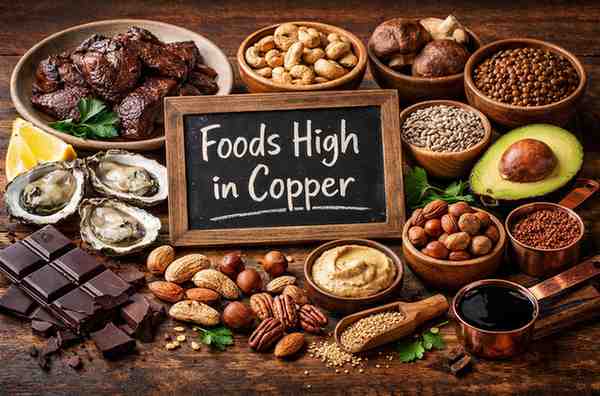
The 17 Foods High in Copper (Ranked by What I’ve Seen Work Best)
Let’s keep this practical. These are foods high in copper that actually move the needle when added consistently.
1. Beef Liver
This is the heavyweight.
-
~12–14 mg per 3 oz (way above daily requirement)
From what I’ve seen, nothing corrects copper status faster through food.
But here’s the reality: most Americans won’t eat it.
Those who do? Their labs shift quickly.
Still — don’t overdo it. Too much copper isn’t better.
2. Oysters
High in copper. Also high in zinc.
That balance matters.
If someone has been megadosing zinc supplements (common in immune protocols), adding oysters instead of more zinc pills often restores balance more gently.
3. Dark Chocolate (70%+)
This one surprises people.
-
~0.5–0.9 mg per ounce
I didn’t expect this to be such a common bridge food. People actually stick with it.
But moderation matters. It’s easy to overshoot calories.
4. Cashews
Reliable. Practical. Easy to add.
Most people I’ve worked with can consistently add a small handful daily.
Just watch portion sizes. Easy to overeat.
5. Sunflower Seeds
Underrated.
They’re one of the easiest “sprinkle solutions” I’ve seen:
-
On salads
-
In yogurt
-
Blended into smoothies
Small habit. Real impact.
6. Shiitake Mushrooms
This one honestly surprised me.
People who switched from white mushrooms to shiitake consistently improved intake without trying much harder.
7. Lentils
For plant-based eaters, this becomes a staple.
But here’s where people mess up:
They assume one serving fixes everything.
Copper intake works through consistency, not one heroic meal.
8. Almonds
9. Hazelnuts
10. Pecans
Nuts help. But again — portion control.
Most people overestimate how much copper they’re getting from “just a few nuts.”
11. Sesame Seeds (Tahini)
Extremely helpful for people avoiding animal products.
Tahini dressing daily? That’s realistic.
12. Chickpeas
Steady contributor. Not dramatic, but reliable.
13. Quinoa
Helpful for plant-based diets, but not a copper powerhouse alone.
14. Tofu
Moderate contribution. Works best combined with seeds and legumes.
15. Potatoes (with skin)
This one shocks people.
Not high — but not zero.
If someone eats potatoes daily, it adds up.
16. Avocado
Minor contributor. Don’t rely on it alone.
17. Blackstrap Molasses
Old-school remedy.
I’ve seen older clients swear by this. It’s not magic, but it does contain measurable copper.
Taste is… polarizing.
How Much Copper Do You Actually Need?
For most adults in the United States:
-
RDA: ~900 mcg (0.9 mg) per day
Upper limit: ~10 mg per day
And here’s something important.
People hear “deficiency” and immediately think, “More is better.”
That’s not how copper works.
Too much copper can:
-
Cause nausea
-
Disrupt zinc balance
-
Affect liver health
-
Increase oxidative stress
Balance matters.
What Most People Get Wrong (Repeated Pattern)
This is the big one.
1. They Supplement Blindly
Almost everyone I’ve seen struggle with copper starts by buying a supplement.
No testing. No context.
Then they feel worse.
Copper needs balance with:
-
Zinc
-
Iron
-
Vitamin C
-
Molybdenum
You can’t just throw it in and hope.
2. They Ignore Zinc Intake
This is huge.
High zinc intake lowers copper absorption.
And I didn’t expect this to be such a common issue — but it is.
People take:
-
Immune zinc
-
Cold remedies
-
Acne protocols
For months.
Then fatigue sets in.
3. They Expect Immediate Energy
Copper restoration isn’t a caffeine hit.
From what I’ve seen, if someone is genuinely low:
-
3–6 weeks to feel subtle shifts
-
2–3 months for lab normalization
-
Hair and skin changes? Even longer
Patience isn’t optional here.
How Long Does It Take to Improve Copper Levels?
Short answer:
-
Mild deficiency: 4–8 weeks
-
Moderate deficiency: 2–4 months
But here’s the nuance.
If absorption issues exist (gut problems, high zinc, restrictive diets), it takes longer.
Almost everyone I’ve seen struggle with slow progress had one hidden blocker.
Who Should Be Careful With High-Copper Foods?
This part matters.
This is NOT for:
-
People with Wilson’s disease
-
People with unexplained high serum copper
-
Those with liver disorders
-
Anyone supplementing without medical oversight
If labs already show high copper, adding more will not help fatigue.
I’ve seen that mistake too.
Objections I Hear All the Time
“Can’t I just take a supplement?”
You can.
But most people I’ve watched do better stabilizing through food first.
Food regulates better. Slower. Safer.
“Isn’t copper toxic?”
In excess, yes.
From food alone? Rarely.
“I eat healthy. How could I be low?”
Healthy doesn’t always mean balanced.
Plant-heavy diets without seeds or legumes?
High zinc supplementation?
Low variety?
It happens.
Reality Check Section
Let’s ground this.
Copper deficiency is not common in the general U.S. population.
But suboptimal levels?
More common than people think — especially in:
-
Restrictive dieters
-
High zinc users
-
Chronic GI issue sufferers
-
People avoiding organ meats
Still — don’t self-diagnose based on symptoms alone.
Fatigue has many causes.
Quick FAQ (SERP-Optimized)
What food is highest in copper?
Beef liver by a wide margin.
Are nuts high in copper?
Yes — especially cashews and sesame seeds.
Can low copper cause anemia?
Yes. Copper is required for proper iron metabolism.
How can I increase copper naturally?
Consistent intake of organ meats, shellfish, seeds, nuts, and legumes.
What Actually Works (From What I’ve Seen)
If I had to distill patterns:
-
Add one consistent daily copper source.
-
Reduce unnecessary zinc supplementation.
-
Don’t megadose.
-
Retest labs after 8–12 weeks.
-
Watch iron levels alongside copper.
Simple. Not dramatic.
Practical Takeaways
If you’re considering foods high in copper, here’s what I’d realistically suggest:
Do This:
-
Add 1 oz dark chocolate daily
-
Rotate seeds into meals
-
Include lentils or chickpeas 3–4 times per week
-
If open to it, try small amounts of liver once weekly
Avoid This:
-
Taking 5 mg copper supplements without context
-
Ignoring zinc intake
-
Expecting energy overnight
Emotionally Expect:
-
Slow shifts
-
Subtle improvements
-
A period of doubt
Almost everyone questions whether it’s working before it does.
That’s normal.
Still.
Copper isn’t a trendy fix. It’s not flashy. No influencer is shouting about it.
But I’ve watched enough people quietly improve once they stopped overlooking it.
No, this isn’t magic.
And yes — sometimes labs show copper isn’t the issue at all.
But when it is?
Getting it right through real foods high in copper, consistently and patiently, often brings a kind of relief → that feels earned.
Not dramatic.
Just steady.
And sometimes steady is exactly what someone stuck in frustration actually needs.