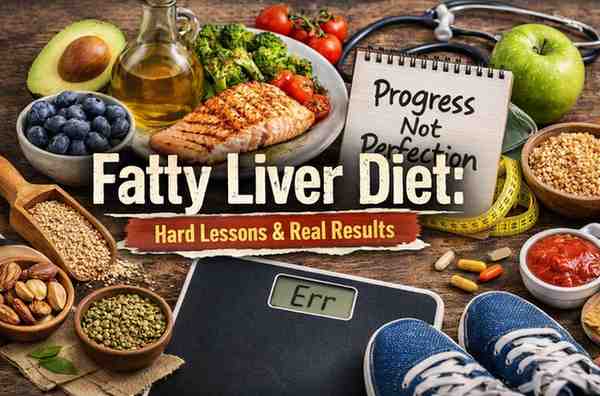
Honestly, I didn’t think this would work →. I’d already tried three other “fixes,” failed at all of them, and felt kind of stupid for hoping again. When my doctor said the words fatty liver, I nodded like I understood. I didn’t. I went home and Googled myself into a panic spiral. The Fatty Liver Diet showed up everywhere, all tidy lists and perfect plates. My real life was messy. Late dinners. Stress snacking. Coffee on an empty stomach. I wanted relief, not another plan I’d quit in a week.
Not gonna lie… I messed this up at first. Hard.
What finally helped wasn’t willpower. It was learning where I was lying to myself, and making a few boring, unsexy changes that I could actually keep. This is what that looked like, from the inside.
The part no one tells you: I didn’t “start” the diet. I drifted into it.
I kept waiting for a Monday. A clean slate. A new grocery haul.
Meanwhile my liver numbers didn’t care about my calendar.
So I drifted. One dinner change. Then one breakfast tweak. Then a brutal realization:
I was trying to out-exercise a bad diet.
Didn’t work. I was still tired. Still bloated. Still anxious about labs.
What I misunderstood at the beginning:
-
I thought “fatty liver diet” meant cutting fat.
Turns out I needed to cut ultra-processed carbs and sugar, not olive oil. -
I thought weight loss had to be fast to matter.
Slower changes stuck. Fast changes bounced back. -
I thought one “healthy” meal could cancel a day of junk.
My liver didn’t play that game.
This honestly surprised me: when I stopped chasing perfect and aimed for boring consistency, things started moving.
What I actually ate (not the Instagram version)
I tried the Pinterest plates. Pretty bowls. Perfect macros. I hated it. I quit.
Here’s the version I kept:
Most days
-
Breakfast:
-
Greek yogurt + berries + walnuts
-
Or eggs with spinach + tomatoes
-
Coffee, yes. But I stopped sweetening it like dessert.
-
-
Lunch:
-
Leftovers (chicken, lentils, veggies)
-
Or a simple turkey/avocado wrap on whole-grain
-
-
Dinner:
-
Salmon or chicken
-
Big pile of vegetables
-
Rice or potatoes, but smaller portions than my feelings wanted
-
-
Snacks (the danger zone):
-
Apples + peanut butter
-
Cottage cheese
-
Hummus + carrots
-
Sometimes popcorn. Because life.
-
What I slowly cut back (not cold turkey)
-
Sugary drinks (this hurt the most)
-
White bread and pastries
-
Late-night takeout
-
“Healthy” granola bars that were basically candy
From what I’ve seen, at least: liquid sugar is the fastest way to stall progress. Cutting soda and sweetened coffee drinks did more than any “superfood” I added.
The 3 mistakes that kept me stuck for months
I wish someone had shaken me early and said this:
-
I kept “saving” calories for weekends.
Then I blew past everything Friday night and spent Sunday mad at myself.
Consistency > perfection. Every time. -
I under-ate protein.
I was hungry all the time, then blamed “lack of discipline.”
More protein = fewer binges. Simple math, annoying truth. -
I tried to be perfect around other people.
I’d say yes to food I didn’t even want because I didn’t want to be “difficult.”
Resentment builds. Quietly. Then you rage-eat cookies alone. Ask me how I know.
Don’t repeat my mistake: build a plan that survives birthdays and work lunches. If it can’t, it won’t last.
How long did it take to notice anything?
Short answer (for People Also Ask vibes):
2–4 weeks for energy and bloating.
3–6 months for lab improvements.
Longer, messy answer:
-
Week 2: I felt less puffy. Not thin. Just… less inflamed.
-
Month 1: My cravings chilled out. This didn’t feel possible at first.
-
Month 3: Clothes fit differently. Mood steadier. Labs started to budge.
-
Month 6: My doctor stopped using the word “worse.” Small win. Huge relief.
Then again, progress wasn’t linear. I had two plateaus where nothing changed and I almost quit. Both times, sleep and stress were the real issues, not the food.
“Is this worth it?” (I asked myself that at my lowest)
Real talk:
There were nights I stared at a plate of vegetables and thought, I don’t care about my liver that much.
Here’s the honest calculus I landed on:
What I got
-
Less brain fog
-
Fewer crashes after meals
-
Labs moving in the right direction
-
A weird, quiet pride in keeping promises to myself
What I gave up
-
Some convenience
-
Mindless snacking
-
The comfort of pretending this would fix itself
Was it worth it?
For me, yeah. Not because it was fun. Because it stopped feeling impossible.
If you’re hoping for dramatic, movie-montage weight loss, you might hate this. If you want steady improvement without hating your life, this has a shot.
Common mistakes that slow everything down
Quick hits. Save yourself the time:
-
Going “low-fat” and replacing it with sugar
-
Drinking calories
-
Skipping meals → overeating later
-
Ignoring sleep and stress
-
Expecting supplements to carry the load
-
Waiting for motivation instead of building routines
Honestly, the boring stuff worked. Water. Protein. Veggies. Walking. Sleep.
No miracle powder saved me.
Objections I had (and how I argued with myself)
“I don’t have time to cook.”
Same. I leaned on rotisserie chicken, frozen veggies, and bagged salads. Not glamorous. It worked.
“This is too restrictive.”
At first, yeah. Then I realized my old habits were more restrictive. They boxed me into fatigue and shame.
“What if I fail again?”
You probably will. I did. Multiple times. Failing slower is still progress.
“I need fast results or I’ll quit.”
Fast results are usually rented, not owned. Slow results stick around.
Reality check (the part I wish I’d heard sooner)
This isn’t magic.
It won’t undo years of damage in weeks.
You can do “everything right” and still stall.
Also: some people need meds. Some need more medical supervision. Some have underlying conditions that make this harder. The Fatty Liver Diet isn’t a moral test. It’s a tool. Sometimes you need more than one tool.
Who this is NOT for
-
Anyone needing medically supervised weight loss who refuses care
-
People with eating disorders triggered by strict food rules
-
Anyone hoping food alone will fix severe liver disease → without a doctor involved
Mini FAQ (quick answers, no fluff)
Can fatty liver improve with diet alone?
Sometimes, yes—especially in early stages. Many people see improvements with consistent changes.
Do I have to quit carbs forever?
No. I didn’t. I changed the type and portion. Big difference.
Is alcohol off-limits?
For me, yes. Even small amounts stalled progress. Your doctor’s advice matters here.
What if I mess up?
You will. Resume the next meal. Not the next month.
The routines that actually stuck (steal these)
-
Sunday defaults: I prepped 2 proteins + roasted veggies. That’s it.
-
The “one-plate rule”: No seconds unless I waited 10 minutes.
-
Liquid sugar ban: Water, unsweet tea, black coffee.
-
Walking after dinner: 10–20 minutes. Not heroic. Consistent.
-
Grocery list on repeat: Fewer decisions. Less chaos.
This honestly surprised me: fewer choices = more discipline. My brain likes boring when I’m tired.
Practical takeaways (realistic, not hype)
-
Start imperfectly. Waiting for perfect keeps you stuck.
-
Cut liquid sugar first. It’s the biggest lever.
-
Eat protein early in the day. It calms cravings later.
-
Plan for social food. Don’t white-knuckle it.
-
Track trends, not daily scale noise.
-
Expect plateaus. They’re not failure.
-
Loop in a doctor if labs are bad or symptoms are scary.
What to avoid:
-
Extreme diets you can’t maintain
-
All-or-nothing thinking
-
Relying on supplements to do the work
-
Beating yourself up for normal human slip-ups
What to expect emotionally:
-
Annoyance.
-
Then relief.
-
Then boredom.
-
Then, weirdly, pride.
Patience looks like doing the boring thing again tomorrow.
I won’t pretend the Fatty Liver Diet fixed everything. Some days I still want to blow it up with takeout and a soda. But the difference now is this: it stopped feeling like a losing fight.
So no — this isn’t magic.
But for me? It made progress feel possible.
And that was enough to keep going.