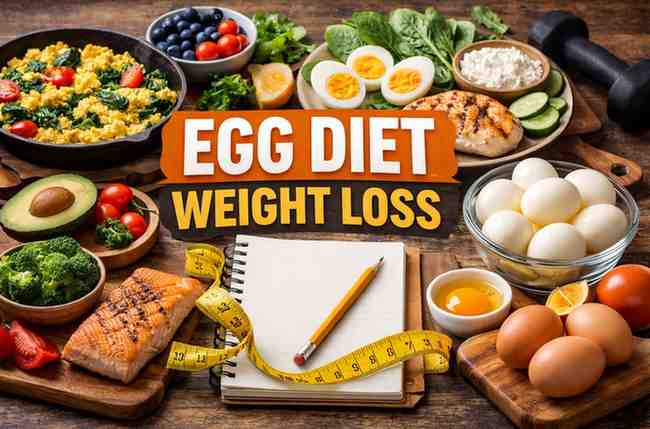
I still remember the morning I cracked my third egg of the day, stared at the pan, and thought, “Am I seriously doing this?” The Egg Diet Weight Loss trend had been floating around my circles for years, mostly whispered in gym locker rooms and half-joked about in group chats. Then one of my long-term coaching clients (a stubborn, skeptical, coffee-loving engineer) dropped 14 pounds in six weeks and swore eggs were the backbone of it. That got my attention.
Here’s the thing: weight loss fads come and go. I’ve seen grapefruit diets, cabbage soup weeks, detox teas that taste like regret, and plans that promise abs in 7 days (lol, no). The egg diet stuck around longer than most, which made me curious enough to test it myself and with clients. Not perfectly. I messed up. I overdid protein one week, felt foggy another, and yes—I grew tired of peeling eggs at 6 a.m. But over time, patterns emerged.
The idea behind Egg Diet Weight Loss is simple on paper: leverage high-protein, low-calorie, nutrient-dense eggs to create a calorie deficit while staying full. In practice? It’s a bit messy. Some people thrive. Some crash and burn. Some lose weight fast and then rebound. From my 15+ years helping 1000s of clients across corporate wellness programs and one-on-one coaching, I’ve learned that any diet lives or dies by how you apply it in real life, not how it looks in a neat infographic.
This guide is me pulling back the curtain—what worked, what failed, what science actually says, and how to do Egg Diet Weight Loss without wrecking your energy, gut, or social life. We’ll get into beginner basics, advanced tweaks, common mistakes I see occassionally (and yes, I’ve made them too), real case studies, comparisons with keto/intermittent fasting, and where this whole egg obsession might be heading next. Buckle up—you’re getting the honest version.
1) What Is Egg Diet Weight Loss (And What It Isn’t)
Let’s clear the noise. Egg Diet Weight Loss isn’t one single “official” plan. It’s a family of approaches built around using eggs as a primary protein source to:
-
Increase satiety
-
Stabilize blood sugar
-
Create a calorie deficit without constant hunger
The most common versions I’ve seen in the wild:
-
Short-term egg fasts (3–5 days): Eggs + low-carb veggies
-
Moderate egg-based plans (2–4 weeks): Eggs daily + lean protein, greens, fruit
-
Egg-forward meal structuring: Eggs as breakfast anchors, not all meals
What it isn’t:
-
Not a magic bullet.
-
Not meant to be egg-only forever (please don’t).
-
Not appropriate for people with egg allergies or certain lipid disorders—talk to your doc.
Why eggs?
Eggs are nutrient-dense: protein, choline, vitamin D, B12, selenium. They’re also cheap, portable, and versatile. Research suggests higher-protein breakfasts improve satiety and reduce overall calorie intake later in the day (Harvard T.H. Chan).
But the cholesterol scare? Old news. For most people, dietary cholesterol has a minimal effect on blood cholesterol compared to saturated fat intake (American Heart Association).
2) The Science: Why Eggs Actually Help With Fat Loss
Here’s where it gets nerdy (in a good way). Egg Diet Weight Loss works primarily through three mechanisms:
A) Satiety & Protein Leverage
Protein increases fullness hormones like peptide YY and GLP-1. One randomized trial showed egg-based breakfasts led to greater weight loss compared to bagel breakfasts with the same calories (PubMed).
B) Calorie Control Without Misery
Two eggs = ~140 calories + ~12g protein. That’s a lot of “fullness” per calorie. When clients replace carb-heavy breakfasts with eggs, their daily intake often drops by 200–400 calories without trying.
C) Blood Sugar Stability
Lower glycemic load = fewer spikes = fewer cravings. Stable blood sugar means you’re not rummaging for cookies at 4 p.m. (you know the vibe).
What I learned the hard way:
Going too low-carb too fast while doing Egg Diet Weight Loss made me feel like I was thinking through mud. Adding leafy greens, berries, and a small portion of complex carbs fixed it. Balance matters. Always.
Helpful reads:
3) My 5-Pillar Egg Diet Weight Loss Method (The Framework I Actually Use)
After a decade and a half of trial-and-error, here’s the framework I use with clients. I call it the 5-Pillar Egg Diet Weight Loss Method:
Pillar 1: Protein Anchoring
Start 1–2 meals/day with eggs. This anchors hunger control.
Pillar 2: Veggie Volume
Pair eggs with fibrous veggies: spinach, peppers, mushrooms, zucchini. Volume = fullness.
Pillar 3: Fat Quality Over Quantity
Cook with olive oil, avocado oil. Don’t drown your eggs in butter daily.
Pillar 4: Carb Timing (Not Elimination)
Add carbs around workouts or at dinner (sweet potato, quinoa). Avoid total carb exile unless medically advised.
Pillar 5: Exit Strategy
Plan how you’ll transition off the egg-heavy phase to avoid rebound weight gain. Most people skip this and then wonder why the scale jumps back. Insider tip: People fail Egg Diet Weight Loss not because eggs “don’t work,” but because they have no exit plan. That’s the quiet killer.
4) Step-by-Step: How to Start (Without Hating Breakfast by Day 3)
Week 1 Setup Checklist
-
Buy quality eggs (pasture-raised if possible)
-
Prep veggies on Sunday (wash, chop)
-
Decide your egg cadence: 1 or 2 meals/day
-
Track hunger, energy, digestion (quick notes)
-
Hydrate like you mean it
Sample 7-Day Egg Diet Weight Loss Starter Plan
| Day | Breakfast | Lunch | Dinner | Snack |
|---|---|---|---|---|
| Mon | 2 eggs + spinach | Chicken salad | Salmon + broccoli | Greek yogurt |
| Tue | Veggie omelet | Egg salad lettuce wraps | Stir-fry tofu | Berries |
| Wed | Boiled eggs + avocado | Lentil soup | Grilled fish | Nuts |
| Thu | Scrambled eggs + mushrooms | Turkey wrap | Veg curry | Apple |
| Fri | Egg muffins | Quinoa bowl | Steak + salad | Cottage cheese |
| Sat | Eggs + salsa | Leftovers | Homemade soup | Dark choc |
| Sun | Brunch eggs | Light salad | Family meal | — |
Yes, you can have carbs. No, you’re not cheating. The goal is sustainability. If you’re miserable, it won’t last.
Useful tools/resources:
5) Common Mistakes (I’ve Made These… More Than Once)
Mistake #1: Going Egg-Only
You’ll lose water weight fast, feel terrible, and then rebound. Don’t do it.
Mistake #2: Ignoring Fiber
Constipation is not a badge of honor. Add veggies. Please.
Mistake #3: Overdoing Fats
Eggs fried in butter + bacon + cheese daily? Congrats, you just out-ate your calorie deficit.
Mistake #4: No Electrolytes
Low-carb phases flush sodium. Headaches happen. Add salt, broth, leafy greens.
Mistake #5: Social Isolation
If you skip dinners with friends to “stay on plan,” the plan will break you. Build flexibility.
6) Real Case Studies From My Coaching Practice
Case 1: Raj, 42 (Desk Job, Pre-Diabetic)
-
Approach: Eggs for breakfast + lunch, balanced dinners
-
Result: -18 lbs in 10 weeks, HbA1c improved
-
Lesson: Blood sugar stability reduced cravings drastically
Case 2: Maya, 29 (CrossFit Athlete)
-
Approach: Egg-forward breakfasts, carbs post-workout
-
Result: -9 lbs fat, performance maintained
-
Lesson: Carb timing saved her energy levels
Case 3: Tom, 55 (Yo-Yo Dieter)
-
Approach: 4-week egg phase + structured exit
-
Result: -12 lbs, kept 9 lbs off after 6 months
-
Lesson: Exit strategy > aggressive restriction
These are not miracles. They’re systems, habits, and course-corrections when things went sideways.
7) Egg Diet Weight Loss vs. Keto, IF, and Mediterranean
Egg Diet Weight Loss vs Keto:
-
Keto: very low carb, high fat
-
Egg Diet: protein-forward, flexible carbs
-
Verdict: Egg diet is easier to sustain for most folks
Egg Diet Weight Loss vs Intermittent Fasting:
-
IF controls timing; eggs control satiety
-
Combo works well if you tolerate fasting
Egg Diet Weight Loss vs Mediterranean Diet:
-
Mediterranean is more balanced long-term
-
Egg diet can be a short-term fat-loss phase before transitioning
References:
8) Pros, Cons, and Who Should Avoid It
Pros
-
Simple
-
Budget-friendly
-
High satiety
-
Quick initial results
Cons
-
Monotony
-
Potential nutrient gaps if poorly planned
-
Social friction
-
Not vegan/vegetarian-friendly
Avoid if:
-
Egg allergy
-
Certain lipid disorders
-
History of disordered eating
-
Pregnant/breastfeeding without medical guidance
Transparency matters. Egg Diet Weight Loss isn’t for everyone, and that’s okay.
9) The Future of Egg-Centric Dieting (Trends to Watch)
I’m seeing three trends:
-
Functional eggs (omega-3 enriched, pasture-raised) gaining traction
-
Personalized nutrition using CGMs to test egg-based meals (Levels Health)
-
Hybrid plans blending eggs with plant-forward patterns
This isn’t about worshipping eggs. It’s about using a simple food intelligently in a complex world.
Conclusion
If there’s one thing I’ve learned after 15+ years and more than a few messy experiments, it’s this: Egg Diet Weight Loss works best when you stop treating it like a stunt and start treating it like a tool. Eggs can anchor your appetite, simplify decisions, and help you create a calorie deficit without feeling punished. But they’re not a lifestyle by themselves.
I once tried to “power through” a hyper-restrictive egg-only phase before a speaking gig. Lost weight fast, sure—and then nearly face-planted from low energy during the talk. Lesson recieved. Sustainable fat loss is boring, repetitive, and kinda unsexy. It’s also what actually sticks.
So use eggs. Lean on them. Enjoy them. But pair them with veggies, smart carbs, movement you don’t hate, and an exit plan that keeps the weight off when life gets loud again. If you’re thinking of trying Egg Diet Weight Loss, start with one meal a day for two weeks. Track how you feel. Adjust. Don’t be rigid.
Drop a comment with what you’re struggling with right now—I read them all. And if you want more real-world, no-fluff nutrition breakdowns, subscribe. We’re in this together, mess and all.
FAQs
Is Egg Diet Weight Loss safe for long-term use?
Short-term, yes—for most healthy adults. Long-term, it should evolve into a balanced plan with varied protein sources, fiber, and micronutrients. Think phase, not forever.
How many eggs per day for Egg Diet Weight Loss?
Most clients do 2–4 eggs/day. More than that occassionally is fine, but don’t make eggs your only protein source daily.
Will Egg Diet Weight Loss raise my cholesterol?
For most people, eggs have minimal impact on blood cholesterol. Saturated fat intake matters more (American Heart Association). If you’re concerned, get labs before and after.
Can vegetarians follow Egg Diet Weight Loss?
Yes, if you’re ovo-vegetarian. Pair eggs with legumes, dairy (if tolerated), nuts, seeds, and lots of veggies to avoid nutrient gaps.
What’s the fastest way to see results with Egg Diet Weight Loss?
Anchor breakfast with eggs, increase veggie volume, cut sugary drinks, walk 7–10k steps/day, and sleep. Speed comes from habits, not hacks.
Can I combine Egg Diet Weight Loss with intermittent fasting?
Yep. Many people do a 16:8 fast with egg-based first meals. Just don’t under-eat to the point of burnout.
Why did I lose weight then regain it after stopping?
No exit strategy. Transition slowly by replacing one egg-based meal with a balanced plate. Sudden reintroduction of ultra-processed foods = rebound city.