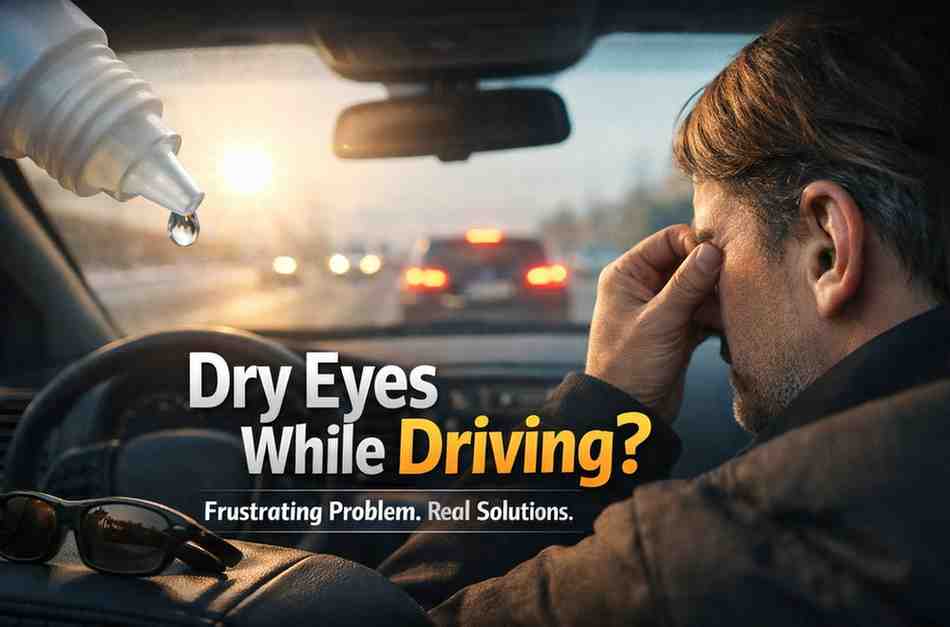
I didn’t expect dry eyes while driving to be such a common complaint.
But over the last few years, it kept showing up in conversations.
Friends who commute two hours a day.
Ride-share drivers.
Delivery workers.
Even someone who only drives 20 minutes to work but says the irritation starts before the first traffic light.
At first they describe it casually.
“My eyes just feel tired when I drive.”
“It’s like my contacts dry out instantly.”
“Sometimes I blink hard at red lights just to reset my eyes.”
Then the frustration shows up.
Burning.
Blurred road signs.
Light sensitivity at night.
A weird feeling like sand in the eyes.
And the confusing part?
Most of them don’t have dry eyes the rest of the day.
Just while driving.
From what I’ve seen →, that disconnect is where people start doubting themselves. They assume it’s fatigue… or screen use… or allergies… or “just getting older.”
But after hearing the same story over and over again, a pattern becomes obvious:
Driving creates the perfect storm for dry eye symptoms.
And most people accidentally make it worse without realizing it.
Why Dry Eyes While Driving Happens So Often
People assume dry eye is a medical issue.
Sometimes it is.
But what surprised me after watching so many drivers struggle with it is how often the problem is environmental and behavioral.
Driving changes several eye conditions at once.
1. You blink way less than you think
This one shocked almost everyone I’ve talked with.
When people focus on the road, their blink rate drops dramatically.
Normally we blink about:
15–20 times per minute
But when concentrating — like driving, gaming, or staring at screens — it can drop to:
5–7 blinks per minute
That means your tear film evaporates faster than it replenishes.
After about 10–15 minutes, dryness starts building.
And most people don’t even notice until the irritation spikes.
2. Car airflow is brutal on tear moisture
Almost everyone I’ve seen struggle with dry eyes while driving does this:
They blast the air conditioning or heater directly toward their face.
It feels comfortable at first.
But airflow speeds up tear evaporation.
I’ve watched people → test this accidentally.
They redirect the vent away from their eyes… and within days symptoms improve.
Not magically.
But noticeably.
3. Long visual focus strains tear stability
Driving forces your eyes into constant focus at distance.
Which sounds harmless.
But it creates subtle strain because:
-
You're tracking moving objects
-
Your eyes adjust constantly
-
Your blink reflex gets suppressed
After 20–30 minutes, the tear film becomes unstable.
That’s when drivers describe:
-
gritty feeling
-
burning sensation
-
watery eyes (ironically)
-
blurred vision
That watery reaction actually confuses people.
But from what eye doctors explain, reflex tears don’t lubricate well. They’re the eye’s panic response.
4. Modern windshields and glare make it worse
This part honestly surprised me after hearing it from multiple drivers.
Glare and brightness make people stare harder.
Which means:
-
fewer blinks
-
wider eye opening
-
faster tear evaporation
Night driving with LED headlights makes this especially bad.
What Most People Get Wrong At First
Almost everyone I’ve seen struggle with this goes down the same path.
They assume the solution is simple.
So they try quick fixes.
Sometimes those help… temporarily.
But often they miss the underlying triggers.
Common first attempts that rarely solve it alone
• Drinking more water
• Using random eye drops once in a while
• Blaming screen time
• Switching contact lenses immediately
• Ignoring car airflow
• Pushing through the irritation
None of these are terrible ideas.
But most drivers are attacking only one piece of the puzzle.
Dry eye while driving usually comes from three things happening at the same time.
Blink suppression.
Airflow.
Visual strain.
Miss one of those and the symptoms linger.
The Patterns That Actually Help Most Drivers
After hearing dozens of stories and watching people experiment with fixes, a few things consistently make the biggest difference.
None are complicated.
But the consistency matters.
1. Adjusting airflow (huge impact)
This might be the most underrated fix.
Instead of directing air toward your face:
Angle vents toward the windshield or torso.
People often notice improvement within days.
Not perfect relief.
But noticeably less burning.
Especially during long drives.
2. The “traffic light blink reset”
One commuter told me this trick after months of irritation.
Every red light.
He does five slow blinks.
Not fast blinking.
Slow, deliberate eyelid closure.
Almost everyone who tries this notices a difference.
Why it works:
It spreads the tear film across the eye surface again.
Which driving constantly disrupts.
3. Preservative-free artificial tears
This is where people often get mixed results.
Because the type of drops matters.
Most eye doctors suggest preservative-free lubricating drops for frequent use.
Not the redness-removing ones.
Those can actually make dryness worse over time.
From what I’ve seen, drivers who use drops before the drive starts get better results than waiting for symptoms.
4. Slight windshield tint or anti-glare coating
This one surprised me.
But multiple drivers mentioned their symptoms improved after reducing glare.
Less glare = less eye strain = more natural blinking.
5. Taking micro-breaks during long drives
This sounds obvious.
But people underestimate how effective it is.
Every 45–60 minutes:
-
step out of the car
-
blink normally
-
relax focus
-
hydrate
Even a two-minute break can reset eye comfort.
The One Thing Almost Everyone Messes Up
This pattern shows up constantly.
People only address dry eyes after symptoms start.
But by that point, the tear film is already unstable.
From what I’ve seen, prevention works far better.
Drivers who treat dryness before driving tend to feel dramatically better.
Example routine that works well for many:
• lubricating drops before starting car
• vents angled away from face
• sunglasses during bright driving
• blink reset at traffic lights
Simple stuff.
But the consistency makes the difference.
How Long Does It Take To Improve?
This question comes up constantly.
The honest answer:
It depends on the cause.
But from what I’ve seen across different drivers:
Environmental fixes (airflow, blinking habits)
→ noticeable improvement within a few days
Moderate dry eye conditions
→ improvement within 2–3 weeks
Chronic dry eye syndrome
→ may take several months with treatment
Most people notice at least partial relief → within the first week once they address airflow and blinking.
When Dry Eyes While Driving Might Signal Something Bigger
Sometimes dryness during driving isn’t just environmental.
A few situations come up repeatedly.
Possible underlying causes
• Meibomian gland dysfunction
• Contact lens dryness
• LASIK after-effects
• Screen fatigue from work
• Certain medications
• Aging tear production
If symptoms continue even outside the car, it’s worth seeing an eye doctor.
Especially if you experience:
-
persistent burning
-
blurry vision
-
extreme light sensitivity
-
frequent headaches while driving
Quick Answers People Usually Ask
Why do my eyes water while driving?
Ironically, watering often means dryness.
Your eyes produce reflex tears when the surface becomes irritated.
But those tears don’t lubricate well.
Are contact lenses making it worse?
Sometimes.
Contacts can dry faster in airflow environments.
Many drivers notice improvement when switching to:
-
daily disposable lenses
-
lubricating drops
-
glasses during long drives
Is night driving worse for dry eyes?
Often yes.
Bright headlights cause people to stare more intensely.
Which suppresses blinking.
Can sunglasses help?
Surprisingly, yes.
They reduce glare and prevent squinting.
Both help stabilize tear moisture.
Objections I Hear A Lot
“I only drive for 15 minutes. This shouldn’t happen.”
Honestly… I’ve heard this many times.
But airflow + concentration can trigger dryness surprisingly fast.
Some drivers feel irritation within 10 minutes.
“I already drink a lot of water.”
Hydration matters.
But tear evaporation from airflow often plays a bigger role.
So water alone rarely fixes the problem.
“Eye drops didn’t work for me.”
Most people use them too late.
Or they use the wrong kind.
Preservative-free lubricating drops tend to work better for frequent use.
Reality Check: What This Approach Won’t Fix
It’s worth being honest here.
These adjustments help many drivers.
But they won’t solve everything.
If someone has:
-
advanced dry eye disease
-
autoimmune conditions
-
severe gland blockage
Then lifestyle adjustments alone may not be enough.
Medical treatment might be necessary.
Still… even those patients often benefit from airflow control and blinking habits.
Practical Takeaways That Actually Matter
If someone asked me for the simplest starting point after everything I’ve seen, I’d suggest this:
Start here.
-
Aim car vents away from your face
-
Use preservative-free drops before driving
-
Do slow blink resets at traffic lights
-
Reduce glare with sunglasses
-
Take micro-breaks on long drives
That combination solves the issue for a surprising number of drivers.
Not overnight.
But gradually.
And honestly… the emotional part of this problem doesn’t get talked about enough.
People feel ridiculous complaining about eye irritation →.
Until it starts affecting focus on the road.
Then suddenly driving feels exhausting.
Distracting.
Uncomfortable.
I’ve watched people quietly tolerate this for months before realizing the cause was something simple like airflow hitting their eyes.
So no — these fixes aren’t magic.
But I’ve seen enough drivers finally feel normal again once they tweak a few habits.
Sometimes the relief isn’t dramatic.
Just quieter.
Less burning.
Clearer road signs.
A drive that finally feels… normal again. ????????️