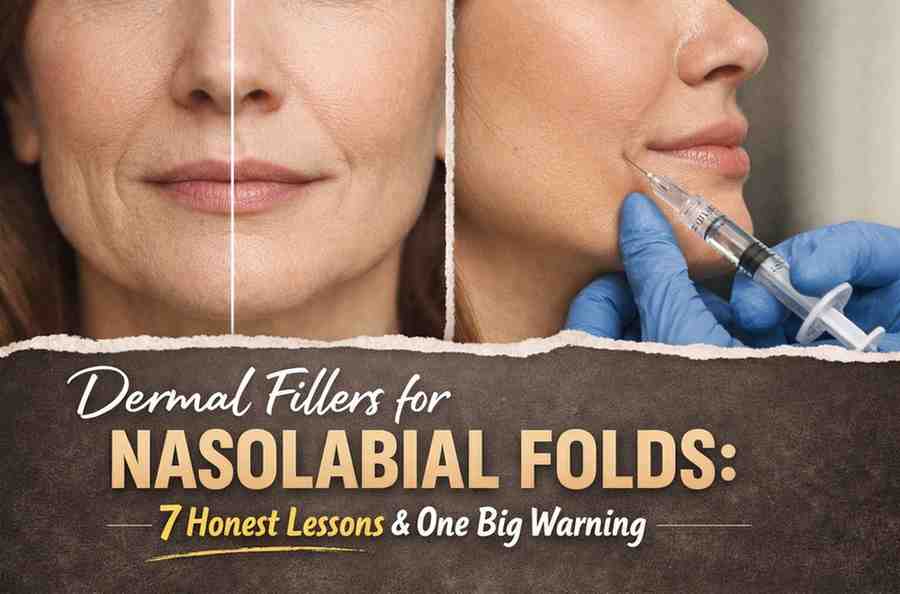
Honestly, I didn’t think this would work →.
I’d already burned money on creams, gadgets, and one very dramatic “facial massage routine” I quit after five days. I kept catching my reflection in my phone screen—those lines from my nose to my mouth felt louder every month. Not older, exactly. Just… tired. I wanted relief, not perfection. So yeah, dermal fillers for nasolabial folds ended up on my “fine, I’ll try this once” list.
Not gonna lie, I walked into that clinic half-defensive. Like, “I’m not vain, I’m just exhausted from hating my face in bad lighting.” I also had a quiet fear I wouldn’t say out loud: what if I look weird? What if I can’t undo it? What if this is one more thing I regret?
This is me, after the fact. The good. The dumb mistakes. The parts no one put on the website.
Why I even considered fillers (after swearing I wouldn’t)
I didn’t wake up one day wanting needles in my face. It crept up.
-
Zoom calls made my face look harsher than mirrors do.
-
Weight fluctuations changed how my cheeks sat. The folds got deeper.
-
Every “natural” solution I tried felt like busywork.
What I misunderstood at first: I thought nasolabial folds were just lines you fill directly and boom—gone. I pictured a quick fix. That mental model messed me up early because I went in expecting a straight-line solution to a structural problem.
From what I’ve seen, at least, those folds are partly about volume loss in the cheeks. The fold is where skin collapses because support above it is gone. That detail matters. It changes where filler should go. And it changes how natural you look after.
I didn’t expect that at all.
What I tried before (and why it didn’t do much)
I’m not anti-trying-the-cheap-stuff-first. I just wish I’d known when to stop.
Things I tried that basically did nothing for my folds:
-
Retinol + vitamin C religiously for months
-
Jade rolling (felt nice, didn’t change the folds)
-
Gua sha (same story)
-
“Collagen-boosting” serums that smelled like hope
-
Face yoga (I quit. Sue me.)
These helped my skin texture. Maybe brightness. Not the depth of the fold. That’s when I started admitting the problem wasn’t surface-level.
This is the emotional part people don’t say: failing at DIY fixes makes you feel a little dumb. Like you fell for Instagram again. I had to swallow that before I could make a calmer decision.
The consult: where I almost messed this up
Here’s where I could’ve made a bad call.
I booked a consult with a med spa that had flashy before/afters. The provider suggested filling directly into the fold. It sounded logical. It also felt rushed. No real talk about my face shape, no “here’s what can go wrong,” just upsell energy.
I walked out. That took more confidence than I expected. I was embarrassed to say no. But something felt off.
Second consult was quieter. Less glam. More “let’s look at your cheeks first.” The provider talked about support vs. chasing lines. She also said something that stuck: overfilling the fold can make your mid-face look heavy and age you in a different way.
That was my first “oh… this is nuanced” moment.
What I actually did (and what surprised me)
I ended up doing small amounts of hyaluronic acid filler in the mid-cheek area, not just the fold. Tiny corrections near the fold. Not the aggressive trench-filling I imagined.
What surprised me:
-
The change was subtle.
-
My face didn’t look “done.”
-
The fold softened without disappearing.
-
My resting face looked less tense.
I thought I’d walk out and feel instant relief. I did… but it was quieter than I expected. More like, “Huh. I don’t hate my reflection right now.” That’s the win.
The swelling messed with my head the first 48 hours. I kept thinking, Is this the final result? Did I overdo it? Then the swelling dropped and the real outcome showed up. That waiting period is emotionally weird.
How long did it take to look normal?
Short answer (People Also Ask vibes): about 3–7 days to settle, 2 weeks to fully see what you’re getting.
Here’s my messy timeline:
-
Day 0: Red, puffy, slightly lopsided. Panic lite.
-
Day 2: Swelling down. Still tender. I stopped touching my face.
-
Day 5: This is where I started to relax.
-
2 weeks: Final-ish result. My face felt like mine again.
If you’re the type who freaks out when your face looks different for a week, plan your life accordingly. Don’t book this right before a wedding or something.
Is it worth it? (The honest version)
For me? Yes. With conditions.
It didn’t make me look younger in a movie-star way. It made me look like I slept and drank water. Relief, not transformation. That was worth the money because I stopped spiraling every time I saw my side profile.
But it’s not a one-and-done. Fillers fade. You’re signing up for maintenance. And that’s where people get bitter. The first time feels like a win. The second time feels like a bill.
So the real question isn’t “Is it worth it once?”
It’s “Am I okay with maintaining this?”
If that thought makes your stomach drop, this might not be your thing.
Common mistakes I see (and almost made)
Short, scannable stuff here because this is where people mess up:
-
Chasing the fold directly instead of addressing cheek support
-
Overfilling because you want dramatic results
-
Choosing price over skill (this is your face…)
-
Not asking what product is being used
-
Ignoring facial balance and ending up puffy in one area
I messed this up at first by not asking enough questions. I assumed providers would explain risks without prompting. Some do. Some don’t.
Objections I had (and how I worked through them)
“I’ll look fake.”
This depends on technique and amount. Overfilling looks fake. Subtle support looks… boring in the best way.
“It’s vain.”
Maybe. I also brush my hair. Wanting your face to stop stressing you out isn’t a moral failure.
“It’s addictive.”
It can be. The key is setting a personal limit. I told myself: soften, don’t erase. That boundary helped.
“It’s unsafe.”
There are real risks. Vascular occlusion is rare but serious. This is why provider choice matters more than price.
A quick FAQ
Do dermal fillers for nasolabial folds hurt?
Not gonna lie… uncomfortable. Not unbearable. Numbing helps. The anxiety before was worse than the needle.
How long do results last?
From what I’ve seen, 9–18 months depending on product and your metabolism.
Can it go wrong?
Yes. Lumps, unevenness, vascular issues. Rare, but real. Ask how your provider handles complications.
Can it be reversed?
Hyaluronic acid fillers can be dissolved. That safety net mattered to me emotionally.
Reality check (this part matters)
This won’t fix how you feel about aging overall.
It won’t suddenly make you confident in every mirror.
If you’re hoping this erases insecurity, you’ll be disappointed.
It did one specific thing: reduced how much my folds grabbed my attention. That freed up mental space. That’s it. No magic. Just less noise.
Also: if you’re dealing with major volume loss, weight changes, or skin laxity, fillers alone may not be enough. Sometimes the right answer is… not this.
Who should avoid this (seriously)
This is not for you if:
-
You hate maintenance costs
-
You’re chasing perfection
-
You’re in a financially tight spot
-
You have body dysmorphia tendencies
-
You can’t tolerate temporary swelling/bruising
-
You’re hoping to look like a different person
No shame. Just… wrong tool.
What I’d do differently if I started over
-
Take before photos in neutral lighting
-
Space my consults out instead of rushing
-
Ask about conservative dosing upfront
-
Budget for touch-ups emotionally and financially
-
Plan two low-key days post-injection
That last one is huge. Give yourself space to freak out privately if you need to.
Practical takeaways (the grounded version)
-
Start with support, not trenches.
-
Go subtle first. You can add. You can’t un-add easily.
-
Vet your provider like you’re hiring a babysitter for your face.
-
Expect a week of emotional weirdness.
-
Decide your maintenance boundary before you start.
-
If the consult feels rushed, walk.
No guarantees. No miracles. Just… better odds.
I’m not here to sell you on dermal fillers for nasolabial folds. I’m here to say this: I went in tired of feeling stuck with my face. I came out not transformed, but lighter. Less obsessed. Less annoyed with mirrors.
So no — this isn’t magic.
But for me? It stopped feeling impossible.
And that was enough to breathe again.