Honestly, most of the men I’ve watched try to “fix” their health start in the same place.
They cut carbs.
They buy protein powder.
They download a step tracker.
And then a doctor casually says, “You should probably watch your sodium.”
That’s when the confusion starts.
Because when it comes to Daily Sodium Intake for Men, almost everyone I’ve worked with either ignores it completely… or panics and goes extreme.
And both backfire.
I’ve seen guys feel bloated, tired, frustrated, thinking they’re “doing everything right.” I’ve seen others slash salt so aggressively they end up dizzy, cramping, and weirdly more exhausted than before.
It’s rarely about willpower.
It’s about misunderstanding what actually matters.
From what I’ve seen across dozens of real routines — busy dads, desk-job guys, gym regulars, men managing high blood pressure — sodium is one of those quiet levers that makes a massive difference when handled properly.
But only when handled properly.
Let’s walk through what actually plays out in real life.
What Is the Recommended Daily Sodium Intake for Men?
Short answer:
-
General guideline: Under 2,300 mg per day
-
If you have high blood pressure: Ideally closer to 1,500 mg per day
That’s what most major U.S. health authorities recommend.
But here’s what surprised me after watching so many people try to follow that advice:
Almost no one knows what 2,300 mg actually looks like in food.
They assume it means “don’t add salt.”
That’s mistake number one.
Why Men Start Thinking About Sodium in the First Place
From what I’ve seen, men usually care about sodium for one of four reasons:
-
A doctor mentions rising blood pressure
-
They feel constantly bloated
-
They’re trying to lose weight
-
A family history scare wakes them up
It’s rarely random.
There’s usually a moment.
A number on a blood pressure cuff.
A ring that suddenly feels tight.
An uncomfortable conversation.
And then the Google searches begin.
What Most Men Get Wrong About Daily Sodium Intake
Almost everyone I’ve seen struggle with this does one thing wrong:
They focus on the salt shaker.
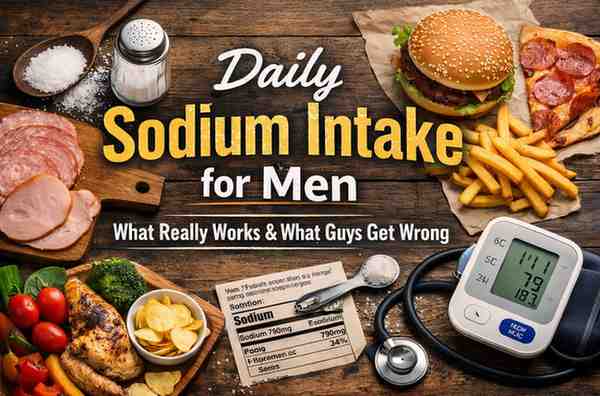
Meanwhile, 70–75% of sodium intake in the U.S. comes from processed and restaurant foods, not the salt added at home.
Let me show you how this plays out in real life.
A “Normal” Day That Quietly Blows Past 3,500 mg
From real food logs I’ve reviewed:
-
Breakfast sandwich (fast food): 1,200 mg
-
Deli turkey sandwich: 1,100 mg
-
Chips: 250 mg
-
Pasta sauce (jarred): 600 mg
-
Protein bar: 200 mg
Total: 3,350 mg
And he never picked up a salt shaker.
This honestly shocked a few guys I worked with. They genuinely thought they were eating “moderately.”
They weren’t overeating.
They were over-sodium-ing.
Why Sodium Hits Men Differently (Patterns I Keep Seeing)
Not every man responds to sodium the same way.
But here are the patterns I’ve seen repeatedly:
1. The “Silent Riser”
Blood pressure climbs slowly over years.
No symptoms.
Feels fine.
Until one appointment says otherwise.
2. The “Bloated Gym Guy”
Heavy workouts.
High sodium sports drinks.
Processed protein foods.
Feels puffy. Blames carbs. It’s often sodium imbalance.
3. The “Low-Salt Overcorrector”
Cuts sodium too hard.
Gets headaches. Fatigue. Muscle cramps.
I didn’t expect this to be such a common issue — but it is.
Your body does need sodium. Just not excess.
How Much Sodium Is Actually Reasonable?
Here’s the grounded take.
For most healthy men in the U.S.:
-
Under 2,300 mg/day is realistic.
-
Around 1,800–2,200 mg works well for many.
-
1,500 mg is ideal for men with hypertension — but hard to maintain without cooking most meals.
What consistently works isn’t extreme restriction.
It’s reduction without obsession.
How Long Does It Take to See Results?
This is one of the most common questions.
From what I’ve seen:
-
Blood pressure changes: Often noticeable within 2–4 weeks.
-
Reduced bloating: Sometimes within 3–7 days.
-
Weight fluctuation from water retention: Can shift within days.
But here’s the emotional reality:
The first week feels annoying.
Food tastes bland.
You question whether it’s worth it.
You miss restaurant meals.
Then taste buds adjust.
Almost every guy I’ve seen stick with it past two weeks says the same thing:
“I don’t crave as much salt anymore.”
That part is real.
What Actually Works (From Real-World Observation)
These patterns consistently help:
1. Cook 60–70% of Meals at Home
Not perfection.
Just majority control.
Restaurant meals are sodium bombs. Even “healthy” ones.
2. Swap Processed Meats
Deli meats → Fresh chicken or turkey
Sausage → Eggs or Greek yogurt
Huge difference.
3. Check These Labels First
If someone’s overwhelmed, I tell them:
Just check three things:
-
Bread
-
Sauces
-
Packaged snacks
Those three usually hide the bulk of excess sodium.
4. Don’t Eliminate Salt Entirely
Men who try zero-salt diets usually fail.
Flavor matters.
Instead:
-
Use smaller amounts.
-
Use spices, citrus, garlic.
This approach sticks.
What Repeatedly Fails
I’ve seen these patterns crash hard:
-
Going from 3,500 mg → 1,200 mg overnight
-
Relying on “low-sodium” processed foods (still high)
-
Ignoring portion sizes
-
Assuming gym workouts cancel sodium intake
They don’t.
Exercise helps. But it doesn’t erase dietary patterns.
Who Should Be Extra Careful?
Men with:
-
High blood pressure
-
Kidney disease
-
Family history of cardiovascular disease
-
Over age 40 with rising BP trends
But here’s the nuance.
If you’re sweating heavily daily (manual labor, endurance sports), sodium needs may be slightly higher.
Context matters.
Quick FAQ (Straight Answers)
How much sodium should a healthy man eat daily?
Under 2,300 mg. Ideally closer to 2,000 mg for long-term cardiovascular health.
Is 1,500 mg too low?
For many active men, yes — unless medically advised.
Can lowering sodium reduce belly fat?
It reduces water retention, not fat.
How fast does sodium affect blood pressure?
Within days for some people.
Is sea salt healthier than table salt?
Not meaningfully. Sodium is sodium.
Objections I Hear All the Time
“But I work out. I sweat a lot.”
Maybe true.
But most recreational gym sessions don’t require massive sodium replenishment.
Professional athletes? Different story.
Desk workers who lift 4 times a week? Usually overestimating need.
“Food tastes terrible without salt.”
At first.
Then taste buds adapt. I’ve watched this happen repeatedly.
“It’s too hard.”
It is — if you try to be perfect.
It’s manageable if you aim for “better.”
The Reality Check
Lowering daily sodium intake for men is not glamorous.
You won’t get Instagram transformation photos.
You won’t feel dramatic shifts overnight.
What you might feel:
-
Less puffiness
-
More stable blood pressure readings
-
Subtle improvement in energy
-
Fewer “why is my BP high again?” moments
But it requires patience.
And label reading.
And saying no to convenience sometimes.
Not exciting.
But effective.
What to Do (Practical Steps)
If I had to simplify it for someone starting today:
-
Track sodium for 3 days. Just observe.
-
Identify the top two sodium sources.
-
Replace one of them.
-
Reassess in 2 weeks.
That’s it.
Not a total overhaul.
Most people I’ve worked with mess this up at first by trying to change everything.
Don’t.
Small swaps compound.
What to Expect Emotionally
Week 1:
Annoyance. Mild frustration.
Week 2:
Adjustment. Less resistance.
Week 3–4:
Neutral. It becomes normal.
And honestly, that’s when you know it’s sustainable.
Who This Is Not For
-
Competitive endurance athletes without medical concerns
-
Men with medically advised higher sodium needs
-
People looking for rapid weight loss hacks
This is slow-burn health.
Still — I’ve watched enough men quietly improve their blood pressure numbers, feel less swollen, and stop dreading doctor visits after adjusting their Daily Sodium Intake for Men approach.
It’s not dramatic.
It’s not trendy.
But it’s steady.
And sometimes steady is the whole point.
So no — this isn’t magic.
But I’ve seen the shift happen often enough to trust the pattern.
Sometimes the real win isn’t perfection.
It’s finally understanding what actually matters… and doing just enough of it consistently.