I still remember a call from a friend who had just received a positive Chagas disease test after years of unexplained symptoms.
He sounded more confused than scared.
Because the internet had given him two completely opposite messages.
One side said:
“There’s no cure.”
The other side promised miracle herbs, parasite cleanses, and overnight recovery.
And honestly… I’ve watched a lot of people get stuck right in that confusing middle.
Over the years—through conversations with patients, caregivers, and even a few clinicians working with immigrant communities in the U.S.—one pattern keeps repeating.
People searching for a cure for Chagas disease usually arrive already exhausted.
They’ve read too much.
They’ve tried things that sounded promising.
And most of them are asking one simple question beneath all of it:
Is there actually a real way to treat this… or am I chasing something that doesn’t exist?
From what I’ve seen, the answer isn’t as hopeless as people think.
But it’s also not as simple as people hope.
And almost everyone I’ve watched go through this makes the same few mistakes early on.
What Most People Mean When They Search “Cure for Chagas Disease”
Here’s something that honestly surprised me after seeing so many conversations around this.
Most people aren’t really asking for a scientific definition of cure.
They’re asking things like:
-
Can the parasite be eliminated?
-
Will symptoms stop getting worse?
-
Can my heart stay healthy long-term?
-
Did I catch this too late?
Those are very different questions.
And the answers depend heavily on which stage of the infection someone is in.
Chagas disease has two major phases:
1. Acute Phase (Early Infection)
This happens shortly after infection with the parasite Trypanosoma cruzi.
The tricky part?
Most people don’t notice it.
Symptoms can look like:
-
Mild fever
-
Fatigue
-
Swelling near the bite site
-
Eye swelling (Romana’s sign)
But many cases are so mild they go unnoticed.
From what I’ve seen discussed repeatedly in patient groups, people often discover → the infection years later during routine blood testing.
2. Chronic Phase
This is where most U.S. diagnoses happen.
And this phase has two paths:
Indeterminate chronic phase
No symptoms. Parasite still present.
Determinate chronic phase
Symptoms appear, often affecting:
-
Heart
-
Digestive system
-
Nervous system
This stage is where people start worrying about long-term damage.
Which is why the question of “cure” becomes complicated.
The Two Medications That Actually Target the Parasite
Despite all the alternative cures floating around online, there are currently two main treatments recognized by infectious disease specialists.
And from what I’ve seen in real-world discussions, many people don’t even realize these exist.
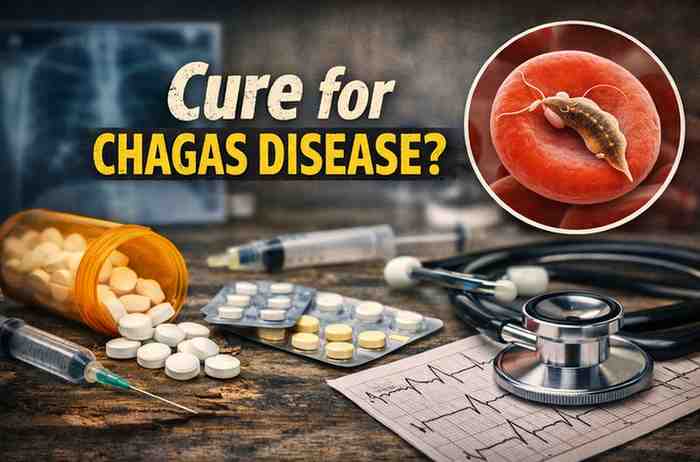
1. Benznidazole
This is the most commonly used treatment.
It works by damaging the parasite's DNA so it can’t reproduce.
Doctors in the United States often obtain it through the CDC treatment program.
Typical treatment length:
60 days
What people often report during treatment:
-
Fatigue
-
Nerve irritation
-
Digestive issues
Most people I’ve heard from say the first few weeks are manageable.
But around week three or four… side effects can start appearing.
That’s where some patients quit early.
And unfortunately, stopping halfway can reduce effectiveness.
2. Nifurtimox
The second option.
Often used if someone cannot tolerate benznidazole.
It works differently but still targets the parasite.
Treatment duration:
60–90 days
Common complaints I’ve seen discussed:
-
Appetite loss
-
Nausea
-
Mood changes
Neither medication is easy.
But they remain the only treatments proven to directly attack the parasite.
And that matters.
The Biggest Misunderstanding About “Cure”
Almost everyone I’ve seen go through this initially assumes something like this:
“Once I take the medication, the parasite is gone forever.”
That’s… not exactly how doctors frame it.
What treatment aims to do is:
-
Kill as many parasites as possible
-
Prevent disease progression
-
Reduce long-term complications
In early infections, treatment success rates are very high.
Some studies suggest parasite clearance rates above 80% in children and early cases.
But in long-standing infections, it’s harder to confirm full eradication.
The immune system and parasite interactions become complicated over time.
So doctors often measure success differently.
Success might mean:
-
Lower parasite levels
-
Stabilized heart function
-
No worsening symptoms
Which, honestly, is still a big win.
Why Early Treatment Changes Everything
This is one pattern that comes up again and again.
People who discover infection early often respond much better to treatment.
From what infectious disease specialists say, early treatment can:
-
Eliminate parasites more effectively
-
Prevent heart damage
-
Prevent digestive complications
And that’s huge.
Because Chagas disease complications—especially cardiomyopathy—can develop slowly over decades.
I’ve seen multiple patients say they only found out they had Chagas after:
-
Blood donation screening
-
Pregnancy testing
-
Immigration medical exams
And those accidental discoveries sometimes end up being life-saving.
The Mistakes I Keep Seeing People Make
This part might sound blunt.
But most people I’ve worked with or spoken to mess up the early decision phase.
Usually in one of these ways.
Mistake #1: Waiting Too Long
Fear of medication side effects causes delays.
People spend months researching alternatives.
Meanwhile, the parasite remains active.
Mistake #2: Falling for “Parasite Cleanses”
There are endless online detoxes claiming to cure Chagas.
Things like:
-
Herbal parasite flushes
-
Coffee enemas
-
Oxygen therapy
-
High-dose supplements
I’ve never seen credible infectious disease doctors recommend these as primary treatments.
Some might help with general health.
But they don’t eliminate Trypanosoma cruzi.
Mistake #3: Stopping Medication Early
Side effects hit.
People quit at week three.
But parasite treatment requires complete therapy duration.
Stopping early can undermine results.
Mistake #4: Ignoring Cardiac Monitoring
Even after treatment, doctors often recommend periodic heart testing.
Things like:
-
ECG
-
Echocardiogram
-
Holter monitoring
Some patients assume treatment means zero follow-up.
That’s risky.
How Long Does Treatment Usually Take?
The medication itself typically lasts:
60–90 days
But recovery isn’t measured only by finishing pills.
Doctors often track patients over months or years.
Monitoring may include:
-
Blood tests
-
Heart scans
-
Symptom tracking
Many people report feeling normal during treatment.
Others feel exhausted for weeks.
It varies widely.
And honestly… the emotional side of this can be harder than the physical part.
Who Benefits Most From Treatment
From what I’ve seen discussed among clinicians and public health programs, treatment tends to be most effective for:
-
Children
-
Recently infected individuals
-
Adults under 50 with early disease
-
Women of childbearing age (to prevent congenital transmission)
Still, treatment may be recommended even in chronic stages.
Because slowing progression matters.
Who Might Need a Different Approach
Not everyone is automatically treated.
Some cases require careful evaluation.
For example:
-
Severe heart disease
-
Advanced organ damage
-
Pregnancy
-
Medication intolerance
Doctors sometimes weigh risk vs benefit carefully in these situations.
Which can be frustrating for patients hoping for a clear answer.
But it's part of responsible care.
FAQ: Real Questions People Keep Asking
Is Chagas disease completely curable?
In early infections, treatment can often eliminate the parasite.
In chronic cases, treatment aims to reduce parasite levels and slow disease progression.
Can Chagas disease go away on its own?
Very rarely.
Most infections remain lifelong without treatment.
Is treatment dangerous?
Side effects are common but usually manageable under medical supervision.
Doctors monitor patients closely.
How do people in the U.S. get Chagas disease?
Most cases occur in people who:
-
Lived in Latin America
-
Received blood transfusions before screening programs
-
Were born to infected mothers
Objections I Hear All the Time
Let’s talk about the doubts people bring up.
Because they’re understandable.
“The medication sounds harsh.”
Yes.
It can be.
But untreated infection can lead to heart failure decades later.
Doctors weigh that risk carefully.
“What if I’ve had this for 20 years?”
Treatment can still help slow progression.
And many doctors still recommend it.
“Why didn’t my doctor mention this?”
Chagas disease is rare in the U.S. healthcare system.
Some physicians simply aren’t familiar with it.
Specialists in infectious disease or tropical medicine usually know more.
A Reality Check Most People Need
Here’s the hard truth →.
Even after treatment:
-
Some people still develop complications.
-
Heart monitoring may continue for years.
-
Recovery isn’t always obvious.
But I’ve also seen the opposite.
People who start treatment early often feel an enormous sense of relief.
Because the unknown finally becomes something manageable.
That emotional shift matters more than people realize.
Practical Takeaways From Watching People Navigate This
If someone close to me were dealing with this, these are the steps I’d quietly recommend.
1. Confirm diagnosis properly
Blood testing through experienced labs matters.
2. Talk to an infectious disease specialist
Not every general physician handles Chagas frequently.
3. Start treatment sooner rather than later
Especially if the infection is recent.
4. Prepare mentally for side effects
Knowing what might happen reduces panic.
5. Keep long-term follow-up
Heart health monitoring is important.
6. Ignore miracle cure claims
If something promises overnight parasite elimination, be skeptical.
And honestly…
I’ve watched enough people go through the early confusion stage to know how overwhelming this search can feel.
You type “cure for Chagas disease” into Google hoping for one clean answer.
Instead you get science papers, scary statistics, and miracle solutions that sound too good to be true.
The real path tends to be quieter.
Diagnosis.
Treatment.
Monitoring.
Small decisions over time.
No — it isn’t a magical fix.
But I’ve seen the relief people feel once they finally stop guessing and start working with doctors who actually understand the disease.
Sometimes that shift alone is the moment things begin to feel manageable again.