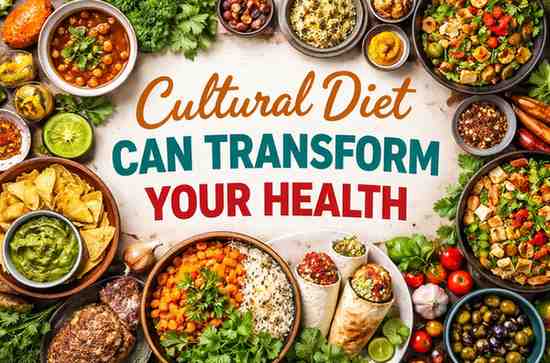
Not gonna lie… the phrase “cultural diet can transform your health” sounded like some Pinterest wellness nonsense the first time I heard it.
Like, yeah sure, let me just magically “eat like my ancestors” and fix my modern stress-filled life, right?
But here’s the part I wasn’t expecting:
When life hit me with stress, fatigue, random bloating, mood swings, and that weird “I don’t feel like myself” fog… I accidentally stumbled into eating more traditional foods.
And it actually helped.
More than the supplements.
More than the TikTok wellness trends.
More than the “clean eating” rules I kept breaking.
It wasn’t intentional. It wasn’t pretty. But it was real.
This whole thing started with one simple moment in my kitchen — and it changed the way I understood food, culture, and myself.
Why I Even Tried a Cultural Diet (Spoiler: It Wasn’t Some Enlightened Decision)
So picture this:
I was tired, hungry, annoyed, and too broke to order takeout again.
I opened my fridge and saw leftover rice, a couple spices, and some sad-looking vegetables.
Basically, a crime scene.
So I tossed everything into a pan the way my family used to.
Nothing fancy.
Just familiar.
And then something weird happened.
After eating it, I felt… calm.
Grounded.
Like my stomach suddenly remembered how to do its job again.
I didn’t expect that at all.
That tiny moment was the beginning of my whole “okay fine, maybe a cultural diet CAN transform your health” journey.
1. Eating Traditional Food Feels Like Coming Home (Even If You Didn’t Know You Left)
Here’s something nobody tells you:
Your body remembers things your brain forgets.
When you grow up eating certain spices, textures, carbs, fats, cooking methods — your gut literally adapts to them.
It builds bacteria that love those foods.
It craves them for a reason.
I didn’t know this at first.
I just knew that:
-
modern diets stressed me out
-
“healthy” meals felt like homework
-
trendy foods made me feel like I was eating someone else’s life
But a single plate of traditional food?
Instant comfort.
Not in a “cheat meal” way.
More like “ohhhh THIS is how I’m supposed to feel after eating.”
I swear, no green smoothie ever gave me that feeling.
2. I Messed This Up at First (You’ll Laugh, It’s Fine)
When I realized cultural foods made me feel better, I went too far too fast.
Classic move.
I tried:
-
cooking 10 traditional dishes a week
-
using every spice in the cabinet
-
recreating old recipes with zero experience
-
forcing myself to “eat culturally” for breakfast, lunch, dinner
I basically tried to live like an ancient monk while working modern hours.
It didn’t work.
My kitchen smelled like a spice hurricane.
My meals were chaotic.
And honestly… I got sick of it.
Then again, I was treating it like a trend instead of a rhythm.
Like a project instead of a return to something that already belonged to me.
When I slowed down, everything clicked.
3. The First Changes I Noticed (These Surprised Me)
Okay, this is the part that made me take this seriously.
After 2–3 weeks of slowly adding more cultural meals, I noticed stuff like:
• My digestion chilled out
Less bloating.
Less “ugh, what did I just eat?” panic.
• I felt full in a good way
Not stuffed.
Just… satisfied.
• My mood wasn’t swinging like a toddler
Stabilized.
Comforted.
Grounded.
• Food guilt disappeared
Traditional food is rarely “diet culture-friendly.”
And that was the best part.
• My energy came back
Slow, steady, reliable.
Not that shaky caffeine buzz I kept mistaking for energy.
I didn’t expect traditional food — something so obvious — to have that much impact.
4. Why a Cultural Diet Hits Different (At Least From What I’ve Seen)
Look, I’m not a scientist. I’m just telling you the raw truth.
But here’s what clicked for me:
Your body trusts familiar food.
It knows what to do with it.
Your microbes love the food you grew up eating.
They flourish when they get what they recognize.
Traditional meals were never meant to be restrictive.
They were meant to sustain you through long days — not starve you for aesthetics.
The balance is built in.
Most cultural diets naturally include:
-
carbs
-
fat
-
spices
-
fiber
-
probiotics
-
slow cooking
-
herbs
It’s like nature made the cheat code and we forgot it.
And finally: comfort reduces inflammation
I didn’t believe this until I lived it.
But stress and inflammation are best friends.
Comfort food (the true kind, not fast food) tells your nervous system “you’re safe.”
Your body heals when it feels safe.
5. What I Eat Now (The “Not Influencer-Approved” List)
Here’s where the wellness world might faint.
These are the meals that made the biggest difference for me:
-
Rice + lentils + ghee
-
Slow-cooked stews
-
Soups with spices
-
Pickles (the fermented kind)
-
Yogurt with simple meals
-
Root veggies
-
Traditional flatbreads
-
Homemade curries
-
Warm teas with herbs
-
Actual comfort food made from scratch
Simple stuff.
Cheap stuff.
Real stuff.
Not imported superfoods.
Not $12 green juices.
Not protein bars made in a lab.
Just food.
My food.
6. The Foods That Didn’t Work (Even Though They’re Trendy)
Let me expose myself real quick.
These made me feel awful, even though they’re “healthy”:
-
raw salads (my gut screamed “NOPE”)
-
cauliflower rice (tastes like sadness)
-
cold smoothies in the morning (my stomach cried)
-
almond flour anything
-
protein shakes that smelled like chemistry class
-
low-fat diet foods
I’m not saying these are bad.
They just weren’t mine.
Once I accepted that, everything felt easier.
7. The Emotional Side Nobody Talks About
This part got me unexpectedly.
When I went back to eating culturally, I felt:
-
connected
-
grounded
-
less lonely
-
more myself
-
less “lost in modern life”
Food carries memories.
Spices carry stories.
Recipes carry whole generations.
You’re not just eating.
You’re reconnecting.
And that does something to your brain.
Something healing.
8. “How Long Until It Works?” (My Honest Timeline)
Everyone’s different, but here’s how it went for me:
-
Week 1: calmer digestion
-
Week 2: less stress eating
-
Week 3: deeper sleep
-
Week 4: better mood, steady energy
-
Week 5: strong gut comfort
-
Week 6: stable weight, no bloating
-
Week 8+: eating feels EASY again
No dramatic drops.
No sudden transformations.
Just slow, steady improvement.
9. If You Want to Try This, Start Here (The Zero-Stress Version)
Don’t overhaul everything.
Don’t go full traditional grandma mode.
Don’t make it a project.
Here’s the gentle version:
1. Add one cultural dish a week
Not replace.
Just add.
2. Use familiar spices again
Turmeric, garlic, cumin, ginger — you know the drill.
3. Eat at least one warm meal a day
Your gut LOVES warmth.
4. Pick your childhood comfort food and remake it at home
Trust me.
Your soul will thank you.
5. Stop apologizing for carbs
They’re not the villain.
6. Don’t chase perfection
This is not a trend.
It’s a return.
I don’t have some perfect moral here.
But I can tell you this:
If you’re tired of dieting, tired of forcing modern meals into a body that wants something familiar, or tired of feeling disconnected from yourself… a cultural diet might be the most grounding thing you ever try.
Not magic.
But meaningful.
Simple.
Comforting.
Real.
And yeah — a cultural diet can transform your health.
Not because it’s trendy.
But because it’s yours.